














The Hidden Curb Appeal Mistake Costing Morgan Hill Sellers

Timothy Alston | Broker
Aegis Luxury Real Estate · DRE# 01328224
Published
March 29, 2021
Wine country meets Silicon Valley
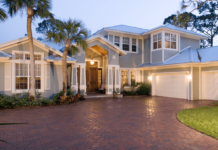
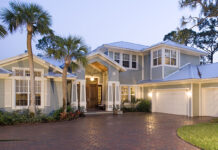
Curb appeal is the first thing buyers judge when they see your home, and in Morgan Hill, that judgment happens fast. Buyers form an opinion within seconds, either from the street or from a listing photo on their phone. If the exterior does not pull them in, many will never step inside or click through to see more.
You know how it goes. You have spent years maintaining the inside of your home, updating the kitchen, keeping the floors clean, making sure everything works. But when was the last time you actually stood at the curb and looked at your property the way a stranger would?
A lot of sellers in Morgan Hill are in exactly that position right now. They pour energy into the interior and assume the outside will take care of itself. But here is the part most people have not stopped to think about yet: buyers are often making a go or no-go decision before they ever reach your front door.
What Does a Buyer Actually See First?
Have you ever scrolled through listing photos and skipped past a home because something about the outside just felt off? Maybe the yard looked overgrown, or the paint was peeling, or the lighting made the whole property look cold and uninviting. That is exactly what buyers are doing when they see your listing.
The exterior of your home is your first marketing touchpoint. It shows up in photos, on drive-bys, and during the first few seconds of every in-person showing. If the curb appeal does not give buyers a reason to keep looking, your property value could take a hit before anyone even sees your kitchen.
Can you see how that dynamic could work against a seller, even when the inside of the home is genuinely impressive?
The Hidden Cost of Neglecting Curb Appeal
What would it mean for your sale if a buyer decided to skip your home entirely, just because of what they saw from the street? In a competitive market like Morgan Hill, where buyer attention is divided across multiple listings, first impressions carry serious financial weight.
Sellers who invest in curb appeal before listing typically see faster offers and stronger ones. A well-maintained exterior signals to buyers that the entire home has been cared for. Peeling paint, cracked walkways, or overgrown landscaping signal the opposite, and buyers start mentally calculating what it will cost them to fix what they see, before they have even walked inside.
How long have you been thinking about those small exterior projects you keep putting off? What is that delay actually costing you in terms of buyer perception?
Simple Appeal Tips That Make a Real Difference
Here is something worth considering. You do not need a large budget to improve your curb appeal meaningfully. Some of the most impactful changes are also the most affordable. Does that make sense given how buyers actually make decisions?
Start by finishing anything you have already started. An unfinished exterior project, even a small one, signals to buyers that maintenance may have been deferred elsewhere in the home too. Buyers notice. They wonder what else might be incomplete.
Next, think about decluttering your yard. Hiding trash cans, removing unused equipment, and clearing out anything that draws the eye for the wrong reasons can transform the feel of a property without spending anything. Simple appeal tips like these cost almost nothing but communicate that someone genuinely cares for the home.
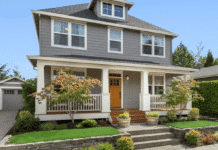
Repainting a fence, updating a mailbox, or adding a few potted plants near the entry are the kinds of details that show up clearly in listing photos and stick in a buyer’s memory.
How to Show Your Home in Its Best Light
Have you ever thought about what your home looks like after dark? Some buyers drive by in the evening, and quite a few listing photo sessions are scheduled to capture the best light at dusk. The right exterior lighting can transform a property from ordinary to remarkable in a single photo.
Showing your home in its best light is not just a phrase. It is a literal strategy. Well-placed lighting along a walkway, at the entry, or highlighting landscaping adds warmth and security to the first impression buyers carry with them. It is one of the most overlooked curb appeal upgrades a seller can make.
In Morgan Hill, where many neighborhoods feature homes with mature landscaping and strong architectural character, a few smart lighting choices can reinforce what is already attractive about your property.
Put Yourself in the Buyer’s Position
Here is an exercise worth trying before you list. Walk to the curb in front of your home and look at it as if you have never seen it before. What is the first thing you notice? What draws your eye? What feels off?
Take note of what looks clean and what looks tired. Does the paint hold up under direct inspection? Do the gutters sag? Is the entry clearly defined and welcoming? These are the questions buyers are silently asking themselves during every drive-by and showing.
If you keep doing nothing about those curb appeal details for the next few months, what does your timeline look like? What happens to your asking price if the first batch of buyers forms a negative impression and moves on?
Working through those questions with a knowledgeable broker before you list can save you time, negotiating power, and real money. Homes in Morgan Hill that present well from the street consistently generate stronger early interest, which is exactly when you have the most leverage as a seller.
If you are thinking about listing and want a straightforward assessment of where your home stands, a quick conversation is a good place to start. Not a pitch. Just an honest look at what buyers in your area are responding to right now. You can reach Broker Timothy Alston directly at (408) 207-4593 to talk through your specific situation. Browse Morgan Hill homes for sale to see how competing listings are presenting themselves and what your home will be measured against.
Schools in Morgan Hill
Aegis School Excellence Index · 2024-25 performance data
Serving districts: Morgan Hill Unified SD (K-12). School district boundaries can change; please verify current enrollment boundaries and program offerings directly with the school district.
Consider This
Have you explored how Saratoga’s neighborhoods vary from the foothills to the flatlands in price and character? Get our Saratoga neighborhood-by-neighborhood guide.
Want to talk through your Morgan Hill options? 15-minute strategy call, no obligation.
Schedule a Call →If you are buying in Morgan Hill, the neighborhoods east of Monterey Road generally offer newer construction and planned community amenities.
Browse Morgan Hill homes for sale
Free Download
Get the Complete Morgan Hill Market Report
Monthly data, neighborhood breakdowns, price trends, and insider analysis delivered to your inbox.
Send Me the Report →Frequently Asked Questions
Still have questions about Morgan Hill?
I’ve helped hundreds of families buy and sell in Morgan Hill. Happy to share what I’m seeing in your specific neighborhood.
Free Home Valuation
What’s Your Morgan Hill Home Worth?
Get an instant estimate powered by RealScout.
Get My Morgan Hill Home Value →
Looking for homes in Morgan Hill?
Get personalized listing alerts delivered to your inbox. Be the first to know about new homes that match your criteria in Morgan Hill.
Get Morgan Hill Listing Alerts →Community Resources
Morgan Hill Essential Services


Official Sources
Ready to find your perfect home in Morgan Hill?
Browse all available Morgan Hill listings, explore neighborhood guides, and get personalized market insights.
Search Morgan Hill Homes →Timothy Alston
Broker · DRE# 01328224
Aegis Luxury Real Estate
Harvard Business School Online, Certified Master Negotiation
23+ Years Silicon Valley Real Estate Experience
Retired Military Veteran
Copyright © 2026 MLSListings Inc. All rights reserved.
The data relating to real estate for sale on this display comes in part from the Internet Data Exchange program of the MLSListings™ MLS system. Real estate listings held by brokerage firms other than Aegis Luxury Real Estate are marked with the Internet Data Exchange icon and detailed information about them includes the names of the listing brokers and listing agents.
Based on information from the MLSListings MLS as of July 5, 2026. All data, including all measurements and calculations of area, is obtained from various sources and has not been, and will not be, verified by broker or MLS. All information should be independently reviewed and verified for accuracy. Properties may or may not be listed by the office/agent presenting the information.
These statistics are generated using information from the MLSListings Inc. multiple listing service, but have not been verified and are not guaranteed. MLSListings Inc. disclaims any responsibility for the accuracy and reliability of these statistics. This information should not be relied upon for real estate transaction decisions.
Data updated every 15 minutes. Visit www.MLSListings.com for more information.
Information provided is for general informational purposes only. Equal Housing Opportunity. If you are currently working with a real estate agent, this is not intended as a solicitation.
Aegis Luxury Real Estate · Timothy Alston, Broker, DRE# 01328224 · 10080 N. Wolfe Rd Ste SW3-200, Cupertino CA 95014 · (408) 207-4593
Last updated: July 06, 2026 | Data reflects July 2026 MLS statistics