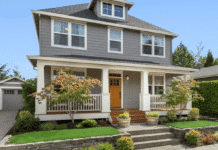



















Smart Campbell Condos: The VA Benefit Most Buyers Miss

Timothy Alston | Broker
Aegis Luxury Real Estate · DRE# 01328224
Published
May 27, 2025
Small-town charm, Silicon Valley access
Veterans eligible for a VA home loan can buy a campbell condo, or any qualifying home, with zero down payment, no private mortgage insurance, and limited closing costs. Yet according to Veterans United, only 3 in 10 veterans know this option exists. That means roughly 7 out of every 10 veterans may be sitting on one of the most powerful homebuying tools available without ever using it.
You know how it goes when the numbers just do not seem to line up? The down payment alone looks like a wall. Then closing costs stack on top. Then there is the question of mortgage insurance, credit history, and whether any of it is even realistic in a market like this one. For veterans eyeing Campbell homes for sale, those layers tend to push ownership further down the road than it actually needs to be.
But here is the part that stops most veterans cold when they hear it: there is a loan program built specifically to remove those exact obstacles. A large portion of the people it was designed to help have no idea it applies to them. Does that sound like a situation worth looking at more closely?
Why the VA Benefit Gap Is Bigger Than Most Veterans Realize
What does your housing situation actually look like right now? Are you renting month to month in Campbell, watching the cost creep up, and wondering if there is ever a realistic path to owning something here?
The VA home loan program has existed for more than 80 years. And yet, Veterans United research shows that 7 out of 10 veterans do not know they may be able to purchase with no money down. Think about that number for a second.
Have you ever stopped to think about how different your options would look if you did not need to save up tens of thousands of dollars just to reach the closing table? That is not a hypothetical perk buried in fine print. It is a core feature of the program, built specifically for people who have served. And it goes unused by the majority of the people it was designed to help.
In Campbell real estate, where property values carry real weight, that awareness gap translates directly into delayed equity and continued rent payments. The va benefit exists whether or not the veteran knows about it. But it can only work if it is actually used.
Here is what a closer look at the program reveals, broken down into five trends that directly affect what is possible for veterans considering campbell condos in this market.
Trend #1: The Awareness Gap Is Costing Veterans Real Wealth
Veterans United data shows only 3 in 10 veterans are aware of the zero-down-payment VA loan option. In a market where a campbell condo can still represent a six-figure purchase with meaningful appreciation potential, that gap in awareness translates directly into delayed equity and missed gains. The va benefit many veterans carry has real dollar value attached to it, but only when it is actually activated. How many years have already passed without knowing this was available?
Trend #2: No Down Payment Rewrites the Entire Math
For many veterans, the down payment requirement is the single largest barrier to owning a home. VA loans eliminate that barrier entirely for eligible borrowers. Getting into a property sooner in a competitive market means building equity now instead of watching values move further out of reach. If the down payment has been the reason you have kept waiting, have you actually looked at whether this path removes it entirely? That one question is worth sitting with before you rule anything out.
Trend #3: Limited Closing Costs Keep More Cash in Your Pocket
VA loans place limits on the types of closing costs eligible veterans are required to pay. In a high-cost area like Santa Clara County, those savings at closing can run into thousands of dollars. What would having that cash available for moving costs, repairs, or simply financial breathing room mean for your household? The va benefit includes this protection at the closing table, and it is not a minor detail when you look at the actual numbers involved in a real transaction.
Trend #4: No PMI Lowers the Monthly Cost for Campbell Condo Buyers
Most loan programs that allow low or no down payment require private mortgage insurance, which adds a recurring cost to every monthly payment. VA loans do not require PMI, even with no money down. Over the life of a loan, that difference compounds into a substantial amount. Veterans United notes that VA loans carry some of the lowest average fixed interest rates in the industry, which layers on top of the PMI savings. For someone evaluating campbell condos, that combination changes the monthly payment picture more than most people expect. Can you see how that shifts the math?
Trend #5: Flexible Credit Guidelines Open Doors Other Loans Close
VA loans carry more flexible and forgiving credit guidelines compared to conventional mortgage options, according to Veterans United. For veterans who have gone through financial transitions after service, that flexibility can be the deciding factor in whether pre-approval is possible at all. Many veterans in Campbell assume they would not qualify based on past credit history, without ever actually checking. If you have made that assumption, have you verified whether it still holds? That single conversation with a VA-specialist lender can change the entire picture.
What Happens If Nothing Changes for Veterans in Campbell?
If you keep renting for the next three to five years, where does that leave you? The rent you pay builds no equity. It does not come back. Meanwhile, a veteran who used their campbell condo purchase to activate this program in the same window could be sitting on meaningful equity, locked into a fixed payment that never changed, and building a financial foundation that compounds over time.
That is not pressure. It is just a question worth sitting with honestly. Veterans who purchase campbell condos using this program consistently report that the monthly payment came in lower than their rent, once PMI and down payment assumptions were removed from the equation. What would it actually mean for your household if you owned the place you were already living in?
The Department of Veterans Affairs confirms the core program features: no down payment for eligible borrowers, limited closing costs, no PMI, and competitive fixed interest rates. Those are not minor perks. That is a structurally different path to homeownership than what most buyers have access to, and it was designed specifically for people who have already earned it through their service.
Based on what many veterans across the Bay Area are discovering, the VA loan program might be far closer to what they have been waiting for than they realized. The numbers often work better than expected, especially once the PMI and down payment variables come out of the equation. Does that make sense for your situation?
If you are a veteran, or if you know one, the first step is simply finding out whether eligibility exists and what the actual numbers look like for your specific circumstances. Looking at homes in Campbell while understanding your full benefit at the same time gives you a complete picture of what is genuinely within reach right now.
Do you feel like this could be worth a conversation? Not a pitch. Not a commitment. Just a straightforward look at whether the benefit applies to you and what it would actually mean for your monthly payment and long-term financial position. Timothy Alston, Broker (DRE# 01328224), works with veterans navigating the Campbell market and can connect you with trusted lenders who specialize in VA loan pre-approval. Reach out at (408) 207-4593 and take a look at what you may have already earned.
Schools in Campbell
Aegis School Excellence Index · 2024-25 performance data
Serving districts: Campbell Union SD (K-8), Campbell Union High SD (9-12). School district boundaries can change; please verify current enrollment boundaries and program offerings directly with the school district.
Consider This
Have you explored how Saratoga’s neighborhoods vary from the foothills to the flatlands in price and character? Get our Saratoga neighborhood-by-neighborhood guide.
Want to talk through your Campbell options? 15-minute strategy call, no obligation.
Schedule a Call →Campbell’s Farmers Market and community events create a small-town feel that buyers pay a premium for. Mention these lifestyle perks in your listing.
Browse Campbell homes for sale
Free Download
Get the Complete Campbell Market Report
Monthly data, neighborhood breakdowns, price trends, and insider analysis delivered to your inbox.
Send Me the Report →Frequently Asked Questions
Still have questions about Campbell?
I’ve helped hundreds of families buy and sell in Campbell. Happy to share what I’m seeing in your specific neighborhood.
Free Home Valuation
What’s Your Campbell Home Worth?
Get an instant estimate powered by RealScout.
Get My Campbell Home Value →


Looking for homes in Campbell?
Get personalized listing alerts delivered to your inbox. Be the first to know about new homes that match your criteria in Campbell.
Get Campbell Listing Alerts →Community Resources
Campbell Essential Services


Official Sources
Ready to find your perfect home in Campbell?
Browse all available Campbell listings, explore neighborhood guides, and get personalized market insights.
Search Campbell Homes →Timothy Alston
Broker · DRE# 01328224
Aegis Luxury Real Estate
Harvard Business School Online, Certified Master Negotiation
23+ Years Silicon Valley Real Estate Experience
Retired Military Veteran
Copyright © 2026 MLSListings Inc. All rights reserved.
The data relating to real estate for sale on this display comes in part from the Internet Data Exchange program of the MLSListings™ MLS system. Real estate listings held by brokerage firms other than Aegis Luxury Real Estate are marked with the Internet Data Exchange icon and detailed information about them includes the names of the listing brokers and listing agents.
Based on information from the MLSListings MLS as of June 10, 2026. All data, including all measurements and calculations of area, is obtained from various sources and has not been, and will not be, verified by broker or MLS. All information should be independently reviewed and verified for accuracy. Properties may or may not be listed by the office/agent presenting the information.
These statistics are generated using information from the MLSListings Inc. multiple listing service, but have not been verified and are not guaranteed. MLSListings Inc. disclaims any responsibility for the accuracy and reliability of these statistics. This information should not be relied upon for real estate transaction decisions.
Data updated every 15 minutes. Visit www.MLSListings.com for more information.
Information provided is for general informational purposes only. Equal Housing Opportunity. If you are currently working with a real estate agent, this is not intended as a solicitation.
Aegis Luxury Real Estate · Timothy Alston, Broker, DRE# 01328224 · 10080 N. Wolfe Rd Ste SW3-200, Cupertino CA 95014 · (408) 207-4593
Last updated: August 09, 2026 | Data reflects August 2026 MLS statistics