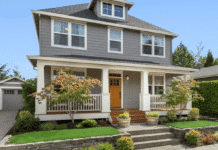


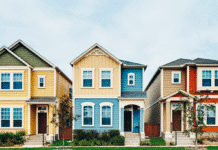
















The Costly Campbell Condos Mistake Most Buyers Overlook

Timothy Alston | Broker
Aegis Luxury Real Estate · DRE# 01328224
Published
May 29, 2025
Small-town charm, Silicon Valley access
Choosing the wrong Campbell condo, or waiting too long to choose one at all, is one of the costliest decisions a buyer can make without ever realizing it. The average homeowner’s net worth runs nearly 40 times greater than the average renter’s, according to the National Association of Realtors. That gap does not appear overnight. It builds quietly, year by year, while you are deciding.
You know how it goes. You look at Campbell condos and think, “Maybe I’ll wait another year.” Then another year passes. Rent went up. Prices held steady or climbed. And you are basically back where you started, except with less time and a higher entry price ahead of you.
Does that sound familiar? Here is the part most people have not stopped to think about yet: the longer you stay in that holding pattern, the harder it becomes to break out of it. Not because of anything you did wrong. Because the math quietly works against you while you wait.
What Does Your Housing Situation Actually Look Like Right Now?
Are you renting month to month? Waiting for rates to drop? Hoping prices soften enough to make a campbell condo feel within reach? Those are real strategies, and none of them are automatically the wrong call.
The question worth asking is: what is that waiting actually costing you?
Every month you pay a landlord, that money is gone. No equity, no ownership stake, no return. Your landlord builds wealth from your payment. You do not. Whether you rent or own, you are paying a mortgage. The only question is whose.
For much of the 1980s and 1990s, rent increases in Santa Clara County were gradual enough that renting felt like a reasonable long-term plan. Households could save steadily, and the pressure was not obvious year to year. But homeowners in the South Bay were quietly accumulating equity that would compound dramatically in the decades ahead. Renters who stayed renters through that era did not lose ground visibly in any single year. They lost it over the full arc of time. The lesson from that era still applies to anyone in Campbell homes for sale who is sitting on the fence today.
A recent Bank of America survey found that 72% of potential buyers worry that rising rent is affecting their current and long-term finances. That worry is not irrational. Over the past several decades, rent has trended upward with very few sustained breaks. Even when rent levels off for a year or two, the overall direction is up.
Have You Ever Stopped to Think About What Ten Years of Rent Payments Really Builds?
Take a moment with this. If you are paying $2,800 a month in rent, that is $33,600 a year. Over ten years, you have sent $336,000 toward someone else’s home equity. What do you have to show for it at the end?
The same question applies whether you rent or pay toward a mortgage, but the outcomes are completely different. Owning one of the campbell condos in this market means your monthly payment builds equity. Think of it as a savings account you can actually live in.
As property values rise over time, the gap between what you owe and what the property is worth grows in your favor. That gap becomes part of your net worth. Renting builds none of that.
Campbell real estate has reflected this pattern clearly. Homes in Campbell have consistently appreciated over long holding periods, rewarding buyers who committed to ownership even during uncertain market windows. That is not a guarantee about any single year. It is a pattern that has held across decades.
The early 2000s tech correction and the 2008 financial crisis shook confidence in homeownership across the entire Bay Area. Many households in the South Bay chose to keep renting rather than risk buying into a falling market. In hindsight, buyers who purchased in Campbell between 2009 and 2012, near the bottom of that cycle, captured some of the strongest appreciation gains of the next decade. Fear of short-term volatility kept many renters out of a wealth-building window they never recovered. The buyers who looked past the noise and focused on long-term holding costs came out ahead by a margin that was not subtle.
Are Campbell Condos More Stable Long Term Than Renting?
Rent renews every year, often higher. A fixed-rate mortgage does not. If you could lock in a monthly payment today and watch it stay the same for 30 years while rents around you keep climbing, how would that change your financial picture?
That is not a hypothetical. That is how fixed-rate loan terms work. In a market like Campbell, where rental demand stays high and rent prices reflect that pressure, the stability of a fixed payment is one of the most overlooked advantages of ownership. Can you see how that works in your favor over time?
Joel Berner, Senior Economist at Realtor.com, has noted that households focused only on short-run costs will find renting easier, but the equity and generational wealth that ownership builds over time changes the long-term picture entirely. Buying may be the better path even when upfront closing costs look daunting.
The decade following the housing recovery was one of the most powerful wealth-building periods for homeowners in Silicon Valley history. Buyers who entered the Campbell market during this window, even at prices that felt stretched at the time, saw their home equity grow at a pace that outpaced virtually every other asset class available to middle-income households. Renters in the same zip codes watched their monthly costs climb while their net worth stayed flat. Average home appreciation in the Campbell area during this period exceeded 6% annually, compounding equity gains that renting simply cannot replicate. The contrast in outcomes between owners and renters during this era was not subtle.
What Happens If Nothing Changes for the Next Five Years?
This is the question that matters most. If you stay in your current rental situation for five more years, where does that leave you? Is rent likely to be lower? Will it be easier to save for a down payment while your housing costs keep climbing?
And on the other side: if values in the area follow the long-term trend, what does waiting cost you in purchase price? In equity you did not start building? In a wrong Campbell condo choice that turns out to be no condo at all, because you waited until the entry price moved another $80,000 beyond your target?
Can you see how the weight of inaction adds up quietly, year by year, without ever announcing itself?
The years following 2019 tested every assumption renters had made about timing the market. Remote work reshaped buyer demand. Interest rates moved sharply. And yet Campbell real estate, anchored by strong employment access, walkable neighborhoods, and limited inventory, held its value and continued to appreciate through cycles that rattled less-established markets. Buyers who acted when conditions felt uncertain still built equity. Renters who waited for a perfect moment often found themselves facing higher prices and higher rates simultaneously. The cost of waiting in this era was measurable, not theoretical.
Is This Starting to Sound Like Something Worth Exploring?
None of this means buying is the right move for everyone today. It is not. Down payment readiness, pre-approval status, income stability, escrow timelines, and credit scores all matter. Picking the wrong Campbell condo, in the wrong building or at the wrong price point for your situation, is a real risk worth taking seriously.
But the question of whether it is better to rent or own over any meaningful time horizon is not actually a close call. Forbes describes homeownership as a proven strategy for building long-term wealth. That is not cheerleading. That is a straightforward reading of what the numbers show over time, across markets, across economic cycles.
And it applies directly to the decision you are sitting with right now.
If you have been weighing this question for a while, the next step is not a commitment to anything. It is a conversation to find out whether the numbers actually work for your specific situation. Not a pitch. Not a sales call. Just an honest look at where you are and what your options actually are.
Timothy Alston, Broker, DRE# 01328224, works with buyers across the area to do exactly that. The goal is clarity, not pressure. If ownership makes sense for your situation, you will know it. If it does not yet, you will know that too, and you will have a clearer picture of what needs to change first.
If that sounds like a conversation worth having, reach out at (408) 207-4593.
Schools in Campbell
Aegis School Excellence Index · 2024-25 performance data
Serving districts: Campbell Union SD (K-8), Campbell Union High SD (9-12). School district boundaries can change; please verify current enrollment boundaries and program offerings directly with the school district.
Consider This
If you could own a newer-construction home in Milpitas at a fraction of Cupertino prices, would you look? Compare Milpitas new construction options and see the value difference.
Want to talk through your Campbell options? 15-minute strategy call, no obligation.
Schedule a Call →Campbell’s proximity to the Winchester Mystery House and Santana Row draws consistent rental demand. Consider this if you are buying as an investor.
Browse Campbell homes for sale
Free Download
Get the Complete Campbell Market Report
Monthly data, neighborhood breakdowns, price trends, and insider analysis delivered to your inbox.
Send Me the Report →Frequently Asked Questions
Still have questions about Campbell?
I’ve helped hundreds of families buy and sell in Campbell. Happy to share what I’m seeing in your specific neighborhood.
Free Home Valuation
What’s Your Campbell Home Worth?
Get an instant estimate powered by RealScout.
Get My Campbell Home Value →


Looking for homes in Campbell?
Get personalized listing alerts delivered to your inbox. Be the first to know about new homes that match your criteria in Campbell.
Get Campbell Listing Alerts →Community Resources
Campbell Essential Services


Official Sources
Ready to find your perfect home in Campbell?
Browse all available Campbell listings, explore neighborhood guides, and get personalized market insights.
Search Campbell Homes →Timothy Alston
Broker · DRE# 01328224
Aegis Luxury Real Estate
Harvard Business School Online, Certified Master Negotiation
23+ Years Silicon Valley Real Estate Experience
Retired Military Veteran
Copyright © 2026 MLSListings Inc. All rights reserved.
The data relating to real estate for sale on this display comes in part from the Internet Data Exchange program of the MLSListings™ MLS system. Real estate listings held by brokerage firms other than Aegis Luxury Real Estate are marked with the Internet Data Exchange icon and detailed information about them includes the names of the listing brokers and listing agents.
Based on information from the MLSListings MLS as of June 12, 2026. All data, including all measurements and calculations of area, is obtained from various sources and has not been, and will not be, verified by broker or MLS. All information should be independently reviewed and verified for accuracy. Properties may or may not be listed by the office/agent presenting the information.
These statistics are generated using information from the MLSListings Inc. multiple listing service, but have not been verified and are not guaranteed. MLSListings Inc. disclaims any responsibility for the accuracy and reliability of these statistics. This information should not be relied upon for real estate transaction decisions.
Data updated every 15 minutes. Visit www.MLSListings.com for more information.
Information provided is for general informational purposes only. Equal Housing Opportunity. If you are currently working with a real estate agent, this is not intended as a solicitation.
Aegis Luxury Real Estate · Timothy Alston, Broker, DRE# 01328224 · 10080 N. Wolfe Rd Ste SW3-200, Cupertino CA 95014 · (408) 207-4593
Last updated: August 09, 2026 | Data reflects August 2026 MLS statistics