



















When it comes to applying for a mortgage, remember that there’s no such thing as a little “white lie.” Saying fibs that you think are harmless, as well as exaggerating, playing down, or failing to disclose certain information, can all jeopardize your chances of getting approved for a loan.
Unfortunately, though, about 1 in 131 applications contained some form of fraud, according to the 2022 Mortgage Fraud Report from CoreLogic. Industry experts and risk managers are particularly on the lookout for an increase in income fraud risk.
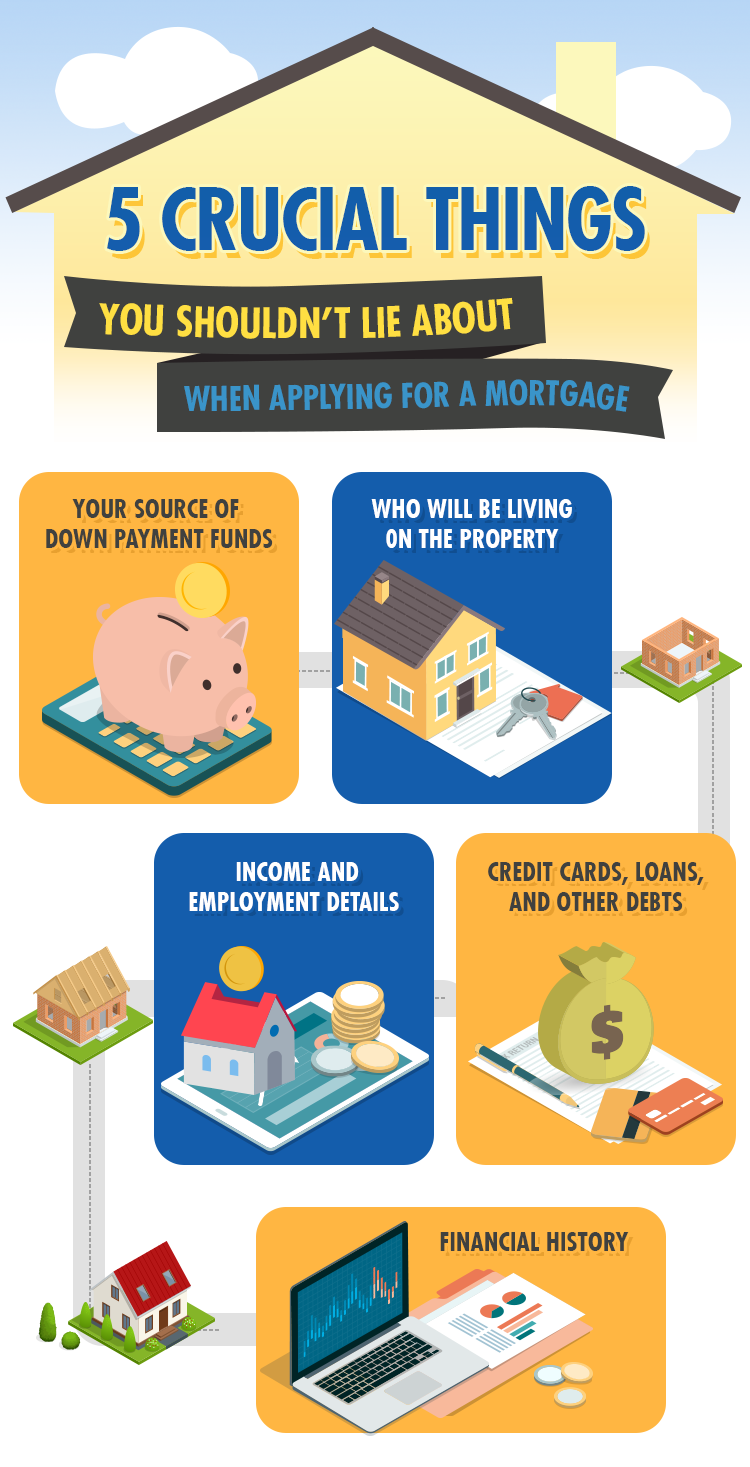
Here we’ve touched on some of the things borrowers might think it’s okay to lie about during their mortgage application, and why it’s not worth risking your chance to finally buy a home.
1. Your source of down payment funds

For many first-time home buyers, especially younger ones, saving for a down payment is one of the most challenging. Most lenders need to see that you have genuine or regular savings towards a deposit.
If you’ve received help from your parents or any family member for your house deposit, whether it was a gift fund or you borrowed it and plan to pay it back, don’t ever think it’s harmless to declare it as part of your genuine savings. You will have to disclose the source of your down payment to avoid the risk of being questioned, or worse, being denied on your loan.
For down payment gift funds that don’t need to be repaid, lenders may ask for a letter signed by that person, saying that the money doesn’t need to be paid back. But if you’re short on cash and the fund is a loan, lenders will want to know about it because it’s part of your other financial obligations, even if it’s a personal agreement between you and your family member or friend.
2. Who will be living on the property

Unfortunately, occupancy misrepresentation, or lying about who will be living in the property, is common in mortgage applications. You may think it’s okay to claim that the property will be your primary residence when you actually plan to rent it out as an investment property. After all, a loan is a loan and you will be responsible to pay for it, so what difference does it make?
The problem with this, though, is that if you have an investment property, you need an investment home loan instead of an owner-occupied home loan, which comes with lower interest rates and fees. Lenders deem investment properties to be higher risk than residential, as people will usually work harder to repay the mortgage if their own home is at risk. Minimum down payments are also significantly bigger on rental properties.
From the lender’s point of view, you’re stealing money from them by making them take on more risk than they agreed to. So spill the beans on who will be living on the property, as it could amount to occupancy fraud which has serious consequences.
3. Income and employment details

Most lenders require proof of at least two years of stable, long-term employment before granting borrowers a mortgage. So don’t be tempted to say you’ve been working at a company for longer than you do or claim to be employed even when you’re not. Likewise, don’t exaggerate your income to make yourself look more financially stable, or switch employers at any point in the buying process.
Lenders will easily find out because, during the application process, they will request various proof of income documents, including a couple of recent paycheck stubs or tax returns. If something doesn’t add up, be prepared to have to explain. You might still be able to go ahead with your application if you’ve simply made a genuine mistake. But if they’ve found out you’ve downright lied, expect your application to be declined.
4. Credit cards, loans, and other debts

Whether it’s a car loan, credit card debt, or student loan, you need to be upfront about all of your current debts. This is because lenders need to know all your financial burdens to properly assess your financial situation. Failing to disclose your debts, no matter how small, could prove to be a problem later and can hurt your chances of getting a mortgage.
5. Financial history

Lenders will want to make sure that you’ve been consistent with your past payments to deem you trustworthy and make sure you can handle another financial obligation. But if you’ve got a history of late payments, whether it’s missed credit card payments or late loan bills, it’s a must to share that information. Late payments will also remain on your credit report, which the lender will pull during the application process. Likewise, you also need to disclose any bankruptcy, even if it was from years ago.

Even if you think those lies may seem harmless, they come with some serious and expensive consequences. So what happens if you’re found out? Here are some scenarios you might face:
- The lender could downright deny your application.
- If you’re already under contract, your earnest money deposit could be forfeited.
- If the truth comes to light after the deal is done, the lender could decide to call the loan payable. This means you have to pay the full amount of the mortgage, or face foreclosure.
- The lender could increase your rate as a penalty, leading to higher interest and monthly mortgage payments.
- Worst case scenario: you’ll be charged with mortgage fraud, with a penalty that can include a maximum of 30 years prison time and a $1 million fine.
The biggest lesson: Just be honest from the start so you’ll have a better chance of getting approved for a mortgage.