





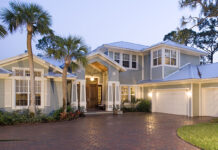









The Surprising Truth About Foreclosure and Luxury Homes San Jose

Timothy Alston | Broker
Aegis Luxury Real Estate · DRE# 01328224
Published
April 24, 2024
Capital of Silicon Valley
Today’s foreclosure headlines are rising, but the truth about foreclosure activity in San Jose looks nothing like 2008. According to ATTOM, roughly 357,000 foreclosure filings were recorded nationally in 2023. During the worst years of the last housing collapse, that number exceeded 1 million annually, several years running. The scale is simply not comparable, and that distinction matters enormously if you are making decisions about luxury homes San Jose buyers and sellers are currently navigating.
You know how it goes. You catch a headline about foreclosures climbing, and a familiar unease settles in. Maybe you owned a home during 2008. Maybe you watched people in your neighborhood lose everything they had built over years. And now you are quietly wondering whether that same pattern is building again underneath all the current optimism.
A lot of buyers and homeowners in San Jose are sitting with exactly that question right now. But here is the part most people have not stopped to think about yet: not all foreclosure increases are the same. Context matters enormously. And the context today tells a very different story than the headlines suggest.
What Are Foreclosure Numbers Actually Telling You About Luxury Homes San Jose?
What does your current understanding of today’s foreclosure data actually look like? If you heard that filings were up significantly compared to recent years, would your first instinct be to worry about a crash in luxury homes San Jose values?
Most people’s instinct would be exactly that. And it makes sense. But that instinct may be working off incomplete information.
Here is why the comparison is lopsided. In 2020 and 2021, a federal moratorium and forbearance program essentially paused foreclosures for millions of homeowners. Filings dropped to historic lows during that window, not because the market was unusually strong, but because foreclosures were artificially held back. Once those programs ended, filings resumed. Of course the numbers went up. They had nowhere to go but up from a floor that was never real to begin with.
Have you ever stopped to think about what it actually means when a data point is being compared to an artificial low? The jump looks dramatic on a chart. The underlying reality may be completely ordinary.
The Real Story: Today’s Foreclosure Volume vs. the 2008 Crash
According to ATTOM, foreclosure filings in 2023 totaled approximately 357,000 nationally. During the peak years of the housing collapse, that number surpassed 1 million annually. The current figures are nowhere near the scale that defined the 2008 crash, and that distinction matters if you are trying to make a clear-headed decision about property in Santa Clara County.
Bankrate noted plainly that after the housing crash, millions of foreclosures flooded the market and pushed prices down hard across the board. That is not what is happening now.
Most homeowners today carry a meaningful equity cushion. When someone has built up home equity, they have options that borrowers in 2008 simply did not have. They can sell before a foreclosure ever happens. That cushion is one of the biggest structural differences between now and then.
Can you see how that changes the entire picture? Widespread home equity acts as a buffer the market did not have during the last crisis. Negative equity was the engine that drove the 2008 collapse. Today’s market has the opposite condition. San Jose real estate, in particular, has seen sustained appreciation that has put most local homeowners in a position that looks nothing like the mid-2000s.
San Jose homeowners with properties purchased before 2020 are carrying average equity positions that provide significant protection against forced sales, based on sustained appreciation across Santa Clara County over the past five years.
What the Truth About Foreclosure Means for the San Jose Market
If you have been watching San Jose homes for sale with hesitation, wondering whether a foreclosure wave might push prices down and create a better buying opportunity, that is a reasonable thing to think through. But based on current data, that scenario would require a collapse in homeowner equity across the board, and that is not what the numbers are showing.
Homes in San Jose have seen consistent value growth over the past several years. That appreciation has put most local homeowners in a very different position than borrowers were in during the mid-2000s, when many owed more than their homes were worth the moment they closed escrow.
What would it mean for your planning if you knew that a foreclosure-driven price collapse was not the most likely path forward for luxury homes San Jose buyers are currently eyeing? How would that change what you are waiting for?
The truth about foreclosure data is not that it signals danger. It signals a return to something closer to normal, measured against any pre-pandemic baseline rather than the artificial lows created by temporary government programs.
The Overlooked Cost of Waiting for a Crash That May Not Come
Here is a question worth sitting with. What happens if you wait for a foreclosure crisis that does not materialize?
If you hold off on a purchase in San Jose for the next two or three years, betting on a wave of distressed inventory that never arrives, what does that cost you in the meantime? Rent does not pause while you wait. Inventory in Santa Clara County does not necessarily increase just because time passes. And the home equity you could have been building continues to accumulate for someone else instead of you.
That is not pressure. That is just the math of inaction when the premise driving the decision may not hold.
Does that make sense as a framework for thinking it through? What would it mean for your family if, three years from now, prices had held steady or climbed, and you were still in the same position you are in today?
What the Data Is Actually Pointing Toward for Luxury Homes San Jose
Based on what buyers and homeowners across the area are working through right now, the data on foreclosure activity points toward more stability than the headlines suggest.
Foreclosure filings are elevated compared to the artificially suppressed years of 2020 and 2021. But they are not elevated compared to any normal pre-pandemic baseline. And they are nowhere near the scale of activity that defined 2008 and triggered a nationwide collapse in property values.
For luxury homes San Jose buyers and sellers, the structural conditions are simply different today. Strong average home values, low distressed inventory relative to historical norms, and a Santa Clara County job market anchored by major technology employers all point to a market with built-in resilience that did not exist in the prior cycle.
Foreclosure filings in Santa Clara County remain well below pre-2008 levels, supported by low distressed inventory and strong average home values across San Jose neighborhoods.
For someone in your situation, whether you are deciding whether to buy, sell, or simply stay informed, that distinction is worth understanding before you make any moves based on a headline.
If you would like to look at how the current foreclosure picture affects your specific options in Santa Clara County, a straightforward conversation with Timothy Alston, Broker (DRE# 01328224), could be a useful starting point. Not a pitch. Just a clear look at where you are and where you want to be. Reach out at (408) 207-4593 whenever that feels right to you.
Schools in San Jose
Aegis School Excellence Index · 2024-25 performance data
Serving districts: San Jose Unified SD, Alum Rock Union Elementary SD, Berryessa Union SD, Cambrian SD, Campbell Union SD (partial), East Side Union High SD, Evergreen Elementary SD, Franklin-McKinley SD, Luther Burbank SD, Moreland SD, Mount Pleasant SD, Oak Grove SD, Orchard SD, Union SD. School district boundaries can change; please verify current enrollment boundaries and program offerings directly with the school district.
Consider This
Have you explored how Saratoga’s neighborhoods vary from the foothills to the flatlands in price and character? Get our Saratoga neighborhood-by-neighborhood guide.
Want to talk through your San Jose options? 15-minute strategy call, no obligation.
Schedule a Call →When competing for San Jose homes in the starter price range, consider targeting homes that need cosmetic work. Many buyers avoid these, reducing competition.
Browse San Jose homes for sale
Free Download
Get the Complete San Jose Market Report
Monthly data, neighborhood breakdowns, price trends, and insider analysis delivered to your inbox.
Send Me the Report →Frequently Asked Questions
Still have questions about San Jose?
I’ve helped hundreds of families buy and sell in San Jose. Happy to share what I’m seeing in your specific neighborhood.
Free Home Valuation
What’s Your San Jose Home Worth?
Get an instant estimate powered by RealScout.
Get My San Jose Home Value →
Looking for homes in San Jose?
Get personalized listing alerts delivered to your inbox. Be the first to know about new homes that match your criteria in San Jose.
Get San Jose Listing Alerts →Community Resources
San Jose Essential Services


Official Sources
Ready to find your perfect home in San Jose?
Browse all available San Jose listings, explore neighborhood guides, and get personalized market insights.
Search San Jose Homes →Timothy Alston
Broker · DRE# 01328224
Aegis Luxury Real Estate
Harvard Business School Online, Certified Master Negotiation
23+ Years Silicon Valley Real Estate Experience
Retired Military Veteran
Copyright © 2026 MLSListings Inc. All rights reserved.
The data relating to real estate for sale on this display comes in part from the Internet Data Exchange program of the MLSListings™ MLS system. Real estate listings held by brokerage firms other than Aegis Luxury Real Estate are marked with the Internet Data Exchange icon and detailed information about them includes the names of the listing brokers and listing agents.
Based on information from the MLSListings MLS as of June 11, 2026. All data, including all measurements and calculations of area, is obtained from various sources and has not been, and will not be, verified by broker or MLS. All information should be independently reviewed and verified for accuracy. Properties may or may not be listed by the office/agent presenting the information.
These statistics are generated using information from the MLSListings Inc. multiple listing service, but have not been verified and are not guaranteed. MLSListings Inc. disclaims any responsibility for the accuracy and reliability of these statistics. This information should not be relied upon for real estate transaction decisions.
Data updated every 15 minutes. Visit www.MLSListings.com for more information.
Information provided is for general informational purposes only. Equal Housing Opportunity. If you are currently working with a real estate agent, this is not intended as a solicitation.
Aegis Luxury Real Estate · Timothy Alston, Broker, DRE# 01328224 · 10080 N. Wolfe Rd Ste SW3-200, Cupertino CA 95014 · (408) 207-4593
Last updated: August 21, 2026 | Data reflects August 2026 MLS statistics