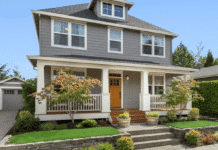



















The Hidden Key Opportunity Santa Clara Homebuyers Overlook

Timothy Alston | Broker
Aegis Luxury Real Estate · DRE# 01328224
Published
June 28, 2022
Sports, tech, and community
Santa Clara homebuyers now have a key opportunity that did not exist during the height of the pandemic market: more homes to choose from and less competition to fight through. Inventory is rising, bidding wars are cooling, and the pace of sales has slowed enough to give serious homebuyers room to breathe, compare options, and make decisions without the frantic pressure of the past two years.
You know how it goes. You find a house that checks most of your boxes, you get excited, and then fifteen other buyers are lined up with offers over asking price before you even finish touring the place. And you keep doing that. Over and over. Does that sound familiar?
A lot of homebuyers in Santa Clara homes for sale have been dealing with exactly that kind of frustration. But here is the part most people have not stopped to think about yet: the market has quietly shifted. And the buyers who recognize this key opportunity first are the ones who end up in a much better position.
What Does Your Housing Situation Actually Look Like Right Now?
Are you renting and watching your monthly payment increase while your landlord benefits from the equity you will never see? Are you sitting on the sidelines waiting for the market to calm down, not realizing it already has? What would you say your biggest obstacle has been, truly, when it comes to finding a home in Santa Clara?
For most buyers who have been searching over the past two years, the answer is not price alone. It is the combination of almost nothing available to buy and the feeling that every home turns into a bidding war before you can even get comfortable with the idea of making an offer.
How long have you been dealing with that? And what is that actually costing you, not just financially, but in terms of time, energy, and the stress of not knowing when it ends?
Trend #1: New Listings Are Rising vs. Last Year
New listings coming onto the market are running approximately 6% above where they were this time last year, according to Danielle Hale, Chief Economist at realtor.com. That may not sound dramatic, but in a tight market like Silicon Valley, even a modest increase in available homes creates meaningful new options for serious homebuyers. More sellers are listing because rising home prices have given them the equity cushion and the confidence to move. For buyers who have been waiting, this shift in supply is a key opportunity that was simply not present twelve months ago.
Trend #2: Buyer Demand Has Pulled Back From the Frenzy
Mark Fleming, Chief Economist at First American, points out that the inventory growth happening right now is not entirely from new listings. It is also coming from a slowdown in the pace at which homes are selling. Fewer buyers are competing for each home, which means listings are sitting long enough for more buyers to actually tour them and think clearly. Higher mortgage rates and broader economic factors have cooled the intensity of competition without crashing property values. That cooling is exactly what many homebuyers have been quietly hoping for.
Trend #3: Months of Supply Is Growing Without a Surplus
When fewer sales happen against the same pool of listings, the months-of-supply figure grows. That is not a sign of a collapsing market; it is a sign of a market rebalancing. Homebuyers now have more time to evaluate homes, request inspections, and negotiate terms without the pressure of twenty competing offers arriving the same afternoon. The Santa Clara market is not flooded with distressed inventory. It is simply offering more breathing room than it has in years, and that difference matters enormously to buyers who have been outbid repeatedly.
Trend #4: Forecasts Project Continued Inventory Growth
Realtor.com’s latest forecast projects that as rising inflation and mortgage rates continue moderating demand from the peak frenzy of recent years, inventory could grow at a double-digit rate compared to that prior period. That means more homes in Santa Clara becoming available over the coming months, giving homebuyers a better-than-expected chance to find a property that actually fits their needs. This is not a guarantee of easy buying. But the trend line for available homes is moving in the right direction for buyers willing to act with clarity and preparation.
Trend #5: Less Competition Does Not Mean No Competition
Bidding wars have not disappeared from Silicon Valley. Well-priced homes in desirable neighborhoods still generate multiple offers, and list price is still rarely the ceiling in strong areas. What has changed is the intensity and frequency of those situations. Buyers who are pre-approved, decisive, and working with an experienced broker are finding that the gap between searching and actually getting an accepted offer has narrowed meaningfully. The key opportunity here is not that buying has become effortless. It is that the process has become manageable again for buyers who are properly prepared.
Why This Specific Key Opportunity Matters for Santa Clara Homebuyers
If you could have a real conversation with a home and ask it whether right now is a smart time to buy, what do you think it would say? That question sounds strange, but here is what it is really asking: are the conditions today better for you than they were six months ago? And are they likely to get significantly easier if you wait another six to twelve months?
Based on what a lot of homebuyers are sharing, the answer to the first question is yes. The answer to the second question is much less certain. Mortgage rates can move in either direction. Home equity builds from the day you close, not from the day you feel perfectly comfortable. And this particular combination of growing inventory, reduced buyer competition, and a market shifting back toward balance does not show up very often. Can you see how that creates a window that may not stay open indefinitely?
What happens if nothing changes in your situation? If you keep renting or keep searching without adjusting your approach for the next three to five years, where does that leave you in terms of equity, stability, and the monthly payment you are already making to someone else’s mortgage?
That is not a pressure tactic. It is just an honest question worth sitting with. Homebuyers who found the opportunity in similar market transitions did not necessarily have perfect timing. They had clear goals and someone helping them navigate the specifics of their local market. Does that approach sound like what you have been looking for?
If this key opportunity feels like the right moment to take a closer look at what is actually possible for you in Santa Clara real estate, the next step is a straightforward conversation. Not a pitch. Just an honest look at where you are, what you are looking for, and whether the current market conditions line up with your situation. Timothy Alston, Broker (DRE# 01328224), Aegis Luxury Real Estate, is available at (408) 207-4593 to have exactly that conversation whenever you are ready.
Schools in Santa Clara
Aegis School Excellence Index · 2024-25 performance data
Serving districts: Santa Clara Unified SD (K-12). School district boundaries can change; please verify current enrollment boundaries and program offerings directly with the school district.
Consider This
Have you explored how Saratoga’s neighborhoods vary from the foothills to the flatlands in price and character? Get our Saratoga neighborhood-by-neighborhood guide.
Want to talk through your Santa Clara options? 15-minute strategy call, no obligation.
Schedule a Call →Santa Clara homes near Central Park and the library attract family buyers who value community resources. Position these amenities in your listing.
Browse Santa Clara homes for sale
Free Download
Get the Complete Santa Clara Market Report
Monthly data, neighborhood breakdowns, price trends, and insider analysis delivered to your inbox.
Send Me the Report →Frequently Asked Questions
Still have questions about Santa Clara?
I’ve helped hundreds of families buy and sell in Santa Clara. Happy to share what I’m seeing in your specific neighborhood.
Free Home Valuation
What’s Your Santa Clara Home Worth?
Get an instant estimate powered by RealScout.
Get My Santa Clara Home Value →


Looking for homes in Santa Clara?
Get personalized listing alerts delivered to your inbox. Be the first to know about new homes that match your criteria in Santa Clara.
Get Santa Clara Listing Alerts →Community Resources
Santa Clara Essential Services



Official Sources
Ready to find your perfect home in Santa Clara?
Browse all available Santa Clara listings, explore neighborhood guides, and get personalized market insights.
Search Santa Clara Homes →Timothy Alston
Broker · DRE# 01328224
Aegis Luxury Real Estate
Harvard Business School Online, Certified Master Negotiation
23+ Years Silicon Valley Real Estate Experience
Retired Military Veteran
Copyright © 2026 MLSListings Inc. All rights reserved.
The data relating to real estate for sale on this display comes in part from the Internet Data Exchange program of the MLSListings™ MLS system. Real estate listings held by brokerage firms other than Aegis Luxury Real Estate are marked with the Internet Data Exchange icon and detailed information about them includes the names of the listing brokers and listing agents.
Based on information from the MLSListings MLS as of June 10, 2026. All data, including all measurements and calculations of area, is obtained from various sources and has not been, and will not be, verified by broker or MLS. All information should be independently reviewed and verified for accuracy. Properties may or may not be listed by the office/agent presenting the information.
These statistics are generated using information from the MLSListings Inc. multiple listing service, but have not been verified and are not guaranteed. MLSListings Inc. disclaims any responsibility for the accuracy and reliability of these statistics. This information should not be relied upon for real estate transaction decisions.
Data updated every 15 minutes. Visit www.MLSListings.com for more information.
Information provided is for general informational purposes only. Equal Housing Opportunity. If you are currently working with a real estate agent, this is not intended as a solicitation.
Aegis Luxury Real Estate · Timothy Alston, Broker, DRE# 01328224 · 10080 N. Wolfe Rd Ste SW3-200, Cupertino CA 95014 · (408) 207-4593
Last updated: July 11, 2026 | Data reflects July 2026 MLS statistics