















Surprising Truth About Buying Houses in San Jose

Timothy Alston | Broker
Aegis Luxury Real Estate · DRE# 01328224
Published
August 12, 2024
Capital of Silicon Valley
If you want to buy houses in San Jose, the honest truth is this: inventory has improved significantly, with active listings up roughly 37% compared to last year, according to Realtor.com. But total supply still sits nearly 29% below pre-pandemic levels, which means more choices without the price crash many buyers are waiting for. Understanding that gap is the key to making a smart move right now.
You know how it has been. You browse listings, find something promising, and within days it is already under contract. Or the final price stretches so far past asking that it stops making sense for your budget. A lot of buyers who want to buy houses in San Jose have been dealing with exactly that kind of pressure for years. But here is the part most people have not stopped to think about yet: the landscape is quietly shifting.
So before you assume the market is still working against you, it is worth pausing on one honest question. What does your housing situation actually look like right now?
What More Inventory Actually Means When You Want to Buy Houses in San Jose
Are you renting? Waiting for something to change? Have you been telling yourself you will look seriously once more homes come onto the market?
If so, it is worth pausing on that. Because the thing you said you were waiting for may already be happening.
Active listings nationwide are up nearly 37% compared to last year. That is roughly one in three additional homes on the market compared to twelve months ago. For buyers who have been completely locked out, that kind of shift in available inventory can change what is actually possible when you go to San Jose homes for sale and start exploring your real options in Santa Clara County.
Lawrence Yun, Chief Economist at the National Association of Realtors, put it plainly: more supply means buyers can see more properties before making decisions. More options reduce the pressure to rush. They tend to soften the intensity of competing offers and give you more room in the negotiation process. Can you see how that changes the experience of searching for a home?
The Surprising Truth About Buying Houses in San Jose: More Homes Does Not Mean Lower Prices
This is the part about buying that a lot of people miss entirely.
A lot of buyers are quietly holding out, hoping prices fall sharply before they commit. But here is the data that complicates that thinking. Even with listings up nearly 37% compared to last year, there are still roughly 29% fewer homes on the market than during the pre-pandemic years of 2017 to 2019.
Bill McBride, Housing Analyst at Calculated Risk, described the situation directly: inventory is rising year over year, but remains well below pre-pandemic levels. That gap matters enormously.
It means the increase in available homes is real and meaningful for anyone looking to buy houses in San Jose right now. But it does not signal an oversupply that would push property values into a sharp decline. The San Jose market operates with a structural shortage of housing relative to demand, anchored by the technology economy of Silicon Valley and constrained by geography, zoning, and decades of underbuilding.
Average days on market in San Jose sat at just 10 days as of mid-2026, reflecting strong buyer demand even in an improving inventory environment. The conditions that drive prices into a sustained downturn are simply not in place here.
So the question becomes: if prices are not expected to crash, and inventory is improving right now, what are you actually waiting for?
Why National Headlines Miss the Truth About San Jose Real Estate
Here is something that most buyers overlook entirely when they try to read the market. National averages only tell part of the story. Real estate is local, and the inventory picture varies significantly from one region to the next, and even from one neighborhood to the next within the city itself.
Some markets around the country are close to pre-pandemic inventory levels. Others remain dramatically undersupplied. The truth about buying in San Jose is that it sits in one of the most supply-constrained corridors in the entire country.
Average list-to-sale price ratios, the number of new listings added each week, active inventory by neighborhood, and local days-on-market data: these numbers tell you far more than any national headline. If you are trying to time the market from a distance, you may be solving the wrong problem entirely.
The only way to know exactly where San Jose real estate stands right now is to look at current listing data with someone who tracks it closely. Are you working with that kind of local context yet, or are you still relying on what you read online?
What Happens If You Keep Waiting to Buy Houses in San Jose?
Spend a moment with this one. If nothing changes in your housing situation over the next three to five years, where does that leave you?
If you are renting in San Jose, how much of your monthly payment is quietly disappearing each year without building any equity? What would it mean to look back and realize that inventory was improving, conditions were shifting, and you had every reason to explore your options, but did not?
This is not pressure. It is just an honest question about buying and the real cost of staying still.
The cost of waiting is not always visible the way a down payment is. It is slower, quieter, and it compounds. The National Association of Realtors has documented the average gap between homeowner and renter net worth as exceeding $400,000 over time. That is not a hypothetical. That is the actual financial distance that builds between two people making different housing decisions over a decade.
Does that change how you think about the timeline you are on?
A Straightforward Look at Where Things Stand
When you think about what it actually takes to buy houses in San Jose, the process matters as much as the timing. Pre-approval, offer strategy, escrow timelines, closing costs: these are the mechanics that determine whether a good opportunity becomes a successful purchase or a missed one.
Based on what buyers across the market are experiencing right now, the combination of more homes available and still-limited overall supply creates a window worth understanding, even if you are not ready to move immediately. Knowing your options costs nothing. Not knowing them could cost considerably more than you realize.
Having someone in your corner who understands homes in San Jose is not a luxury in a market this competitive. It is a practical necessity. Timothy Alston, licensed Broker (DRE# 01328224) with Aegis Luxury Real Estate, works with buyers to cut through the noise and look honestly at what is available, what is realistic, and what actually makes sense for where you want to be.
Not a pitch. Not a sales call. Just a straightforward conversation about your situation and the homes that might fit it. Do you feel like this could be what you have been looking for? If so, the next step is yours to take whenever it makes sense for you. You can reach Timothy directly at (408) 207-4593.
Schools in San Jose
Aegis School Excellence Index · 2024-25 performance data
Serving districts: San Jose Unified SD, Alum Rock Union Elementary SD, Berryessa Union SD, Cambrian SD, Campbell Union SD (partial), East Side Union High SD, Evergreen Elementary SD, Franklin-McKinley SD, Luther Burbank SD, Moreland SD, Mount Pleasant SD, Oak Grove SD, Orchard SD, Union SD. School district boundaries can change; please verify current enrollment boundaries and program offerings directly with the school district.
Consider This
What if you could trade your current home for a Los Gatos property without a gap in housing? Ask about our bridge strategy for Los Gatos buyers and sellers.
Want to talk through your San Jose options? 15-minute strategy call, no obligation.
Schedule a Call →San Jose’s Japantown is one of only three remaining Japantowns in the United States. Homes near this cultural district carry a unique neighborhood premium.
Browse San Jose homes for sale
Free Download
Get the Complete San Jose Market Report
Monthly data, neighborhood breakdowns, price trends, and insider analysis delivered to your inbox.
Send Me the Report →Frequently Asked Questions
Still have questions about San Jose?
I’ve helped hundreds of families buy and sell in San Jose. Happy to share what I’m seeing in your specific neighborhood.
Free Home Valuation
What’s Your San Jose Home Worth?
Get an instant estimate powered by RealScout.
Get My San Jose Home Value →
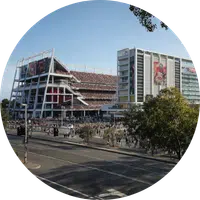

Looking for homes in San Jose?
Get personalized listing alerts delivered to your inbox. Be the first to know about new homes that match your criteria in San Jose.
Get San Jose Listing Alerts →Community Resources
San Jose Essential Services


Official Sources
Ready to find your perfect home in San Jose?
Browse all available San Jose listings, explore neighborhood guides, and get personalized market insights.
Search San Jose Homes →Timothy Alston
Broker · DRE# 01328224
Aegis Luxury Real Estate
Harvard Business School Online, Certified Master Negotiation
23+ Years Silicon Valley Real Estate Experience
Retired Military Veteran
Copyright © 2026 MLSListings Inc. All rights reserved.
The data relating to real estate for sale on this display comes in part from the Internet Data Exchange program of the MLSListings™ MLS system. Real estate listings held by brokerage firms other than Aegis Luxury Real Estate are marked with the Internet Data Exchange icon and detailed information about them includes the names of the listing brokers and listing agents.
Based on information from the MLSListings MLS as of August 13, 2026. All data, including all measurements and calculations of area, is obtained from various sources and has not been, and will not be, verified by broker or MLS. All information should be independently reviewed and verified for accuracy. Properties may or may not be listed by the office/agent presenting the information.
These statistics are generated using information from the MLSListings Inc. multiple listing service, but have not been verified and are not guaranteed. MLSListings Inc. disclaims any responsibility for the accuracy and reliability of these statistics. This information should not be relied upon for real estate transaction decisions.
Data updated every 15 minutes. Visit www.MLSListings.com for more information.
Information provided is for general informational purposes only. Equal Housing Opportunity. If you are currently working with a real estate agent, this is not intended as a solicitation.
Aegis Luxury Real Estate · Timothy Alston, Broker, DRE# 01328224 · 10080 N. Wolfe Rd Ste SW3-200, Cupertino CA 95014 · (408) 207-4593
Last updated: August 13, 2026 | Data reflects August 2026 MLS statistics