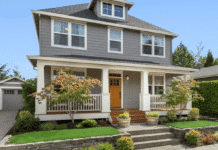



















The Hidden Truth About Another Foreclosure Crisis in Morgan Hill

Timothy Alston | Broker
Aegis Luxury Real Estate · DRE# 01328224
Published
November 18, 2020
Wine country meets Silicon Valley
Are we headed for another foreclosure crisis? Based on everything analysts can measure right now, the answer is close to about zero percent. Today’s homeowners carry record levels of equity, lenders have structured flexible repayment options, and the policy response to economic hardship looks nothing like the cold silence that followed 2008. The conditions that caused the last crash simply do not exist in the same form today.
You know how a news headline can plant a seed of doubt that just sits there? Maybe you have seen something suggesting the housing market is fragile, that defaults are creeping up, that another foreclosure crisis is lurking around the corner. And maybe part of you wonders whether that affects what you should do with your home, or whether now is even a reasonable time to make a move in the Morgan Hill market.
That doubt is worth examining. Because the story behind the data is very different from the story the headlines seem to be telling.
What Actually Caused the Last Foreclosure Crisis?
Have you ever stopped to think about what made 2006 to 2008 so destructive? It was not just falling prices. It was the combination of loans written for people who could not realistically repay them, almost no home equity as a buffer, and a policy response that amounted to telling struggling homeowners they were on their own.
In 2009, John Courson, then Chief Executive of the Mortgage Bankers Association, was quoted in the Wall Street Journal suggesting that homeowners who could not pay were setting a bad example for their children. That was the tone. No flexibility, no relief, no forbearance. What followed was a wave of foreclosures that reshaped entire neighborhoods and wiped out years of built-up home equity across the country.
Does that environment sound anything like the one we are in now?
Why Another Foreclosure Wave Is Sitting at About Zero Probability
The response to more recent economic disruption looked completely different. When households faced financial hardship through no fault of their own, the government moved quickly to create mortgage forbearance programs that let borrowers pause their payments until their situations stabilized. That one policy decision changed the entire trajectory.
And when forbearance plans began to expire, lenders did not simply demand lump-sum repayment. They built in extended repayment structures, loan modifications, and other options designed to keep people in their homes. Banks and policymakers had learned from the last crisis. They had no interest in triggering another foreclosure crisis.
Ivy Zelman, CEO of Zelman and Associates and one of the most respected voices in housing research, put it plainly: the likelihood of another foreclosure crisis is, in her words, about zero percent.
Can you see how the structural conditions have changed? And does that shift how you are thinking about the stability of the housing market right now?
The Equity Buffer That Did Not Exist Before
Here is something worth sitting with for a moment. During the housing crash, many homeowners owed more on their mortgages than their homes were worth. They had no options. Selling would not cover the loan balance, so foreclosure became the only exit.
Today, the average homeowner is sitting on a substantial cushion of equity built over years of rising property values. That changes everything. A homeowner who runs into financial difficulty now has a real choice: sell, walk away with proceeds, and preserve their financial footing. Foreclosure becomes a last resort rather than a foregone conclusion.
In Morgan Hill homes for sale are drawing serious buyer interest precisely because inventory remains limited and demand stays relatively firm. That dynamic supports property values, which in turn protects the equity position of existing homeowners in Morgan Hill.
What would it mean for your own financial picture if you knew the equity you have built is being protected by structural market conditions, not just luck?
What This Means If You Are Watching the Market From the Sidelines
If you have been holding off on a decision because you are worried another foreclosure crisis could crater home values, it might be worth asking yourself: what specific scenario would actually have to unfold for that to happen?
The lending standards that produced the last crash, where loans went to borrowers with no documentation and no realistic repayment plan, are largely gone. Underwriting is tighter. Equity levels are higher. Policy tools exist that simply were not deployed in 2008. The foreclosure crisis that shaped your memory of what a bad market looks like was a product of conditions that are close to about zero in terms of replication today.
Homes in Morgan Hill have seen consistent demand from buyers relocating from higher-cost Bay Area markets, drawn by relatively more accessible price points, quality of life, and proximity to major employment corridors. That underlying demand does not evaporate when a headline predicts doom.
What happens to your plan if you wait another year for a foreclosure wave that the data suggests is not coming? Where does that leave you?
The Difference Between Then and Now Is Not Small
It is the difference between a system with no safety net and one that learned, adjusted, and rebuilt with those lessons in mind. The forbearance programs, the repayment flexibility, the equity buffers, the tighter loan standards: each of these addresses a specific failure point from the last foreclosure crisis. They did not all appear by accident.
Morgan Hill real estate, like any market, carries real risk. No one can promise you a straight line. But the specific risk of a foreclosure-driven collapse rests on a foundation that current data simply does not support. That is worth knowing before you make a decision based on fear that another foreclosure surge is imminent.
If you are trying to sort out what this market actually means for your situation, whether you are considering buying, selling, or just want a clear-eyed read on where things stand, the next step is a straightforward conversation. No pitch, no pressure. Just a look at the numbers and what they mean for you specifically. Timothy Alston, Broker, can be reached at (408) 207-4593. Would that kind of conversation be useful to you right now?
Schools in Morgan Hill
Aegis School Excellence Index · 2024-25 performance data
Serving districts: Morgan Hill Unified SD (K-12). School district boundaries can change; please verify current enrollment boundaries and program offerings directly with the school district.
Consider This
If you could own a newer-construction home in Milpitas at a fraction of Cupertino prices, would you look? Compare Milpitas new construction options and see the value difference.
Want to talk through your Morgan Hill options? 15-minute strategy call, no obligation.
Schedule a Call →Morgan Hill homes with mountain views of El Toro Peak or the surrounding hills sell for measurably more than comparable flat-lot properties. Price accordingly.
Browse Morgan Hill homes for sale
Free Download
Get the Complete Morgan Hill Market Report
Monthly data, neighborhood breakdowns, price trends, and insider analysis delivered to your inbox.
Send Me the Report →Frequently Asked Questions
Still have questions about Morgan Hill?
I’ve helped hundreds of families buy and sell in Morgan Hill. Happy to share what I’m seeing in your specific neighborhood.
Free Home Valuation
What’s Your Morgan Hill Home Worth?
Get an instant estimate powered by RealScout.
Get My Morgan Hill Home Value →


Looking for homes in Morgan Hill?
Get personalized listing alerts delivered to your inbox. Be the first to know about new homes that match your criteria in Morgan Hill.
Get Morgan Hill Listing Alerts →Community Resources
Morgan Hill Essential Services


Official Sources
Ready to find your perfect home in Morgan Hill?
Browse all available Morgan Hill listings, explore neighborhood guides, and get personalized market insights.
Search Morgan Hill Homes →Timothy Alston
Broker · DRE# 01328224
Aegis Luxury Real Estate
Harvard Business School Online, Certified Master Negotiation
23+ Years Silicon Valley Real Estate Experience
Retired Military Veteran

Copyright © 2026 MLSListings Inc. All rights reserved.
The data relating to real estate for sale on this display comes in part from the Internet Data Exchange program of the MLSListings™ MLS system. Real estate listings held by brokerage firms other than Aegis Luxury Real Estate are marked with the Internet Data Exchange icon and detailed information about them includes the names of the listing brokers and listing agents.
Based on information from the MLSListings MLS as of June 11, 2026. All data, including all measurements and calculations of area, is obtained from various sources and has not been, and will not be, verified by broker or MLS. All information should be independently reviewed and verified for accuracy. Properties may or may not be listed by the office/agent presenting the information.
These statistics are generated using information from the MLSListings Inc. multiple listing service, but have not been verified and are not guaranteed. MLSListings Inc. disclaims any responsibility for the accuracy and reliability of these statistics. This information should not be relied upon for real estate transaction decisions.
Data updated every 15 minutes. Visit www.MLSListings.com for more information.
Information provided is for general informational purposes only. Equal Housing Opportunity. If you are currently working with a real estate agent, this is not intended as a solicitation.
Aegis Luxury Real Estate · Timothy Alston, Broker, DRE# 01328224 · 10080 N. Wolfe Rd Ste SW3-200, Cupertino CA 95014 · (408) 207-4593
Last updated: July 04, 2026 | Data reflects July 2026 MLS statistics