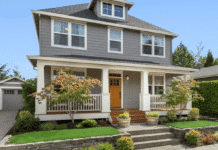



















The Hidden Truth About Home Price in Los Gatos

Timothy Alston | Broker
Aegis Luxury Real Estate · DRE# 01328224
Published
June 09, 2021
Foothill sophistication, downtown heart
Home price movement in Los Gatos follows one of the most straightforward principles in economics: supply and demand. When the number of buyers in the market exceeds the number of available homes, prices rise. When inventory grows and supply and demand come back into balance, appreciation tends to slow toward historical norms. Understanding which direction that balance is tilting right now could matter more than you realize.
You know how it feels to watch home prices climb and wonder if you missed your window? And then wonder if waiting any longer just means paying even more later? A lot of buyers and sellers in Los Gatos are sitting with exactly that question right now. But here is the part most people have not stopped to think about yet: the reason prices move the way they do is actually not complicated. And once you see it clearly, the decision in front of you gets a lot easier to think through.
So let’s slow down for a second. What does your housing situation actually look like right now? Are you renting and watching your monthly payment go up while your landlord builds equity? Are you a homeowner wondering whether the appreciation you have already built is as strong as you think? Either way, the same underlying force is shaping your answer.
What Home Price Really Comes Down To
Have you ever stopped to think about why a home price goes up at all? Strip away the speculation and the headlines, and it comes down to this: more people want to buy than there are homes available to purchase. That is it. When buyer demand is high and housing supply is limited, sellers have leverage. Prices climb. It is the same principle that drives the price of anything scarce.
The Federal Housing Finance Agency has tracked this pattern across the country, and the states that saw the sharpest price appreciation were consistently the same states that saw the steepest drops in available inventory. Idaho, Utah, and Arizona became clear examples of this. Fewer listings, more competition, higher home prices. Does that pattern sound familiar when you think about what you have seen in the local market here?
In Los Gatos, the dynamic has played out with particular intensity. Homes in Los Gatos tend to attract buyers who have strong purchasing power, which keeps demand elevated even when broader market conditions soften. That combination of limited supply and persistent buyer demand has kept price appreciation in this market running well above national averages during tight inventory cycles.
What Happens When Supply and Demand Shift?
Here is where the picture gets more nuanced. Supply and demand do not stay frozen. Inventory levels have been showing signs of movement nationally, with the majority of states reporting increases in available listings over recent months. That is meaningful. When more homes come onto the market, buyers have more choices. Competition eases. And price appreciation tends to moderate back toward what economists consider a healthier, more sustainable range.
So here is a question worth sitting with: if appreciation starts to moderate, what does that mean for your plan? If you have been waiting for prices to come down significantly before buying, what evidence are you basing that on? And if you have been thinking about selling, what would a window of peak equity mean for your next move?
Nationally, real estate economists note that when active listing counts rise by 20 percent or more in a given market, average home price growth tends to compress by roughly one to three percentage points within two quarters. That is not a crash. That is a recalibration. The difference matters enormously depending on which side of the transaction you are on.
The Cost of Waiting That Nobody Talks About
What happens if nothing changes in your situation? If you keep doing the same thing for the next three to five years, where does that leave you? That is not a rhetorical question. It is the most practical one you can ask yourself right now.
Every month a buyer waits in a market with limited supply, they are making a silent bet that prices will drop enough to offset the equity they did not build while waiting. Every month a seller holds back, wondering if prices will climb a little further, they are taking on the risk that the pool of qualified buyers may shrink as mortgage rates and buyer demand shift.
If you could lock in your home price today in a market where supply is still relatively constrained, and then watch as inventory gradually normalizes over the next year or two, how would that compare to trying to time the exact peak? Can you see how that question changes the calculus a little?
What the Data Is Actually Telling You
Based on what buyers and sellers are navigating in the Los Gatos homes for sale market right now, the core insight from the national data might actually be closer to what you have been looking for. Here is why it matters for someone in your situation.
Supply and demand signals suggest we are in a transitional period. Inventory is rising in many markets, but it has not yet reached levels that would meaningfully shift pricing power from sellers to buyers in high-demand areas like Los Gatos. Price appreciation is expected to moderate, not reverse. That is a very different outcome than the dramatic correction some headlines imply.
Average home equity for long-term homeowners in Santa Clara County has climbed substantially over the past decade, reflecting the compounding effect of consistent price appreciation in a supply-constrained region. That is not an accident. It is supply and demand, operating over time.
Does that change the way you are thinking about your next step? If so, the next move is a straightforward conversation, not a sales pitch, just a clear look at where you are, where you want to be, and whether the numbers make sense for your specific situation. Timothy Alston, licensed Broker, DRE #01328224, is available at (408) 207-4593 whenever you are ready to have that conversation. The decision is entirely yours.
Schools in Los Gatos
Aegis School Excellence Index · 2024-25 performance data
Serving districts: Los Gatos Union Elementary SD (K-8), Los Gatos-Saratoga Joint Union High SD (9-12). School district boundaries can change; please verify current enrollment boundaries and program offerings directly with the school district.
Consider This
What if you could trade your current home for a Los Gatos property without a gap in housing? Ask about our bridge strategy for Los Gatos buyers and sellers.
Want to talk through your Los Gatos options? 15-minute strategy call, no obligation.
Schedule a Call →Los Gatos homes within walking distance of North Santa Cruz Avenue command a significant premium. Walkability to downtown is the number one value driver.
Browse Los Gatos homes for sale
Free Download
Get the Complete Los Gatos Market Report
Monthly data, neighborhood breakdowns, price trends, and insider analysis delivered to your inbox.
Send Me the Report →Frequently Asked Questions
Still have questions about Los Gatos?
I’ve helped hundreds of families buy and sell in Los Gatos. Happy to share what I’m seeing in your specific neighborhood.
Free Home Valuation
What’s Your Los Gatos Home Worth?
Get an instant estimate powered by RealScout.
Get My Los Gatos Home Value →


Looking for homes in Los Gatos?
Get personalized listing alerts delivered to your inbox. Be the first to know about new homes that match your criteria in Los Gatos.
Get Los Gatos Listing Alerts →Community Resources
Los Gatos Essential Services


Official Sources
Ready to find your perfect home in Los Gatos?
Browse all available Los Gatos listings, explore neighborhood guides, and get personalized market insights.
Search Los Gatos Homes →Timothy Alston
Broker · DRE# 01328224
Aegis Luxury Real Estate
Harvard Business School Online, Certified Master Negotiation
23+ Years Silicon Valley Real Estate Experience
Retired Military Veteran
Copyright © 2026 MLSListings Inc. All rights reserved.
The data relating to real estate for sale on this display comes in part from the Internet Data Exchange program of the MLSListings™ MLS system. Real estate listings held by brokerage firms other than Aegis Luxury Real Estate are marked with the Internet Data Exchange icon and detailed information about them includes the names of the listing brokers and listing agents.
Based on information from the MLSListings MLS as of June 11, 2026. All data, including all measurements and calculations of area, is obtained from various sources and has not been, and will not be, verified by broker or MLS. All information should be independently reviewed and verified for accuracy. Properties may or may not be listed by the office/agent presenting the information.
These statistics are generated using information from the MLSListings Inc. multiple listing service, but have not been verified and are not guaranteed. MLSListings Inc. disclaims any responsibility for the accuracy and reliability of these statistics. This information should not be relied upon for real estate transaction decisions.
Data updated every 15 minutes. Visit www.MLSListings.com for more information.
Information provided is for general informational purposes only. Equal Housing Opportunity. If you are currently working with a real estate agent, this is not intended as a solicitation.
Aegis Luxury Real Estate · Timothy Alston, Broker, DRE# 01328224 · 10080 N. Wolfe Rd Ste SW3-200, Cupertino CA 95014 · (408) 207-4593
Last updated: July 10, 2026 | Data reflects July 2026 MLS statistics