

















The Costly Mistake We Buy Houses Los Altos California Sellers Make

Timothy Alston | Broker
Aegis Luxury Real Estate · DRE# 01328224
Published
June 15, 2026
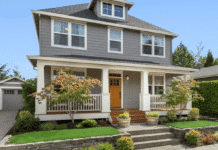
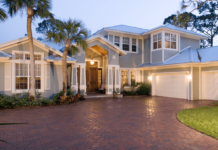
Timeless suburban elegance
When a seller in Los Altos declines a buyer’s closing cost request without running the numbers first, the hidden cost of that decision is rarely zero. Saying no reflexively can stall a sale, extend carrying costs, and ultimately net less than a well-structured concession would have. On a home priced near the Los Altos average, a $20,000 to $30,000 buyer’s closing contribution is often the difference between a signed contract and a collapsed deal.
You know how selling a home used to feel almost automatic? List it, field multiple offers, close in three weeks. Somewhere along the way, that changed. Sellers across Santa Clara County are now fielding negotiation requests they have not seen in a few years. The most common one: “Can you help with my closing costs?”
Before you answer that with a reflexive no, it is worth pausing. What does that no actually cost you?
What Buyer’s Closing Costs Actually Add Up To
Have you ever stopped to think about what happens on the buyer’s side of the table? They have saved for a down payment, qualified for a mortgage, and then watched another $15,000 to $30,000 in buyer’s closing fees appear on the disclosure. That lump sum hits all at once, and even a buyer who can comfortably afford the monthly payment may be stretched too thin to close.
According to Freddie Mac, buyer’s closing costs typically include loan origination fees, appraisal and inspection costs, title insurance, and escrow fees. On a national average, that commonly runs between 2% and 5% of the purchase price. Scale that to Los Altos homes for sale, which regularly exceed $3 million for single-family residences, and you are looking at a number that can genuinely disqualify an otherwise strong buyer.
The hidden cost here is not just the dollar amount on the closing disclosure. It is what happens to your deal when a qualified buyer cannot bridge that gap. They walk. And you start over. Does that outcome serve your goals better than meeting the buyer halfway?
What the Concession Data Is Actually Telling Sellers
Here is a number worth sitting with. According to Zillow, 67% of sellers recently reported paying some or all of a buyer’s closing costs. That is not a fringe tactic. That is the majority of sellers making a calculated decision to keep deals alive rather than watch them collapse over a closing cost line item.
Redfin data shows there are currently more active sellers than buyers nationally. While homes in Los Altos attract serious, well-qualified buyers, the broader shift has given buyers more negotiating room than they have had in years. Ignoring buyer’s closing requests in that environment is not a power move. It is a risk with a real price tag attached.
Property values in Los Altos consistently reflect the area’s top-tier schools, walkability, and proximity to major Silicon Valley tech employers. The average home price in Los Altos hovers well above the Santa Clara County average, making buyer’s closing contributions proportionally larger and more meaningful to the outcome. That premium is real. But it does not mean every buyer has the liquidity to absorb closing costs on top of a substantial down payment.
Can you see how those two facts can exist at the same time?
Why We Buy Houses Los Altos California Sellers Underestimate Carrying Costs
Think about your specific situation for a moment. Has your home been on the market longer than you expected? Have you had showings but no written offers? Are you working against a deadline tied to a job change, a new purchase, or a life transition?
If any of those describe where you are right now, the hidden cost of ignoring a buyer’s closing cost request becomes very concrete. Every additional month your home sits means another mortgage payment, more property taxes, more maintenance, and a growing signal to the market that something is off with the listing.
Buyers notice days on market. That number works against you the longer it climbs. What does it actually cost you to hold firm on every concession for another 60 days? Run that number honestly. Then compare it to the buyer’s closing contribution sitting on the table right now.
Does that comparison change how you are thinking about this?
Many sellers who say “we buy houses” or work with investors in Los Altos California are actually trying to avoid exactly this kind of stalemate. They want certainty. But certainty on the open market is still available, if you understand which concessions protect your net and which ones do not. That distinction is everything.
When a Concession Is Not Actually a Concession
Here is what sellers who are navigating this market well understand: a $15,000 buyer’s closing contribution that closes a clean deal in 30 days can easily save $20,000 or more in carrying costs, price reductions, and the erosion that comes with a stale listing. That is not losing. That is a smart business decision.
And you do not always have to cover buyer’s closing costs directly. Redfin points to several alternatives sellers are using alongside, or instead of, direct closing cost contributions. A home warranty removes a buyer’s anxiety about unknowns after closing. Repair credits give buyers funds to address inspection findings without reopening the price negotiation. A flexible closing date can be enormously valuable to a buyer navigating a lease end or a school calendar. Leaving behind appliances or including a design credit can sweeten the offer without touching the closing line at all.
The right answer depends on what buyers in the Los Altos real estate market are actually asking for, and what matters most to you in this transaction. Knowing that distinction is the difference between a negotiation and a standoff. Are you with me on that?
What Sellers Who Close Deals Actually Do Differently
The sellers who are closing deals right now are not the ones refusing everything. They are the ones who understand which requests serve their goals and which ones do not. That requires knowing your carrying costs, your timeline, your alternatives, and what the local market is actually doing.
Ignoring buyer’s closing cost requests without running the numbers is not strength. It is guessing. And in a market where home equity in Los Altos carries this much financial weight on both sides of the table, guessing is expensive.
The hidden cost of inaction compounds quietly. A concession declined today can become a price reduction next month. A price reduction rarely recovers the full dollar amount it gives back. And the opportunity cost of a sale that should have happened three months earlier is real, even when it does not show up on a closing disclosure.
What happens if nothing changes? If you hold firm on every request for the next 60 to 90 days and the deal falls apart, where does that leave you?
If you want a straightforward look at what is reasonable in your specific situation, not a pitch, not a sales call, Timothy Alston, Broker, DRE# 01328224, Aegis Luxury Real Estate, works with sellers to think through exactly these decisions before they become costly mistakes. Reach out at (408) 207-4593. Would that be a useful next step for you?
Schools in Los Altos
Aegis School Excellence Index · 2024-25 performance data
Serving districts: Los Altos SD (K-8), Mountain View-Los Altos Union High SD (9-12). School district boundaries can change; please verify current enrollment boundaries and program offerings directly with the school district.
Consider This
Have you explored how Saratoga’s neighborhoods vary from the foothills to the flatlands in price and character? Get our Saratoga neighborhood-by-neighborhood guide.
Want to talk through your Los Altos options? 15-minute strategy call, no obligation.
Schedule a Call →When selling a Los Altos home, invest in professional photography that showcases the mature landscaping and tree canopy. This is a major buyer draw.
Browse Los Altos homes for sale
Free Download
Get the Complete Los Altos Market Report
Monthly data, neighborhood breakdowns, price trends, and insider analysis delivered to your inbox.
Send Me the Report →Frequently Asked Questions
Still have questions about Los Altos?
I’ve helped hundreds of families buy and sell in Los Altos. Happy to share what I’m seeing in your specific neighborhood.
Free Home Valuation
What’s Your Los Altos Home Worth?
Get an instant estimate powered by RealScout.
Get My Los Altos Home Value →Explore Nearby Cities



Looking for homes in Los Altos?
Get personalized listing alerts delivered to your inbox. Be the first to know about new homes that match your criteria in Los Altos.
Get Los Altos Listing Alerts →Community Resources
Los Altos Essential Services


Official Sources
Ready to find your perfect home in Los Altos?
Browse all available Los Altos listings, explore neighborhood guides, and get personalized market insights.
Search Los Altos Homes →Timothy Alston
Broker · DRE# 01328224
Aegis Luxury Real Estate
Harvard Business School Online, Certified Master Negotiation
23+ Years Silicon Valley Real Estate Experience
Retired Military Veteran
Copyright © 2026 MLSListings Inc. All rights reserved.
The data relating to real estate for sale on this display comes in part from the Internet Data Exchange program of the MLSListings™ MLS system. Real estate listings held by brokerage firms other than Aegis Luxury Real Estate are marked with the Internet Data Exchange icon and detailed information about them includes the names of the listing brokers and listing agents.
Based on information from the MLSListings MLS as of August 2, 2026. All data, including all measurements and calculations of area, is obtained from various sources and has not been, and will not be, verified by broker or MLS. All information should be independently reviewed and verified for accuracy. Properties may or may not be listed by the office/agent presenting the information.
These statistics are generated using information from the MLSListings Inc. multiple listing service, but have not been verified and are not guaranteed. MLSListings Inc. disclaims any responsibility for the accuracy and reliability of these statistics. This information should not be relied upon for real estate transaction decisions.
Data updated every 15 minutes. Visit www.MLSListings.com for more information.
Information provided is for general informational purposes only. Equal Housing Opportunity. If you are currently working with a real estate agent, this is not intended as a solicitation.
Aegis Luxury Real Estate · Timothy Alston, Broker, DRE# 01328224 · 10080 N. Wolfe Rd Ste SW3-200, Cupertino CA 95014 · (408) 207-4593
Last updated: August 02, 2026 | Data reflects August 2026 MLS statistics