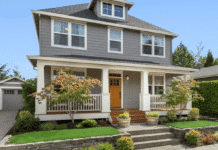



















The Surprising Edge When You Buy Home Santa Clara

Timothy Alston | Broker
Aegis Luxury Real Estate · DRE# 01328224
Published
June 22, 2026
Sports, tech, and community
A house sitting unsold in Santa Clara for 45 days or more is not automatically a red flag. In many cases, it is an overlooked negotiating opportunity. Sellers carrying extended mortgage payments and property taxes grow more flexible on price and terms over time. Buyers who know how to read that signal can often get into a solid clara house with room to negotiate that fresh listings simply do not offer.
You know how it goes when you open a home search app. You see the fresh listings at the top, that little green badge that says “New Today,” and your eyes go straight there. A little further down the feed sits a listing that has been there since last month. Maybe the month before. And almost without thinking, you keep scrolling.
Most buyers do exactly that. But have you ever stopped to think about what that automatic reaction might actually be costing you?
What Does Your Search Actually Look Like Right Now?
Are you filtering by newest listings first? Almost everyone is. That default setting feels logical. New means competitive, and competitive means desirable. But what if that instinct is pointing you away from the real opportunity in Santa Clara instead of toward it?
Think about where you are right now. Maybe affordability has been the wall you keep running into. Maybe you have been pre-approved, you know your budget, and you just cannot find a home that checks every box without blowing past your number. Does that sound familiar?
If so, there is a specific kind of listing worth a much closer look. It is the house that has been sitting while everyone else walks by.
Why Sitting Listings Can Help You Buy Home in Santa Clara
Data from Realtor.com shows a direct connection between time on market and price reductions. The longer a house sits without an offer, the more likely the seller is to reduce the asking price. Research from Redfin puts real scale on this: there is currently more than $347 billion worth of stale listings on the market nationally, more than at any comparable point in recent memory.
That is not a small number. That is a massive inventory of homes where sellers are waiting, and in many cases, getting more flexible by the week.
In the Santa Clara real estate market, MLS data shows that listings crossing the 45-day mark consistently see accelerating price reductions compared to newly listed properties. The average days on market for competitively priced listings in Santa Clara has been hovering near 10 days. Once a property crosses that 45-day line, the seller’s position has shifted considerably. That gap is where the real opportunity lives.
Can you see how a home that has been sitting could actually be working in your favor, not against you?
Sitting Does Not Mean Something Is Wrong
Here is where a lot of buyers talk themselves out of a genuine opportunity. They assume a house that is sitting must have a flaw. A foundation issue. A bad location. Something the listing photos are hiding.
Sometimes that is true. But according to Redfin, the most common reasons a home lingers on the market have nothing to do with the house itself. The asking price was set too high from the start. The listing photos did not photograph well. Or there was a surge of competing inventory, and the home simply got buried in the feed.
None of those are dealbreakers. None of them mean the house is worth skipping. What they do mean is that the seller has been carrying mortgage payments, property taxes, and uncertainty for weeks. That changes the negotiating dynamic in ways that matter deeply to a buyer who has been struggling to stay within budget.
A thorough inspection will surface any real concerns. And if something turns up, that information becomes a negotiating tool, not a reason to walk away from a home that might otherwise be a strong fit. Are you with me on that?
Two Levers That Let You Buy Home in Santa Clara at a Better Price
What would it mean for you if you could get into a solid home and still have room to negotiate on both price and terms?
According to reporting from USA Today, buyers working with stale listings have two main levers to pull.
The first is price. A broker can pull comparable sales data and help you build an offer grounded in what similar homes have actually sold for recently. Coming in below the asking price is completely reasonable when a property has been sitting for an extended stretch. Sellers who have already reset their expectations understand this dynamic.
The second lever is concessions. A seller who will not move much on price may still be willing to cover a portion of your closing costs, offer repair credits, or contribute toward a mortgage rate buydown that lowers your monthly payment from day one. That kind of flexibility can shift the true cost of buying a home more than a small price reduction ever could.
The opportunity here is that both levers are often available at the same time on the same listing. Does that change how you are thinking about your search?
Discovering the Opportunity Before Other Buyers Do
When you decide to buy home in Santa Clara by sorting listings from oldest to newest, you are looking at a completely different negotiating environment than buyers competing over fresh inventory. Stale listings in Santa Clara average price reductions of 3 to 7 percent below original asking price once they cross the 45-day threshold. That is meaningful savings on a market where the average single-family home carries a significant price tag.
Browse Santa Clara homes for sale sorted by days on market and you will see a layer of the market that most buyers never reach. Your broker can flip that filter and show you exactly what is sitting, and why.
Have you ever asked a broker to sort your search from oldest to newest? If not, it is worth finding out what that view reveals.
What Happens If Nothing Changes in Your Search?
Here is the harder question worth sitting with for a moment. If you keep filtering by newest listings first, keep getting outbid or priced out on fresh inventory, and keep scrolling past the houses that have been sitting, where does that leave you in another six months?
Likely in the same place. But with less buying power if mortgage rates shift, and with more months spent paying rent instead of building home equity on a property you own.
Santa Clara has enough inventory right now that buyers who know where to look genuinely have options. Houses in Santa Clara that have been listed for 45 or more days represent a segment where buyer leverage is measurably higher than the rest of the market. That is not a hypothetical. It is a pattern visible in the MLS data right now.
The strategy is straightforward. Ask your broker to sort listings from oldest to newest and start there. The clara house that fits your budget could already be waiting, just further down the list than most people ever scroll.
If that sounds like the kind of conversation worth having, Timothy Alston, Broker (DRE# 01328224) at Aegis Luxury Real Estate, is available to walk through the numbers with you. Not a pitch. Not a sales call. Just an honest look at which lingering listings in the area are worth a second look and which ones to skip. Reach out at (408) 207-4593 and let him know you want to start with the oldest listings first.
Schools in Santa Clara
Aegis School Excellence Index · 2024-25 performance data
Serving districts: Santa Clara Unified SD (K-12). School district boundaries can change; please verify current enrollment boundaries and program offerings directly with the school district.
Consider This
Have you explored how Saratoga’s neighborhoods vary from the foothills to the flatlands in price and character? Get our Saratoga neighborhood-by-neighborhood guide.
Want to talk through your Santa Clara options? 15-minute strategy call, no obligation.
Schedule a Call →In Santa Clara, proximity to Levi’s Stadium and the convention center can drive rental income for investment properties, especially during events and conferences.
Browse Santa Clara homes for sale
Free Download
Get the Complete Santa Clara Market Report
Monthly data, neighborhood breakdowns, price trends, and insider analysis delivered to your inbox.
Send Me the Report →Frequently Asked Questions
Still have questions about Santa Clara?
I’ve helped hundreds of families buy and sell in Santa Clara. Happy to share what I’m seeing in your specific neighborhood.
Free Home Valuation
What’s Your Santa Clara Home Worth?
Get an instant estimate powered by RealScout.
Get My Santa Clara Home Value →


Looking for homes in Santa Clara?
Get personalized listing alerts delivered to your inbox. Be the first to know about new homes that match your criteria in Santa Clara.
Get Santa Clara Listing Alerts →Community Resources
Santa Clara Essential Services


Official Sources
Ready to find your perfect home in Santa Clara?
Browse all available Santa Clara listings, explore neighborhood guides, and get personalized market insights.
Search Santa Clara Homes →Timothy Alston
Broker · DRE# 01328224
Aegis Luxury Real Estate
Harvard Business School Online, Certified Master Negotiation
23+ Years Silicon Valley Real Estate Experience
Retired Military Veteran
Copyright © 2026 MLSListings Inc. All rights reserved.
The data relating to real estate for sale on this display comes in part from the Internet Data Exchange program of the MLSListings™ MLS system. Real estate listings held by brokerage firms other than Aegis Luxury Real Estate are marked with the Internet Data Exchange icon and detailed information about them includes the names of the listing brokers and listing agents.
Based on information from the MLSListings MLS as of August 2, 2026. All data, including all measurements and calculations of area, is obtained from various sources and has not been, and will not be, verified by broker or MLS. All information should be independently reviewed and verified for accuracy. Properties may or may not be listed by the office/agent presenting the information.
These statistics are generated using information from the MLSListings Inc. multiple listing service, but have not been verified and are not guaranteed. MLSListings Inc. disclaims any responsibility for the accuracy and reliability of these statistics. This information should not be relied upon for real estate transaction decisions.
Data updated every 15 minutes. Visit www.MLSListings.com for more information.
Information provided is for general informational purposes only. Equal Housing Opportunity. If you are currently working with a real estate agent, this is not intended as a solicitation.
Aegis Luxury Real Estate · Timothy Alston, Broker, DRE# 01328224 · 10080 N. Wolfe Rd Ste SW3-200, Cupertino CA 95014 · (408) 207-4593
Last updated: August 02, 2026 | Data reflects August 2026 MLS statistics