


















The Hidden Best Use of Time and Money Before Selling in Los Altos

Timothy Alston | Broker
Aegis Luxury Real Estate · DRE# 01328224
Published
August 12, 2021
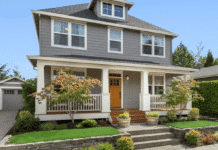
Timeless suburban elegance
The best use of your time and money before listing a home in Los Altos is not always a full renovation. In a low-inventory market, many buyers are willing to take on projects themselves, which means expensive upgrades can actually hurt your net proceeds. Knowing which improvements add value and which ones drain your budget is the single most important decision a seller makes before going to market.
You know how it goes. You start thinking about selling, and suddenly every room looks like a project. The kitchen feels dated. The bathrooms need work. The floors have seen better days. And somewhere in the back of your mind, a number is growing. A number that might not come back to you at closing.
Have you ever stopped to think about how much of that renovation budget actually makes it back into your pocket? Not the work itself, but the return. Because a lot of sellers in Los Altos put real money into upgrades and walk away having broken even, or worse.
That is the part worth slowing down on.
What Does Your Current Situation Actually Look Like?
Before you call a contractor, it helps to get honest about where you are. Are you renovating because the house genuinely needs it, or because you are anxious about what buyers might think? Those are two very different starting points, and they lead to very different decisions.
What would you change about your home if you were staying another ten years? Now, what would you change if you were moving out in ninety days? Notice how different those lists are. The best use of your renovation time and money is almost always on the second list, not the first.
After the 2008 correction, sellers in Los Altos real estate were in full-renovation mode. Competition was stiff, inventory was climbing, and buyers had options. Granite countertops and stainless appliances were table stakes. Sellers who skipped updates often sat on the market. That dynamic shaped a generation of seller behavior that still influences how people think about pre-listing renovations today, even though the market has shifted dramatically since then.
Not All Renovation Projects Are Created Equal, and Money Spent Unevenly Hurts You
This is where a lot of sellers go wrong. They assume that more improvement equals more value. But the National Association of Realtors has tracked renovation returns for years, and the data does not support that assumption across the board. Some projects return close to full value. Others return less than half.
Renofi.com put it plainly: centering your home design around a passing trend is one of the costliest mistakes a seller can make. A buyer who loves that trend today may not exist in your specific price range. And a buyer who does not love it will use it to negotiate you down.
Can you see how spending $40,000 on a kitchen remodel that returns $25,000 at closing is not a strategy? It is a loss disguised as improvement.
By 2017, open-concept renovations, barn doors, and shiplap walls had become near-universal in Los Altos homes priced above $2 million. Sellers were competing on aesthetics, and buyers rewarded the look with speed and price. What most sellers did not realize until later was that many of those design choices dated quickly. Homes renovated for the 2017 buyer sometimes needed refreshing by 2022. The lesson: timeless beats trendy every single time when your goal is resale value.
The Best Use of Time and Money Is Often Simpler Than You Think
Here is what the data actually supports. The upgrades that tend to deliver the best return before listing are the ones that remove doubt from a buyer’s mind. Fresh paint in neutral tones. Clean flooring. A bathroom that functions well and looks maintained. Curb appeal that signals care.
None of those are glamorous. But they do something a full kitchen remodel often does not: they get out of the buyer’s way and let them imagine themselves in the space.
What would it mean for your bottom line if you spent $8,000 on targeted updates instead of $60,000 on a full renovation, and walked away with a stronger net? That is a question worth sitting with.
Homes in Los Altos have consistently attracted well-qualified buyers who have renovation budgets of their own. The National Association of Realtors reported that available home inventory, while gradually rising, has remained well below the six-month supply that defines a balanced market. In a supply-constrained environment, buyers are often willing to take on projects, which changes the renovation calculus for sellers entirely.
HomeAdvisor’s State of Home Spending Report found that 35% of households completed interior painting projects during the pandemic period, 31% completed bathroom remodels, and 26% installed new flooring. In Los Altos, that wave of home improvement activity created a unique seller advantage: many homes came to market already updated, raising buyer expectations across the board. Sellers who had not renovated suddenly found themselves competing against neighbors who had spent the previous eighteen months improving their properties.
If You Already Made Upgrades, That Is Worth Something
Have you done work on your home in the last two or three years? New flooring, a refreshed bathroom, updated fixtures, a repainted interior? That work is not invisible. A skilled broker knows how to surface those improvements in a listing so buyers actually register the value.
The mistake sellers make is assuming buyers will notice on their own. They often do not. They walk through quickly, take photos, and move on. Your broker’s job is to make sure the story of what you invested is told clearly, so it is priced into the offer rather than overlooked.
Does that make sense? Because there is a real difference between a home that has $30,000 in recent updates and a listing that communicates $30,000 in recent updates. One of those gets credit at the negotiating table. The other does not.
What Happens If You Guess Wrong?
What if you spend the next three months and a significant amount of money renovating based on what you think buyers want, and it turns out those buyers were not your buyers? What if the trend you chased was already peaking? What if a lighter-touch approach would have netted you more, faster?
That is not a hypothetical. It happens in competitive markets when sellers act on instinct instead of data. The best approach is a direct conversation with someone who knows the current buyer pool in the Los Altos homes for sale market and can tell you, specifically, what is moving and what is sitting.
If you are thinking about selling and want a straightforward look at what your home actually needs before listing, and what it does not, that conversation is worth having. Not a pitch. Just a clear-eyed look at your specific situation and the best use of your preparation time and money before you go to market.
Reach out to Timothy Alston, Broker, at (408) 207-4593. The goal is simple: make sure every dollar you spend before listing comes back to you, and then some.
Schools in Los Altos
Aegis School Excellence Index · 2024-25 performance data
Serving districts: Los Altos SD (K-8), Mountain View-Los Altos Union High SD (9-12). School district boundaries can change; please verify current enrollment boundaries and program offerings directly with the school district.
Consider This
Have you explored how Saratoga’s neighborhoods vary from the foothills to the flatlands in price and character? Get our Saratoga neighborhood-by-neighborhood guide.
Want to talk through your Los Altos options? 15-minute strategy call, no obligation.
Schedule a Call →If your Los Altos home has an original ranch-style layout, consider an open floor plan renovation. Modern buyers in this market value open living spaces.
Browse Los Altos homes for sale
Free Download
Get the Complete Los Altos Market Report
Monthly data, neighborhood breakdowns, price trends, and insider analysis delivered to your inbox.
Send Me the Report →Frequently Asked Questions
Still have questions about Los Altos?
I’ve helped hundreds of families buy and sell in Los Altos. Happy to share what I’m seeing in your specific neighborhood.
Free Home Valuation
What’s Your Los Altos Home Worth?
Get an instant estimate powered by RealScout.
Get My Los Altos Home Value →Explore Nearby Cities



Looking for homes in Los Altos?
Get personalized listing alerts delivered to your inbox. Be the first to know about new homes that match your criteria in Los Altos.
Get Los Altos Listing Alerts →Community Resources
Los Altos Essential Services


Official Sources
Ready to find your perfect home in Los Altos?
Browse all available Los Altos listings, explore neighborhood guides, and get personalized market insights.
Search Los Altos Homes →Timothy Alston
Broker · DRE# 01328224
Aegis Luxury Real Estate
Harvard Business School Online, Certified Master Negotiation
23+ Years Silicon Valley Real Estate Experience
Retired Military Veteran
Copyright © 2026 MLSListings Inc. All rights reserved.
The data relating to real estate for sale on this display comes in part from the Internet Data Exchange program of the MLSListings™ MLS system. Real estate listings held by brokerage firms other than Aegis Luxury Real Estate are marked with the Internet Data Exchange icon and detailed information about them includes the names of the listing brokers and listing agents.
Based on information from the MLSListings MLS as of June 12, 2026. All data, including all measurements and calculations of area, is obtained from various sources and has not been, and will not be, verified by broker or MLS. All information should be independently reviewed and verified for accuracy. Properties may or may not be listed by the office/agent presenting the information.
These statistics are generated using information from the MLSListings Inc. multiple listing service, but have not been verified and are not guaranteed. MLSListings Inc. disclaims any responsibility for the accuracy and reliability of these statistics. This information should not be relied upon for real estate transaction decisions.
Data updated every 15 minutes. Visit www.MLSListings.com for more information.
Information provided is for general informational purposes only. Equal Housing Opportunity. If you are currently working with a real estate agent, this is not intended as a solicitation.
Aegis Luxury Real Estate · Timothy Alston, Broker, DRE# 01328224 · 10080 N. Wolfe Rd Ste SW3-200, Cupertino CA 95014 · (408) 207-4593
Last updated: July 10, 2026 | Data reflects July 2026 MLS statistics