















The Overlooked Reason Los Altos Hills Houses Feel Costly

Timothy Alston | Broker
Aegis Luxury Real Estate · DRE# 01328224
Published
October 23, 2025
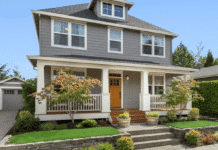
Timeless suburban elegance
The real reason homes in Los Altos feel out of reach right now is not corporate investors. Large institutional investors account for only about 2.8% of all home purchases nationally. The actual driver is a structural supply shortage: there are simply not enough houses available to meet the number of households looking to buy, and that gap has been widening quietly for over a decade.
You know how you scroll through listings and everything seems priced beyond what makes sense? And then someone tells you that big corporations are sweeping up all the inventory before regular families even get a chance? A lot of buyers looking at Los Altos real estate have landed in exactly that conversation. But here is the part most people have not stopped to think about yet.
What if the story you have been told is actually keeping you from understanding what is really going on? Because if you are solving the wrong problem, you will keep waiting for the wrong fix. And that waiting has a cost most people never calculate.
What Does Your Housing Situation Actually Look Like Right Now?
Take a moment and think honestly about where you are today. Are you renting and watching your monthly payment climb year after year? Are you sitting on the sidelines, waiting for prices to drop because you believe something external is artificially inflating them?
How long have you been in that holding pattern, and what has it actually cost you? Those are not rhetorical questions. The answers matter. Because the reason homes feel out of reach to so many buyers right now has almost nothing to do with what most people assume.
After the 2008 financial collapse, homebuilders across the country pulled back sharply. Permits dried up. Construction slowed to a fraction of historical norms. In high-demand markets like Los Altos, that pullback created a housing deficit that compounded quietly for years. The seeds of today’s affordability pressure were planted in those years of underbuilding, not in any coordinated wave of investor activity. Buyers who understand this history ask very different questions than buyers who do not.
The Investor Myth That Is Costing Buyers Clarity
Have you ever stopped to think about where the investor narrative actually comes from? Social media moves fast, and a compelling villain story spreads faster than data. But here is what the data actually shows.
Realtor.com tracked home purchases nationally and found that large investors accounted for only 2.8% of all transactions in a recent reporting period. That means roughly 97% of homes were bought and sold by regular people: families, individuals, and small investors, not corporate giants sweeping up neighborhoods block by block.
Danielle Hale, Chief Economist at Realtor.com, has noted that while investors hold notable shares in certain specific neighborhoods, the nationwide share of investor-owned housing is not a primary driver of overall market pricing. Does that match what you have been hearing? Can you see how a narrow local story became a national talking point?
As the economy rebuilt through the 2010s, buyer demand steadily recovered. But construction never fully caught up. In Los Altos and across broader Santa Clara County, lot availability, zoning constraints, and rising construction costs kept new inventory suppressed for nearly a decade. Buyer demand quietly outpaced supply long before listing prices began to visibly accelerate. By the time most buyers noticed homes climbing out of reach, the structural gap had already been widening for years, and properties zoned for single-family use had appreciated significantly.
The Surprising Reason Los Altos Hills Houses Feel So Expensive
Robert Dietz, Chief Economist at the National Association of Home Builders, has stated plainly that blaming investors is popular, but the economics do not hold up under scrutiny. The fundamental driver of housing costs is the shortage itself: a mismatch between the number of households and the actual size of the housing stock.
That is the real answer. Not a conspiracy. Not a coordinated buyout. Just a math problem that has been building for over a decade. And when you understand that, your next question changes entirely.
If you have been waiting for investors to be regulated out of the market before making a move, what happens if that regulation never comes? What happens if the actual problem, the shortage, starts to ease instead? And more importantly, what does three more years of waiting cost you in a market where property values have historically rewarded buyers who are already building home equity?
Buyers who entered the market in 2019 and 2020 have seen substantial equity accumulation, even through periods of rate volatility. The structural shortage that pushed prices higher before the pandemic has not been resolved. Inventory remains constrained, and houses in Los Altos that are priced appropriately continue to attract serious buyer interest, often generating multiple offers. The average listing price in Los Altos currently sits near $1.67 million, with homes typically under contract within 10 days of hitting the MLS. That is not a market waiting around for buyers who are still debating the wrong problem.
What Might Change If You Understood the Real Problem?
If the reason homes feel expensive is supply, not investor manipulation, then the question shifts entirely. Instead of asking when the investors will be stopped, you might start asking: is inventory in my target area starting to improve? Am I pre-approved to move quickly when the right property appears? That is a completely different conversation, and it is the conversation that actually leads somewhere.
More new listings are gradually coming to market in many areas of Santa Clara County. If supply is the problem, more supply is the solution, and that solution is slowly beginning to materialize. The reason homes feel more accessible in certain pockets of this market right now is not because prices have collapsed. It is because the range of available options is beginning to widen. Are you positioned to take advantage of that shift, or are you still waiting for a different problem to get solved?
Browse Los Altos homes for sale to get a clearer picture of what current inventory and pricing actually look like right now.
What Happens If Nothing Changes for You?
Here is the consequence question most people avoid. If you keep doing exactly what you are doing right now, renting, waiting, watching, where does that leave you in five years? Your rent is not building home equity. Your landlord’s mortgage is getting paid down. The gap between what homeowners accumulate and what renters accumulate does not stay flat. It compounds.
The National Association of Realtors has tracked the net worth gap between average homeowners and renters for years, and the difference is not marginal. It is generational. What would it mean for your family if you had been on the right side of that gap for the last decade?
You do not have to have all the answers today. But you do have to ask the right questions. And the right question is not when will investors stop. The right question is: given what you now know about the actual reason homes feel costly in Los Altos, what is the smartest next move for your specific situation? Supply constraints create lasting value in markets where buyer demand does not disappear. Los Altos is exactly that kind of market.
Do you feel like this could be the conversation you have been needing to have? If so, the next step is straightforward. Timothy Alston, Broker (DRE# 01328224) at Aegis Luxury Real Estate, can walk through what the numbers look like for your specific situation. Not a pitch. Not a pressure call. Just a clear look at where you are and where you want to be. Would that be a useful next step? Reach out at (408) 207-4593.
Schools in Los Altos
Aegis School Excellence Index · 2024-25 performance data
Serving districts: Los Altos SD (K-8), Mountain View-Los Altos Union High SD (9-12). School district boundaries can change; please verify current enrollment boundaries and program offerings directly with the school district.
Consider This
What if you could trade your current home for a Los Gatos property without a gap in housing? Ask about our bridge strategy for Los Gatos buyers and sellers.
Want to talk through your Los Altos options? 15-minute strategy call, no obligation.
Schedule a Call →Los Altos homes near the downtown village consistently command a premium. If walkability is a selling point, feature it prominently in your marketing.
Browse Los Altos homes for sale
Free Download
Get the Complete Los Altos Market Report
Monthly data, neighborhood breakdowns, price trends, and insider analysis delivered to your inbox.
Send Me the Report →Frequently Asked Questions
Still have questions about Los Altos?
I’ve helped hundreds of families buy and sell in Los Altos. Happy to share what I’m seeing in your specific neighborhood.
Free Home Valuation
What’s Your Los Altos Home Worth?
Get an instant estimate powered by RealScout.
Get My Los Altos Home Value →Explore Nearby Cities



Looking for homes in Los Altos?
Get personalized listing alerts delivered to your inbox. Be the first to know about new homes that match your criteria in Los Altos.
Get Los Altos Listing Alerts →Community Resources
Los Altos Essential Services


Official Sources
Ready to find your perfect home in Los Altos?
Browse all available Los Altos listings, explore neighborhood guides, and get personalized market insights.
Search Los Altos Homes →Timothy Alston
Broker · DRE# 01328224
Aegis Luxury Real Estate
Harvard Business School Online, Certified Master Negotiation
23+ Years Silicon Valley Real Estate Experience
Retired Military Veteran
Copyright © 2026 MLSListings Inc. All rights reserved.
The data relating to real estate for sale on this display comes in part from the Internet Data Exchange program of the MLSListings™ MLS system. Real estate listings held by brokerage firms other than Aegis Luxury Real Estate are marked with the Internet Data Exchange icon and detailed information about them includes the names of the listing brokers and listing agents.
Based on information from the MLSListings MLS as of June 12, 2026. All data, including all measurements and calculations of area, is obtained from various sources and has not been, and will not be, verified by broker or MLS. All information should be independently reviewed and verified for accuracy. Properties may or may not be listed by the office/agent presenting the information.
These statistics are generated using information from the MLSListings Inc. multiple listing service, but have not been verified and are not guaranteed. MLSListings Inc. disclaims any responsibility for the accuracy and reliability of these statistics. This information should not be relied upon for real estate transaction decisions.
Data updated every 15 minutes. Visit www.MLSListings.com for more information.
Information provided is for general informational purposes only. Equal Housing Opportunity. If you are currently working with a real estate agent, this is not intended as a solicitation.
Aegis Luxury Real Estate · Timothy Alston, Broker, DRE# 01328224 · 10080 N. Wolfe Rd Ste SW3-200, Cupertino CA 95014 · (408) 207-4593
Last updated: August 02, 2026 | Data reflects August 2026 MLS statistics