





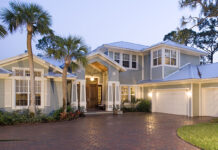









The Hidden Surging Real Estate Truth San Jose Sellers Miss

Timothy Alston | Broker
Aegis Luxury Real Estate · DRE# 01328224
Published
September 16, 2020
Capital of Silicon Valley
The surging real estate market in San Jose is not slowing down. Buyer demand is outpacing supply, home prices are climbing, and the pace of sales continues to accelerate. If you have been watching from the sidelines and wondering whether the window has already closed, the short answer is: the data says otherwise. Here is what that actually means for your situation.
You know how it feels to watch the market move and wonder if you missed your moment? And then you wait a little longer, hoping for a sign, while prices keep shifting around you? A lot of homeowners and buyers in San Jose are sitting exactly where you are right now. But here is the part most people have not stopped to think about yet: what if waiting is not the neutral choice it seems like?
What Does Your Housing Situation Actually Look Like Right Now?
Are you renting and wondering when the numbers will finally make sense for buying? Or are you a homeowner sitting on equity you have never fully thought through? Either way, something brought you here. And that something is worth paying attention to.
Have you ever stopped to think about what your current situation is actually costing you, not just in dollars, but in options? Every month that passes in a rental is a month your landlord builds equity on your payments. Every month you delay listing a home in a surging real estate market is a month you are not capturing the demand that is sitting there right now.
What would it mean for your family if you could look back two years from now and know you made your move at exactly the right time, instead of wondering why you waited?
Why the Surging Real Estate Momentum in San Jose Is Not Just Noise
Realtor.com developed a Housing Recovery Index to track four key signals in the real estate market: online search activity, asking price growth, new listing volume, and how quickly homes are moving off the market. Each of those four signals points in the same direction right now.
The index compares current conditions against a pre-pandemic baseline set at 100. When this data was first compiled, the estate market dropped sharply in early 2020 as the economy paused. What happened next surprised nearly everyone. The recovery did not just return to baseline. It climbed past it. The surging real activity in the market pushed the index to its highest point of the entire tracking period, above even the numbers from before the disruption began.
Does that shift how you think about the current moment? Can you see how a market that has already absorbed that kind of shock and come out stronger might actually be telling you something important?
Zillow’s weekly contract data confirms what the index is showing. Buyer demand is dramatically outpacing the same period from the prior year, and that gap is not shrinking. It is widening. Homes in San Jose are receiving multiple offers faster than inventory can keep up, creating consistent upward pressure on prices. The surging real estate conditions are not a blip. They reflect a structural imbalance between how many people want to buy and how many homes are actually available.
The Hidden Cost of Watching a Surging Real Estate Market From the Sidelines
Here is a question worth sitting with. What happens if nothing changes for you over the next three to five years? If you keep renting, or keep holding off on listing, where does that actually leave you?
CoreLogic President and CEO Frank Martell put it plainly: the housing economy remains solid despite the disruption the pandemic created. That is not spin. That is what the data shows across inventory levels, price movement, and buyer activity in markets like San Jose homes for sale.
Closing costs, down payment timing, and loan terms are all moving targets in a fast estate market. Waiting for perfect conditions often means waiting for conditions that never arrive. Have you thought about what pre-approval could open up for you right now, even before you feel fully ready?
What Buyers and Sellers in San Jose Are Quietly Figuring Out
San Jose real estate has seen consistent demand from buyers competing for limited inventory, with well-priced homes routinely going under contract within days of listing. That dynamic does not favor hesitation on either side of the transaction.
If you are a seller, the question is not whether demand exists. It exists. The question is whether you are positioned to capture it before market conditions shift.
If you are a buyer, the question is not whether home prices are high. They are. The question is whether you have run the numbers on what continued renting costs you in equity over the next decade, and whether that comparison changes anything for you.
The surging real estate environment in San Jose rewards preparation. Property values in this market have shown resilience that few analysts predicted. Buyers who secured pre-approval early found themselves in a position to move quickly when the right home came up. Sellers who priced strategically saw strong offers arrive fast. Are you in a position to do either of those things right now?
If the Numbers Work, What Would Your Next Step Be?
Based on what buyers and sellers across Santa Clara County are experiencing, the surging real estate market is not waiting for stragglers. But the right move looks different for every situation. Yours included.
Do you think this could be the moment you have been circling around? If it is, the next step is not a sales call. It is a straightforward conversation to look at where you are, what the numbers actually show for your specific situation, and whether there is a path worth exploring. No pressure. No pitch. Just clarity.
Reach out to Timothy Alston, licensed Broker with Aegis Luxury Real Estate, at (408) 207-4593. How would you like to proceed?
Schools in San Jose
Aegis School Excellence Index · 2024-25 performance data
Serving districts: San Jose Unified SD, Alum Rock Union Elementary SD, Berryessa Union SD, Cambrian SD, Campbell Union SD (partial), East Side Union High SD, Evergreen Elementary SD, Franklin-McKinley SD, Luther Burbank SD, Moreland SD, Mount Pleasant SD, Oak Grove SD, Orchard SD, Union SD. School district boundaries can change; please verify current enrollment boundaries and program offerings directly with the school district.
Consider This
Have you explored how Saratoga’s neighborhoods vary from the foothills to the flatlands in price and character? Get our Saratoga neighborhood-by-neighborhood guide.
Want to talk through your San Jose options? 15-minute strategy call, no obligation.
Schedule a Call →San Jose buyers should compare the Almaden Valley, Cambrian, and Evergreen neighborhoods. Each offers distinct pricing, lot sizes, and community character.
Browse San Jose homes for sale
Free Download
Get the Complete San Jose Market Report
Monthly data, neighborhood breakdowns, price trends, and insider analysis delivered to your inbox.
Send Me the Report →Frequently Asked Questions
Still have questions about San Jose?
I’ve helped hundreds of families buy and sell in San Jose. Happy to share what I’m seeing in your specific neighborhood.
Free Home Valuation
What’s Your San Jose Home Worth?
Get an instant estimate powered by RealScout.
Get My San Jose Home Value →
Looking for homes in San Jose?
Get personalized listing alerts delivered to your inbox. Be the first to know about new homes that match your criteria in San Jose.
Get San Jose Listing Alerts →Community Resources
San Jose Essential Services


Official Sources
Ready to find your perfect home in San Jose?
Browse all available San Jose listings, explore neighborhood guides, and get personalized market insights.
Search San Jose Homes →Timothy Alston
Broker · DRE# 01328224
Aegis Luxury Real Estate
Harvard Business School Online, Certified Master Negotiation
23+ Years Silicon Valley Real Estate Experience
Retired Military Veteran
Copyright © 2026 MLSListings Inc. All rights reserved.
The data relating to real estate for sale on this display comes in part from the Internet Data Exchange program of the MLSListings™ MLS system. Real estate listings held by brokerage firms other than Aegis Luxury Real Estate are marked with the Internet Data Exchange icon and detailed information about them includes the names of the listing brokers and listing agents.
Based on information from the MLSListings MLS as of June 11, 2026. All data, including all measurements and calculations of area, is obtained from various sources and has not been, and will not be, verified by broker or MLS. All information should be independently reviewed and verified for accuracy. Properties may or may not be listed by the office/agent presenting the information.
These statistics are generated using information from the MLSListings Inc. multiple listing service, but have not been verified and are not guaranteed. MLSListings Inc. disclaims any responsibility for the accuracy and reliability of these statistics. This information should not be relied upon for real estate transaction decisions.
Data updated every 15 minutes. Visit www.MLSListings.com for more information.
Information provided is for general informational purposes only. Equal Housing Opportunity. If you are currently working with a real estate agent, this is not intended as a solicitation.
Aegis Luxury Real Estate · Timothy Alston, Broker, DRE# 01328224 · 10080 N. Wolfe Rd Ste SW3-200, Cupertino CA 95014 · (408) 207-4593
Last updated: July 03, 2026 | Data reflects July 2026 MLS statistics