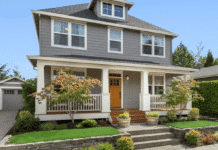



















2 Hidden Questions Smart Sunnyvale Buyers Overlook

Timothy Alston | Broker
Aegis Luxury Real Estate · DRE# 01328224
Published
October 06, 2022
Family-friendly tech hub
When deciding whether to buy a home in Sunnyvale, two questions cut through all the noise: where are home prices heading, and where are mortgage rates heading? Most buyers skip both. Experts project continued home price appreciation and rates that, while volatile, have likely seen their sharpest moves already. Knowing both answers changes how you see the decision in front of you.
You know how it feels to watch the market shift and wonder if you missed your window? Or to keep waiting for the “right time,” only to realize the right time looks different every month? A lot of buyers in Sunnyvale are sitting with exactly that tension right now.
But here is the part most people have not stopped to think about yet: the question is not whether conditions are perfect. The question is whether the two questions you should be asking yourself are the right ones to begin with.
The Two Questions Worth Asking Themselves Right Now
Before anything else, what does your housing situation actually look like right now? Are you renting? Are you watching your monthly payment climb while your lease renews at a higher number? Or are you sitting on the sidelines, waiting for something to change?
Whatever your answer is, it shapes everything. And it points directly to two questions that every serious buyer should ask themselves right now before making any move.
Question One: Where Do You Think Home Prices Are Heading?
Have you ever stopped to think about what it means if prices are still rising while you wait? A panel of over one hundred economists, real estate experts, and market strategists surveyed by Pulsenomics projected continued home price appreciation over the next several years. Not a spike. Steady, continued growth.
Now ask yourself this: if prices in the Sunnyvale market are higher twelve months from now than they are today, what does that mean for the purchase you are considering right now? Does that change the math for you?
Some forecasters did call for a period of price softening, and that is worth acknowledging. But the consensus among experts leaned toward appreciation, not depreciation. For someone trying to time the market, that is a meaningful data point. Can you see how waiting on a rising market works against you in a way that waiting on a falling market does not?
Homes in Sunnyvale have historically held strong equity value through multiple market cycles. That is not a guarantee of future performance, but it is a pattern worth thinking through when you are weighing your options.
Question Two: Where Do You Think Mortgage Rates Are Heading?
This is the second question buyers rarely ask themselves directly, even though it shapes their monthly payment more than almost anything else.
George Ratiu, Senior Economist at Realtor.com, noted that rates above seven percent, which once seemed unlikely, became a realistic near-term possibility given the pace of increases at the time. Mark Fleming, Chief Economist at First American, offered a slightly different read: much of the rapid rate increase, he suggested, was likely already behind us, even as rates were expected to drift higher in the short term.
So where does that leave you? If rates are closer to a plateau than to the beginning of a climb, what does that mean for your timeline? And if rates do continue rising, even slowly, what happens to your buying power six months from now compared to today?
Here is a question worth sitting with: if you could lock in a monthly payment today instead of absorbing another rate increase later, what would that difference mean for your budget over the next five years?
What About Just Staying in Your Rental?
That is a completely reasonable choice, and it deserves an honest look. But ask yourself this: what has your rent done over the last two years? Has it stayed flat? Most renters in competitive markets like Sunnyvale homes for sale are not seeing flat renewals. They are seeing increases, sometimes significant ones, with no equity accumulating on the other side of that payment.
What would it mean for you if, ten years from now, you had built a substantial amount of equity simply from the place you were already living in? That is not a hypothetical. That is the actual gap that research from the National Association of Realtors has documented between average homeowner and renter net worth.
Does that mean buying always wins? No. But it does mean the comparison is not as simple as “rent is cheaper right now.” The full picture includes what you are building, or not building, over time.
What Happens If Nothing Changes?
Here is the consequence question most people avoid: if you keep doing exactly what you are doing right now for the next three to five years, where does that leave you? Is your rent lower? Is your net worth higher? Are you closer to the life you are trying to build?
That is not a pressure question. It is an honest one. And the answer is yours to work through, not anyone else’s to hand you.
Real estate in Sunnyvale does not wait for certainty. Neither does your financial situation. The question is whether the two questions above, asked honestly, point you toward a different answer than the one inaction is giving you right now.
If you would like a straightforward conversation about where your numbers actually stand, not a pitch, just an honest look at your situation, Timothy Alston, Broker (DRE# 01328224), is available at (408) 207-4593. Would that kind of conversation be useful to you right now?
Schools in Sunnyvale
Aegis School Excellence Index · 2024-25 performance data
Serving districts: Sunnyvale SD (K-8), Fremont Union High SD (9-12). School district boundaries can change; please verify current enrollment boundaries and program offerings directly with the school district.
Consider This
If you could own a newer-construction home in Milpitas at a fraction of Cupertino prices, would you look? Compare Milpitas new construction options and see the value difference.
Want to talk through your Sunnyvale options? 15-minute strategy call, no obligation.
Schedule a Call →In Sunnyvale, single-story homes are rare and attract a premium from both aging-in-place buyers and families with young children. Price accordingly if you are selling one.
Browse Sunnyvale homes for sale
Free Download
Get the Complete Sunnyvale Market Report
Monthly data, neighborhood breakdowns, price trends, and insider analysis delivered to your inbox.
Send Me the Report →Frequently Asked Questions
Still have questions about Sunnyvale?
I’ve helped hundreds of families buy and sell in Sunnyvale. Happy to share what I’m seeing in your specific neighborhood.
Free Home Valuation
What’s Your Sunnyvale Home Worth?
Get an instant estimate powered by RealScout.
Get My Sunnyvale Home Value →


Looking for homes in Sunnyvale?
Get personalized listing alerts delivered to your inbox. Be the first to know about new homes that match your criteria in Sunnyvale.
Get Sunnyvale Listing Alerts →Community Resources
Sunnyvale Essential Services


Official Sources
Ready to find your perfect home in Sunnyvale?
Browse all available Sunnyvale listings, explore neighborhood guides, and get personalized market insights.
Search Sunnyvale Homes →Timothy Alston
Broker · DRE# 01328224
Aegis Luxury Real Estate
Harvard Business School Online, Certified Master Negotiation
23+ Years Silicon Valley Real Estate Experience
Retired Military Veteran
Copyright © 2026 MLSListings Inc. All rights reserved.
The data relating to real estate for sale on this display comes in part from the Internet Data Exchange program of the MLSListings™ MLS system. Real estate listings held by brokerage firms other than Aegis Luxury Real Estate are marked with the Internet Data Exchange icon and detailed information about them includes the names of the listing brokers and listing agents.
Based on information from the MLSListings MLS as of June 12, 2026. All data, including all measurements and calculations of area, is obtained from various sources and has not been, and will not be, verified by broker or MLS. All information should be independently reviewed and verified for accuracy. Properties may or may not be listed by the office/agent presenting the information.
These statistics are generated using information from the MLSListings Inc. multiple listing service, but have not been verified and are not guaranteed. MLSListings Inc. disclaims any responsibility for the accuracy and reliability of these statistics. This information should not be relied upon for real estate transaction decisions.
Data updated every 15 minutes. Visit www.MLSListings.com for more information.
Information provided is for general informational purposes only. Equal Housing Opportunity. If you are currently working with a real estate agent, this is not intended as a solicitation.
Aegis Luxury Real Estate · Timothy Alston, Broker, DRE# 01328224 · 10080 N. Wolfe Rd Ste SW3-200, Cupertino CA 95014 · (408) 207-4593
Last updated: July 12, 2026 | Data reflects July 2026 MLS statistics