















The Hidden Truth About Foreclosures Coming to Sunnyvale

Timothy Alston | Broker
Aegis Luxury Real Estate · DRE# 01328224
Published
November 30, 2022
Family-friendly tech hub
A flood of foreclosures coming to the housing market won’t happen the way many headlines suggest. Lending standards are far stricter today than they were before 2008, average homeowner equity is near record highs, and mortgage delinquency rates recently hit their lowest level since 1979. The data points in one clear direction: this housing market is built on a much stronger foundation than the last one.
You know how it goes. You see a headline about rising foreclosures and your stomach drops a little. Maybe you start wondering if this is all about to fall apart again, the way it did back in 2008. Maybe you are holding off on a decision, waiting to see what happens. A lot of people in Sunnyvale are sitting in exactly that spot right now.
But here is the part most people have not stopped to think about yet: are you sure the story those headlines are telling is the full story? Because context changes everything.
Why Foreclosures Coming Today Won’t Look Like 2008
What does your mental picture of a foreclosure crisis actually look like? For most people, it looks like 2008. Neighbors walking away from homes. “Bank Owned” signs on every other block. Property values collapsing overnight.
Here is a question worth sitting with: what was actually different about that era?
After the last housing crash, over nine million households lost their homes through foreclosure, short sale, or deed-in-lieu. The reason was not bad luck. It was bad lending. People were handed mortgages they could never realistically afford, and when rates adjusted or life happened, there was no safety net. The wave of distressed properties that followed crushed home values across the country.
Does that sound like the housing market you have been watching over the last few years? Probably not. And there is a specific reason why.
Lending standards today are dramatically tighter. The buyers who have gotten into homes over the past several years had to actually qualify. Marina Walsh, Vice President of Industry Analysis at the Mortgage Bankers Association, noted that the mortgage delinquency rate recently fell to its lowest level since the MBA began tracking the data in 1979, dropping to 3.45%. Foreclosure starts and loans in the process of foreclosure also dropped, falling further below their historical averages.
Can you see how that changes the picture a little?
The Forbearance Story Most People Missed
Have you ever stopped to think about what actually happened during the pandemic forbearance program? At the time, a lot of people assumed it was just delaying the inevitable. The theory was that once payments resumed, a massive wave of foreclosures coming to the housing market would follow.
That wave never came.
Data from the New York Federal Reserve shows that foreclosure activity today is still running below pre-pandemic levels. Not below last year, when foreclosures were essentially paused. Below the more normal years of 2017 through 2019. And far below the numbers seen during the actual crash.
So when you read a headline saying foreclosures are up compared to last year, what that headline is not telling you is the baseline. Comparing today’s numbers to a period when foreclosures were artificially suspended is like comparing your grocery bill during a freezer-cleanout week to a normal month. The comparison does not mean what it seems to mean.
Are you with me on that?
What Equity Does That Most People Don’t Realize
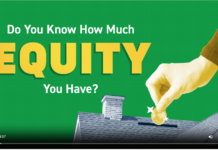
Here is something that rarely makes the headlines. The average homeowner today is sitting on record levels of home equity. Two years of rapidly rising property values built a financial cushion that fundamentally changes the math on foreclosure risk.
Think about it this way. If you are behind on your mortgage but you have $200,000 in equity, what are your options? You can sell. You can refinance. You can work out a plan with your lender. Foreclosure is a last resort, not a first step, and most homeowners today have enough room to avoid it entirely.
Ksenia Potapov, Economist at First American, put it clearly: homeowners have very high levels of tappable equity, providing a cushion that prevents housing distress from turning into foreclosure. Her conclusion was that the result would likely be a foreclosure “trickle,” not a tsunami.
ATTOM Data put actual numbers to that. In a recent reporting period, only about 214,800 homeowners across the entire country were facing possible foreclosure. That is four-tenths of one percent of all outstanding mortgages. And of those, about 91 percent had at least some equity built into their homes.
What does that tell you about how different this moment is from 2008?
What This Means If You Are Watching the Sunnyvale Market
If you have been holding off on a decision about Sunnyvale homes for sale because you were waiting to see if prices drop in a wave of distressed inventory, it is worth asking yourself: what would actually need to happen for that scenario to play out?
You would need a sudden surge in delinquencies from borrowers who are currently at historically low default rates. You would need those borrowers to have no equity to fall back on, despite average homeowner equity being near record highs. And you would need lenders to skip straight to foreclosure rather than work out modifications, which regulators have made far more common since 2008.
None of those dominoes are lined up in Sunnyvale real estate the way they were in the mid-2000s.
What happens if you keep waiting for a crash that the underlying data says won’t come? If the next three to five years look more like a gradual normalization than a collapse, what does that cost you in terms of equity you could have been building, or a monthly payment that could have been locked in?
That is not a rhetorical question. It is a real one worth running the numbers on.
The Sunnyvale market specifically has tight inventory, strong buyer demand, and a homeowner base with deep equity. The foreclosures coming to this area are a trickle, not a tide, and the data supports that clearly.
If you want to take a straightforward look at where the numbers actually stand for your specific situation, that conversation is available. No pressure, no pitch. Just a clear look at the data and what it means for you. Reach out to Timothy Alston, Broker, at (408) 207-4593. Would that be a useful next step for you?
Schools in Sunnyvale
Aegis School Excellence Index · 2024-25 performance data
Serving districts: Sunnyvale SD (K-8), Fremont Union High SD (9-12). School district boundaries can change; please verify current enrollment boundaries and program offerings directly with the school district.
Consider This
Have you explored how Saratoga’s neighborhoods vary from the foothills to the flatlands in price and character? Get our Saratoga neighborhood-by-neighborhood guide.
Want to talk through your Sunnyvale options? 15-minute strategy call, no obligation.
Schedule a Call →Sunnyvale sellers should time their listing to avoid competing with new construction inventory. When major developments release units, resale homes can see reduced attention.
Browse Sunnyvale homes for sale
Free Download
Get the Complete Sunnyvale Market Report
Monthly data, neighborhood breakdowns, price trends, and insider analysis delivered to your inbox.
Send Me the Report →Frequently Asked Questions
Still have questions about Sunnyvale?
I’ve helped hundreds of families buy and sell in Sunnyvale. Happy to share what I’m seeing in your specific neighborhood.
Free Home Valuation
What’s Your Sunnyvale Home Worth?
Get an instant estimate powered by RealScout.
Get My Sunnyvale Home Value →


Looking for homes in Sunnyvale?
Get personalized listing alerts delivered to your inbox. Be the first to know about new homes that match your criteria in Sunnyvale.
Get Sunnyvale Listing Alerts →Community Resources
Sunnyvale Essential Services


Official Sources
Ready to find your perfect home in Sunnyvale?
Browse all available Sunnyvale listings, explore neighborhood guides, and get personalized market insights.
Search Sunnyvale Homes →Timothy Alston
Broker · DRE# 01328224
Aegis Luxury Real Estate
Harvard Business School Online, Certified Master Negotiation
23+ Years Silicon Valley Real Estate Experience
Retired Military Veteran
Copyright © 2026 MLSListings Inc. All rights reserved.
The data relating to real estate for sale on this display comes in part from the Internet Data Exchange program of the MLSListings™ MLS system. Real estate listings held by brokerage firms other than Aegis Luxury Real Estate are marked with the Internet Data Exchange icon and detailed information about them includes the names of the listing brokers and listing agents.
Based on information from the MLSListings MLS as of June 11, 2026. All data, including all measurements and calculations of area, is obtained from various sources and has not been, and will not be, verified by broker or MLS. All information should be independently reviewed and verified for accuracy. Properties may or may not be listed by the office/agent presenting the information.
These statistics are generated using information from the MLSListings Inc. multiple listing service, but have not been verified and are not guaranteed. MLSListings Inc. disclaims any responsibility for the accuracy and reliability of these statistics. This information should not be relied upon for real estate transaction decisions.
Data updated every 15 minutes. Visit www.MLSListings.com for more information.
Information provided is for general informational purposes only. Equal Housing Opportunity. If you are currently working with a real estate agent, this is not intended as a solicitation.
Aegis Luxury Real Estate · Timothy Alston, Broker, DRE# 01328224 · 10080 N. Wolfe Rd Ste SW3-200, Cupertino CA 95014 · (408) 207-4593
Last updated: July 12, 2026 | Data reflects July 2026 MLS statistics