














The Hidden Truth About Today’s Housing Market Myth in Saratoga

Timothy Alston | Broker
Aegis Luxury Real Estate · DRE# 01328224
Published
February 09, 2023
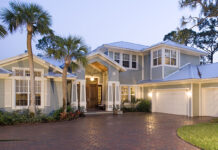
Wine country elegance in the foothills
No, today’s housing market is not headed for a repeat of 2008. Lending standards are significantly tighter, foreclosure volume remains near historic lows, and available inventory is far too limited to trigger the kind of cascading price declines that defined the last crash. The data, across multiple sources, points consistently in the same direction: the market isn’t set up for collapse.
You know how it goes. You open your phone, and there is another headline warning that the housing bubble is about to pop. A friend at dinner tells you they are waiting for prices to crash before they buy. And somewhere in the back of your mind, you start to wonder: is the sky actually falling?
A lot of people in Saratoga are sitting with that exact question right now. And honestly, it makes sense to ask it. But here is the part most people have not stopped to think about yet: feeling uncertain about today’s housing market and understanding what the data actually shows are two very different things.
What Does Your Current Situation Actually Look Like?
Before we get into the numbers, think about where you are right now. Are you renting and wondering whether to keep waiting? Are you a homeowner second-guessing whether to list? Have you been watching the housing market from the sidelines, hoping for a signal that never quite arrives?
What is that waiting actually costing you? Not just in dollars, but in certainty, in stability, in the ability to plan your next five years?
Because here is what tends to happen: fear of a crash keeps people frozen, and frozen people miss windows. The question is not whether a correction is possible. The question is whether your decisions are based on headlines or evidence.
Have You Ever Stopped to Think About What Made 2008 Different?
In the years leading up to the 2008 crash, banks were essentially handing out mortgages like promotional flyers. Lending standards dropped so low that almost anyone could qualify, regardless of income, credit, or capacity to repay. That created enormous artificial demand. And when reality set in, the defaults came in waves.
Today’s housing market operates under a completely different rulebook. The Mortgage Bankers Association tracks how easy or difficult it is to get a mortgage, and that index is currently sitting near its most restrictive level in decades. Lenders are not taking the same risks they were then. Buyers who are getting approved today are genuinely qualified. Does that distinction matter to you? Can you see how that changes the risk profile entirely?
During this period, mortgage lending standards reached their most permissive levels in modern history. Stated-income loans, adjustable-rate products with teaser rates, and near-zero down payment requirements flooded the market with unqualified buyers. In high-value markets like the South Bay and Saratoga real estate corridors, prices inflated rapidly on borrowed demand. When those loans began to reset and defaults followed, the correction was severe and fast. Today’s lending environment looks almost nothing like it did then.
What the Foreclosure Numbers Tell You About Today’s Housing Market
One of the clearest signals from today’s housing market is what is happening, or more accurately, not happening, with foreclosures. After 2008, the market was overwhelmed with distressed properties. Short sales and bank-owned homes flooded supply, forcing prices down across the board.
That pattern is not repeating. Data from ATTOM shows foreclosure activity remains dramatically lower than it was in the years following the last crash. Yes, foreclosures have ticked up slightly from pandemic-era record lows. But the total volume is still minimal compared to historical norms.
Bill McBride, founder of Calculated Risk, addressed this directly. He noted that while foreclosures will rise modestly from record lows, there will not be a massive wave of distressed sales the way there was after the housing bubble. And without that wave, the cascading price declines that defined 2008 simply do not have a mechanism to repeat.
The years immediately following the crash were defined by a glut of distressed inventory. Foreclosures and short sales made up a significant percentage of all transactions in many California markets. In the South Bay, even relatively insulated communities saw price compression as distressed comps dragged down appraisals and valuations. The Saratoga market held up comparatively well due to tight inventory and sustained buyer demand from the tech sector, but the broader correction still left its mark on buyer psychology for years.
Is Limited Inventory Protecting the Housing Market?
Here is something worth sitting with. In 2008, part of what made the crash so severe was an oversupply of homes. Too many properties chasing too few buyers drove prices into freefall.
The current picture is almost the inverse. The National Association of Realtors reports that unsold inventory sits at roughly 2.7 months of supply at the current sales pace. A balanced market typically requires five to six months of supply. That gap tells a significant story about where pricing pressure actually comes from in today’s housing market.
Years of underbuilding have created a structural shortage. That shortage does not disappear because mortgage rates rise or because headlines get more alarming. The market isn’t producing enough homes to meet demand, and that supply constraint acts as a floor under prices, even when other conditions soften.
If you are thinking about Saratoga homes for sale, that inventory reality is especially relevant. Homes in Saratoga have historically faced tight supply and durable demand from buyers relocating for Silicon Valley opportunities. The underlying conditions that have supported property values here are structural, not speculative.
Beginning before the pandemic and accelerating sharply through 2020 to 2022, available housing inventory in Santa Clara County reached historically low levels. New construction failed to keep pace with population growth and household formation, particularly in established communities with limited developable land. Houses in Saratoga reflect this dynamic clearly: listing counts remain well below pre-2019 norms, and well-priced properties continue to attract multiple serious buyers. Even as rates have moderated buyer volume, supply has not materially recovered, keeping pricing fundamentals intact.
What Happens If You Keep Waiting?
Here is the consequence question most people avoid. If you stay on the sidelines for another two or three years, waiting for a crash that the data suggests is not coming, what does that actually look like for you?
More months of rent that build someone else’s equity. More uncertainty about your housing costs year to year. Fewer options if inventory tightens further. And no guarantee that the entry point you are waiting for ever materializes.
That is not pressure. That is just the math of inaction laid out plainly. Does that change how you are thinking about your timeline?
Based on what a lot of buyers and homeowners have been sharing, what they really want is not a crash. What they want is clarity. They want to know that if they act, they are not stepping into a trap. And the current data on lending standards, foreclosure volume, and inventory levels all point to a market that is fundamentally different from the one that collapsed in 2008. The market isn’t perfect. No market ever is. But the structural risks that caused the last crash simply are not present in today’s housing market in the same way.
If that context is helpful and you want to understand what it means specifically for your situation in Saratoga, a straightforward conversation is the logical next step. Not a pitch. Not a sales call. Just a clear look at where you are, where you want to be, and whether the numbers support moving forward. Timothy Alston, Broker, can be reached at (408) 207-4593. Would that kind of conversation be useful for you right now?
Schools in Saratoga
Aegis School Excellence Index · 2024-25 performance data
Serving districts: Saratoga Union Elementary SD (K-8), Los Gatos-Saratoga Joint Union High SD (9-12). School district boundaries can change; please verify current enrollment boundaries and program offerings directly with the school district.
Consider This
Have you explored how Saratoga’s neighborhoods vary from the foothills to the flatlands in price and character? Get our Saratoga neighborhood-by-neighborhood guide.
Want to talk through your Saratoga options? 15-minute strategy call, no obligation.
Schedule a Call →In Saratoga, homes with updated gourmet kitchens and wine storage areas resonate with the local buyer demographic. These features are expected, not extras.
Browse Saratoga homes for sale
Free Download
Get the Complete Saratoga Market Report
Monthly data, neighborhood breakdowns, price trends, and insider analysis delivered to your inbox.
Send Me the Report →Frequently Asked Questions
Still have questions about Saratoga?
I’ve helped hundreds of families buy and sell in Saratoga. Happy to share what I’m seeing in your specific neighborhood.
Free Home Valuation
What’s Your Saratoga Home Worth?
Get an instant estimate powered by RealScout.
Get My Saratoga Home Value →


Looking for homes in Saratoga?
Get personalized listing alerts delivered to your inbox. Be the first to know about new homes that match your criteria in Saratoga.
Get Saratoga Listing Alerts →Community Resources
Saratoga Essential Services


Official Sources
Ready to find your perfect home in Saratoga?
Browse all available Saratoga listings, explore neighborhood guides, and get personalized market insights.
Search Saratoga Homes →Timothy Alston
Broker · DRE# 01328224
Aegis Luxury Real Estate
Harvard Business School Online, Certified Master Negotiation
23+ Years Silicon Valley Real Estate Experience
Retired Military Veteran

Copyright © 2026 MLSListings Inc. All rights reserved.
The data relating to real estate for sale on this display comes in part from the Internet Data Exchange program of the MLSListings™ MLS system. Real estate listings held by brokerage firms other than Aegis Luxury Real Estate are marked with the Internet Data Exchange icon and detailed information about them includes the names of the listing brokers and listing agents.
Based on information from the MLSListings MLS as of June 12, 2026. All data, including all measurements and calculations of area, is obtained from various sources and has not been, and will not be, verified by broker or MLS. All information should be independently reviewed and verified for accuracy. Properties may or may not be listed by the office/agent presenting the information.
These statistics are generated using information from the MLSListings Inc. multiple listing service, but have not been verified and are not guaranteed. MLSListings Inc. disclaims any responsibility for the accuracy and reliability of these statistics. This information should not be relied upon for real estate transaction decisions.
Data updated every 15 minutes. Visit www.MLSListings.com for more information.
Information provided is for general informational purposes only. Equal Housing Opportunity. If you are currently working with a real estate agent, this is not intended as a solicitation.
Aegis Luxury Real Estate · Timothy Alston, Broker, DRE# 01328224 · 10080 N. Wolfe Rd Ste SW3-200, Cupertino CA 95014 · (408) 207-4593
Last updated: July 16, 2026 | Data reflects July 2026 MLS statistics