


















The Hidden Risk of Holding Your Vacation Home in Los Altos

Timothy Alston | Broker
Aegis Luxury Real Estate · DRE# 01328224
Published
August 24, 2021
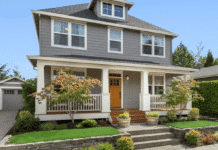
Timeless suburban elegance
If you own a vacation home and have started wondering whether holding it is still the right move, that question deserves a real answer. Demand for second homes has surged significantly in recent years, driven by remote work and shifting lifestyle priorities. For owners in or near Los Altos, that demand may be creating an opportunity worth examining before the post-summer slowdown sets in.
You know how sometimes you own something valuable but never quite stop to ask what it is actually worth to someone else right now? And how that gap between what you assume and what the market is actually doing can quietly cost you? A lot of second-home owners are sitting in exactly that position. But here is the part most have not stopped to think about yet: the window created by high buyer demand does not stay open forever.
So let’s start with a question. What does your vacation home actually mean to your financial life right now? Is it still getting used the way you imagined when you bought it? Or has it shifted more into something you manage, maintain, and pay for, without getting the return you originally pictured?
What Remote Work Did to Vacation Home Demand
Have you ever stopped to think about who is actually looking for a vacation home right now, and why? The profile of the typical buyer has changed. Remote work untethered a significant portion of the workforce from a fixed location, and many of those workers started looking for places where they could live and work without the grind of a daily commute. Your second home might be exactly what they are searching for.
Research from the National Association of Realtors shows vacation home sales climbed dramatically in recent years, with some periods seeing increases of more than 57% compared to prior years. Lawrence Yun, Chief Economist at the NAR, noted that vacation properties have become a sought-after category as remote work options continue for many employers. Second homes in desirable locations are attracting buyers who are willing to compete aggressively, including with all-cash offers and minimal contingencies.
Does that change how you think about what your property might bring in today’s market?
What Staying Put Could Actually Cost You
Here is a consequence question worth sitting with. If nothing changes, if you hold the vacation home for another three to five years while demand cools, what does that look like? Carrying costs continue. Maintenance does not get cheaper. And the buyer pool that exists right now, motivated, liquid, and actively searching, shifts over time.
What is it actually costing you each year to hold a property you are using less than you expected? Property taxes, insurance, upkeep, and the opportunity cost of equity sitting idle all add up. Have you run those numbers recently?
For owners connected to the Los Altos homes for sale market, the equity position in a second home, especially one purchased several years ago, could be substantial. That equity has options. It could become a down payment on a primary residence upgrade, fund a long-deferred goal, or simply reduce financial complexity in your life. The question is whether you have thought carefully about what you actually want it to do.
Could Your Vacation Home Become Your Primary Residence?
This is a possibility a growing number of homeowners are considering seriously. If remote work is now a permanent part of your life, why are you commuting between a primary home and a vacation home at all? What would it mean to flip the arrangement entirely, to make the place you actually enjoy your everyday home, and let go of the one that is tying you to a location you no longer need to be in?
Not everyone can make that move. But if the idea has crossed your mind even once, it is worth exploring what the numbers would actually look like. Can you see how that conversation might be worth having before you default to another year of the status quo?
What Selling a Vacation Home Actually Looks Like When Summer Ends
Timing matters, even in a strong market. The period right after summer ends tends to be a natural pause point for vacation property owners. Use decisions are revisited. Rental income projections get reviewed. And sellers who move thoughtfully during this window often find they are ahead of the seasonal drop-off that can come later in the year.
Homes in Los Altos and the broader Silicon Valley corridor have seen sustained buyer interest, partly because the remote-work lifestyle has made proximity to nature, space, and quality of life more attractive than raw commute optimization. Properties in and around Los Altos real estate have consistently attracted buyers from San Francisco and the peninsula who are recalibrating their priorities. If your vacation home fits that profile, the demand may be stronger than you assume.
What would it mean for your family if you walked away from the sale with strong terms and a clear path to whatever comes next?
The Practical Path Forward
Based on what many second-home owners are sharing, the hesitation is rarely about wanting to sell. It is about not knowing where to start, or not being sure the timing is actually right for their specific situation. That uncertainty is understandable. But it is also a reason to have one conversation, not to commit to anything, just to see what the numbers actually look like.
Timothy Alston, Broker at Aegis Luxury Real Estate, works with homeowners across the Los Altos area to think through exactly these decisions. Not with pressure. Not with a pitch. Just a straightforward look at where you are, what your property might bring in today’s market, and whether acting now aligns with where you want to be.
Do you feel like this could be the conversation you have been putting off? If so, reach out directly. The next step is just a call to see if the situation fits. That is all. You can reach Timothy at (408) 207-4593.
Schools in Los Altos
Aegis School Excellence Index · 2024-25 performance data
Serving districts: Los Altos SD (K-8), Mountain View-Los Altos Union High SD (9-12). School district boundaries can change; please verify current enrollment boundaries and program offerings directly with the school district.
Consider This
Have you explored how Saratoga’s neighborhoods vary from the foothills to the flatlands in price and character? Get our Saratoga neighborhood-by-neighborhood guide.
Want to talk through your Los Altos options? 15-minute strategy call, no obligation.
Schedule a Call →If you are buying a tear-down in Los Altos, factor in the city’s design review process. Custom home approvals can take several months.
Browse Los Altos homes for sale
Free Download
Get the Complete Los Altos Market Report
Monthly data, neighborhood breakdowns, price trends, and insider analysis delivered to your inbox.
Send Me the Report →Frequently Asked Questions
Still have questions about Los Altos?
I’ve helped hundreds of families buy and sell in Los Altos. Happy to share what I’m seeing in your specific neighborhood.
Free Home Valuation
What’s Your Los Altos Home Worth?
Get an instant estimate powered by RealScout.
Get My Los Altos Home Value →Explore Nearby Cities



Looking for homes in Los Altos?
Get personalized listing alerts delivered to your inbox. Be the first to know about new homes that match your criteria in Los Altos.
Get Los Altos Listing Alerts →Community Resources
Los Altos Essential Services


Official Sources
Ready to find your perfect home in Los Altos?
Browse all available Los Altos listings, explore neighborhood guides, and get personalized market insights.
Search Los Altos Homes →Timothy Alston
Broker · DRE# 01328224
Aegis Luxury Real Estate
Harvard Business School Online, Certified Master Negotiation
23+ Years Silicon Valley Real Estate Experience
Retired Military Veteran
Copyright © 2026 MLSListings Inc. All rights reserved.
The data relating to real estate for sale on this display comes in part from the Internet Data Exchange program of the MLSListings™ MLS system. Real estate listings held by brokerage firms other than Aegis Luxury Real Estate are marked with the Internet Data Exchange icon and detailed information about them includes the names of the listing brokers and listing agents.
Based on information from the MLSListings MLS as of June 10, 2026. All data, including all measurements and calculations of area, is obtained from various sources and has not been, and will not be, verified by broker or MLS. All information should be independently reviewed and verified for accuracy. Properties may or may not be listed by the office/agent presenting the information.
These statistics are generated using information from the MLSListings Inc. multiple listing service, but have not been verified and are not guaranteed. MLSListings Inc. disclaims any responsibility for the accuracy and reliability of these statistics. This information should not be relied upon for real estate transaction decisions.
Data updated every 15 minutes. Visit www.MLSListings.com for more information.
Information provided is for general informational purposes only. Equal Housing Opportunity. If you are currently working with a real estate agent, this is not intended as a solicitation.
Aegis Luxury Real Estate · Timothy Alston, Broker, DRE# 01328224 · 10080 N. Wolfe Rd Ste SW3-200, Cupertino CA 95014 · (408) 207-4593
Last updated: July 10, 2026 | Data reflects July 2026 MLS statistics