





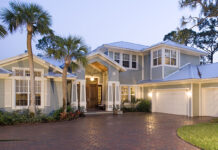









The Surprising Truth About Luxury Homes in San Jose

Timothy Alston | Broker
Aegis Luxury Real Estate · DRE# 01328224
Published
July 29, 2024
Capital of Silicon Valley
Home prices for luxury homes in San Jose are not collapsing. Despite alarming headlines, the market is not in freefall locally or nationally. What is actually happening is a normalization: the dramatic surge from 2020 to 2022 has slowed to a more measured pace. That is a fundamentally different story than a crash, and understanding that difference could reshape every decision you make about housing right now.
You know how it goes when you are trying to figure out whether now is the right time to make a move. One article says a price collapse is coming. Another says the market is perfectly healthy. And somewhere in the middle, you are just trying to understand what is actually true for your situation.
That uncertainty is exhausting. And it makes complete sense that a lot of buyers and sellers in San Jose are stuck right now, waiting for some kind of clarity before they act. But here is the part most people have not stopped to think about yet: waiting for clarity that never fully arrives has its own cost. What is that waiting actually costing you?
What Does “Correction” Actually Mean for Luxury Homes in San Jose?
When you hear the word “correction,” what comes to mind? Most people picture a 2008-style drop, homes losing 30 or 40 percent of their value almost overnight. But that is not what the data is showing.
Danielle Hale, Chief Economist at Realtor.com, has noted that in housing, there is no single established definition of “correction” the way one exists in stock markets. A stock correction typically means a 10 to 20 percent drop. Housing does not work that way.
In today’s context, “correction” simply means home prices that were rising too fast are now rising more slowly. That is not a disaster. That is the market catching its breath.
Have you ever stopped to think about the difference between prices slowing down and prices coming down? Those are two completely different realities. Confusing them could lead to a very costly decision about your home. Does that make sense?
What the Data Actually Shows About the Truth About Luxury Home Prices
From 2020 to 2022, home prices skyrocketed across the country, driven by historically low mortgage rates, limited inventory, and surging buyer demand. That kind of growth was never going to last forever.
Case-Shiller data shows that after a brief flat period, home prices are once again rising at the national level, just at a healthier, more measured pace than during the pandemic surge. Property values in competitive markets like Silicon Valley continue to reflect strong underlying demand, even as the rate of appreciation moderates.
Marco Santarelli, Founder of Norada Real Estate Investments, puts it plainly: expert forecasts point toward slower, more sustainable appreciation over the next several years, not a freefall. The direction is still upward. The speed has simply changed.
The San Jose real estate market currently shows an average home price of approximately $1,668,791, with properties averaging just 10 days on market. That is not the profile of a market in distress. Can you see how that changes the picture you may have been getting from the headlines?
The Truth About Luxury Homes San Jose Buyers Need to Hear About Supply and Demand
It always comes down to supply and demand. Higher mortgage rates have pulled back some buyer demand. Inventory has gradually increased in many markets. Both of those forces take upward pressure off prices.
But here is the question worth sitting with: if reduced buyer demand is the thing currently holding prices in check, what happens to home prices when rates ease further and that demand returns in full force?
Are you positioned to take advantage of this window, or would you be scrambling to get in after the fact?
For anyone exploring San Jose homes for sale right now, this slower-growth environment could actually be a window of opportunity. Not a guaranteed permanent shift. Just a window. And windows close.
What Would Steady Appreciation Actually Mean for You?
What would it mean for you if the home you purchased today continued to appreciate steadily over the next five to seven years, building equity you could actually use? That is not speculation. That is what forecasts from multiple independent economists are pointing toward.
Odeta Kushi, Deputy Chief Economist at First American, has observed that while affordability remains a challenge, slowing price appreciation combined with any further easing in mortgage rates could meaningfully improve access for buyers who move before the next wave of demand arrives.
Luxury homes in San Jose present a specific version of this equation. Closing costs, escrow timelines, and down payment requirements are all more manageable when you enter before the next surge in demand rather than after it. The truth about luxury home pricing in this market is that the window between surges tends to be shorter than buyers expect.
Can you see how that changes the calculus on waiting?
What Does Your Housing Situation Actually Look Like Right Now?
Are you renting and watching that monthly cost climb each year? If you could lock in a fixed mortgage payment instead, what would that mean for your family’s financial picture three years from now?
The National Association of Realtors has documented that the average gap between homeowner and renter net worth runs into the hundreds of thousands of dollars over a decade. That is not a pitch. That is a data point worth sitting with quietly for a moment.
What would you change about your housing situation if you could? And how long have you been waiting for the right moment to make that change?
What Happens If Nothing Changes?
This is the question most people avoid asking themselves directly. What if you keep watching the market from the sidelines in San Jose for another two or three years? Where does that leave you?
The home prices you are waiting to fall further may not fall the way you are hoping. And the longer prices keep moving, even slowly upward, the wider the gap gets between where you are today and where you want to be.
Loan terms, pre-approval thresholds, and down payment targets all shift when the purchase price keeps drifting higher, even gradually. Can you see how waiting for the perfect moment can quietly become the most expensive decision of all?
The Next Step Is Simpler Than You Think
Based on everything you have just thought through, does this picture of the market feel closer to what you have been looking for? Not a crash to wait for. Not a guarantee of zero risk. Just a clearer view of where prices are actually headed and what that means for your specific situation.
Luxury homes in San Jose are not sitting still. The average days on market across the city is currently 10 days. That tells you something important about the pace of this market even during a so-called slowdown.
Timothy Alston, licensed Broker at Aegis Luxury Real Estate (DRE# 01328224), works with buyers and sellers across Santa Clara County. If you want a straightforward look at the numbers for your situation, without a pitch or pressure, that conversation starts with a call to (408) 207-4593.
What would you like to do next?
Schools in San Jose
Aegis School Excellence Index · 2024-25 performance data
Serving districts: San Jose Unified SD, Alum Rock Union Elementary SD, Berryessa Union SD, Cambrian SD, Campbell Union SD (partial), East Side Union High SD, Evergreen Elementary SD, Franklin-McKinley SD, Luther Burbank SD, Moreland SD, Mount Pleasant SD, Oak Grove SD, Orchard SD, Union SD. School district boundaries can change; please verify current enrollment boundaries and program offerings directly with the school district.
Consider This
What if you could trade your current home for a Los Gatos property without a gap in housing? Ask about our bridge strategy for Los Gatos buyers and sellers.
Want to talk through your San Jose options? 15-minute strategy call, no obligation.
Schedule a Call →San Jose homes near Guadalupe River Park and Trail benefit from continuous trail improvements that boost outdoor recreation access and property values.
Browse San Jose homes for sale
Free Download
Get the Complete San Jose Market Report
Monthly data, neighborhood breakdowns, price trends, and insider analysis delivered to your inbox.
Send Me the Report →Frequently Asked Questions
Still have questions about San Jose?
I’ve helped hundreds of families buy and sell in San Jose. Happy to share what I’m seeing in your specific neighborhood.
Free Home Valuation
What’s Your San Jose Home Worth?
Get an instant estimate powered by RealScout.
Get My San Jose Home Value →

Looking for homes in San Jose?
Get personalized listing alerts delivered to your inbox. Be the first to know about new homes that match your criteria in San Jose.
Get San Jose Listing Alerts →Community Resources
San Jose Essential Services


Official Sources
Ready to find your perfect home in San Jose?
Browse all available San Jose listings, explore neighborhood guides, and get personalized market insights.
Search San Jose Homes →Timothy Alston
Broker · DRE# 01328224
Aegis Luxury Real Estate
Harvard Business School Online, Certified Master Negotiation
23+ Years Silicon Valley Real Estate Experience
Retired Military Veteran
Copyright © 2026 MLSListings Inc. All rights reserved.
The data relating to real estate for sale on this display comes in part from the Internet Data Exchange program of the MLSListings™ MLS system. Real estate listings held by brokerage firms other than Aegis Luxury Real Estate are marked with the Internet Data Exchange icon and detailed information about them includes the names of the listing brokers and listing agents.
Based on information from the MLSListings MLS as of August 13, 2026. All data, including all measurements and calculations of area, is obtained from various sources and has not been, and will not be, verified by broker or MLS. All information should be independently reviewed and verified for accuracy. Properties may or may not be listed by the office/agent presenting the information.
These statistics are generated using information from the MLSListings Inc. multiple listing service, but have not been verified and are not guaranteed. MLSListings Inc. disclaims any responsibility for the accuracy and reliability of these statistics. This information should not be relied upon for real estate transaction decisions.
Data updated every 15 minutes. Visit www.MLSListings.com for more information.
Information provided is for general informational purposes only. Equal Housing Opportunity. If you are currently working with a real estate agent, this is not intended as a solicitation.
Aegis Luxury Real Estate · Timothy Alston, Broker, DRE# 01328224 · 10080 N. Wolfe Rd Ste SW3-200, Cupertino CA 95014 · (408) 207-4593
Last updated: August 13, 2026 | Data reflects August 2026 MLS statistics