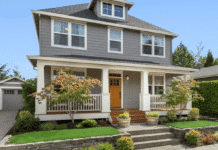



















The Smart Opportunity Sandwich Generation Buyers Miss in San Jose

Timothy Alston | Broker
Aegis Luxury Real Estate · DRE# 01328224
Published
August 01, 2024
Capital of Silicon Valley
If you are part of the sandwich generation, caring for aging parents while raising your own children, you may be holding a financial advantage you have not fully recognized yet. Roughly one in six Americans carry this dual caregiving load. For families looking to buy houses in San Jose, pooling resources across generations can make homeownership more financially attainable than going it alone, and that gap is larger than most people expect.
You know how it feels to be pulled in two directions at once. The kids need attention. Your parents need support. The bills keep coming. And somewhere in the back of your mind, there is probably a question that never quite goes away: how does anyone afford a home in this market while managing all of this?
A lot of families in San Jose are sitting with that exact question right now. And the part most people have not stopped to think about yet is this: the very situation that feels like a burden might actually be your clearest path forward.
What Does Your Housing Situation Actually Look Like Right Now?
Take a moment and think honestly about where things stand. Are you renting? Are you and your parents spending money on separate households, covering two sets of bills, two sets of utilities, maybe even two sets of childcare costs? How long have you been running that equation, and what is it actually costing you every single month?
Now flip the question. What would change if those resources were pooled under one roof?
According to Realtor.com, about one in three members of the sandwich generation say their caregiving situation is actually making it easier to afford a home. That is not a small finding. That is one out of three families discovering something the housing conversation rarely surfaces. Does that make sense given what you are already spending?
After the 2008 financial crisis, multi-generational living quietly surged across Silicon Valley. Families that had kept separate households began consolidating out of necessity, and many discovered that pooling down payment contributions and ongoing expenses accelerated their path to homeownership. In San Jose, where home values were recovering and then climbing sharply, families that combined purchasing power in this era captured appreciation that single-income buyers simply could not reach. The pattern planted seeds for the multi-generational buying trend we see accelerating today.
The Overlooked Financial Case for the Opportunity Sandwich When You Buy Houses in San Jose
Here is where the picture starts to look different than most people expect. Two specific financial advantages tend to surface for families who buy houses in San Jose together across generations.
First: shared expenses. If your parents contribute to a mortgage payment, even partially, you may be able to afford a home that would have been out of reach on your income alone. In a market like San Jose, where home prices reflect the region’s economic weight, that shared contribution is not a minor detail. It can be the difference between qualifying and not qualifying for the home your family actually needs.
Second: built-in childcare. If your parents are living in the home, professional daycare costs may shrink significantly. Think about what that dollar amount is every month for your family. Now think about what it would mean if that money stayed in your household instead.
Does that change how you see this decision?
Mortgage rate increases and sustained home price appreciation across Santa Clara County placed solo buyers under significant purchasing pressure. Yet multi-generational households in San Jose consistently outperformed single-income buyers in both purchase price range and time-to-close. Families that combined down payment contributions and ongoing expense sharing qualified for larger homes, built home equity faster, and absorbed rate volatility more effectively than their single-household counterparts. The sandwich generation, though stretched thin emotionally, held a structural financial advantage many did not recognize until they were already in escrow.
Beyond the Numbers: What Multi-Generational Families Actually Gain
The National Association of Realtors profiles home buyers annually, and multi-generational buyers consistently name reasons that go beyond loan terms and closing costs. Caring for aging parents becomes more manageable when you share a home. The proximity matters in ways that are hard to quantify until you are living it.
Can you see how the daily weight of coordinating care across separate addresses adds up? Every extra trip, every gap in coverage, every moment of worry about what is happening across town. Buying a multi-generational home closes that gap in a way that no care schedule or rideshare app fully can.
And time with your parents, including time your children spend with their grandparents, is not a renewable resource. Does that factor into how you are thinking about this decision?
As Mortgage Reports noted, buying a home with parents can ease caregiving, support young children, and make homeownership considerably more affordable, especially given how steeply prices have moved in recent years.
Across San Jose real estate, buyer inquiries about homes with in-law units, dual primary suites, and separate entrances have climbed noticeably. Inventory featuring multi-generational floor plans now moves faster than comparable single-family homes without those configurations. Brokers working with sandwich generation clients report that these buyers tend to arrive more financially prepared, often because they have been pooling resources with family members for months before beginning their search. For many buyers looking to buy houses in San Jose, multi-generational living is no longer a fallback plan. It is the strategic first move.
What Happens If Nothing Changes?
Here is the consequence question worth sitting with. If you keep running two separate households for the next three to five years, what does that actually look like? Does the caregiving load get lighter or heavier as your parents age? Does rent in the area get more affordable or less? Does the window for building home equity get wider or narrower?
You do not have to answer that out loud. But most people who think through it honestly already know the direction those answers point.
Multi-generational homes in San Jose typically sell faster than comparable single-family properties without those configurations, which means preparation matters more than timing in this search. Knowing what floor plan elements to prioritize, separate entrances, bedroom placement on different floors, private outdoor spaces, is what separates a workable purchase from a frustrating one. Browsing San Jose homes for sale is a natural first step, but understanding the layout details your family actually needs is what makes that search productive.
How a Broker Helps You Buy Houses in San Jose the Right Way for Multi-Generational Living
Buying a multi-generational home is not the same as buying a standard single-family home. The needs on your list are more specific, and the stakes of getting the layout wrong are higher when multiple generations are living there every day.
If you are part of the sandwich generation and exploring the opportunity sandwich your situation creates, the conversation needs to start with your household, not a listing. Where are you now? What does daily life in the home actually need to look like? What would have to be true for this to work for everyone under that roof?
Timothy Alston, Broker (DRE# 01328224) at Aegis Luxury Real Estate in Cupertino, works with families navigating exactly this kind of purchase. The conversation starts with your situation. Not a pitch. Just a straightforward look at whether the numbers and the right home can come together for your family.
If that sounds like a conversation worth having, reach out directly at (408) 207-4593.
Schools in San Jose
Aegis School Excellence Index · 2024-25 performance data
Serving districts: San Jose Unified SD, Alum Rock Union Elementary SD, Berryessa Union SD, Cambrian SD, Campbell Union SD (partial), East Side Union High SD, Evergreen Elementary SD, Franklin-McKinley SD, Luther Burbank SD, Moreland SD, Mount Pleasant SD, Oak Grove SD, Orchard SD, Union SD. School district boundaries can change; please verify current enrollment boundaries and program offerings directly with the school district.
Consider This
If you could own a newer-construction home in Milpitas at a fraction of Cupertino prices, would you look? Compare Milpitas new construction options and see the value difference.
Want to talk through your San Jose options? 15-minute strategy call, no obligation.
Schedule a Call →If you are buying in San Jose, check the property’s earthquake retrofit status. Older homes, especially in East San Jose, may need foundation work.
Browse San Jose homes for sale
Free Download
Get the Complete San Jose Market Report
Monthly data, neighborhood breakdowns, price trends, and insider analysis delivered to your inbox.
Send Me the Report →Frequently Asked Questions
Still have questions about San Jose?
I’ve helped hundreds of families buy and sell in San Jose. Happy to share what I’m seeing in your specific neighborhood.
Free Home Valuation
What’s Your San Jose Home Worth?
Get an instant estimate powered by RealScout.
Get My San Jose Home Value →

Looking for homes in San Jose?
Get personalized listing alerts delivered to your inbox. Be the first to know about new homes that match your criteria in San Jose.
Get San Jose Listing Alerts →Community Resources
San Jose Essential Services


Official Sources
Ready to find your perfect home in San Jose?
Browse all available San Jose listings, explore neighborhood guides, and get personalized market insights.
Search San Jose Homes →Timothy Alston
Broker · DRE# 01328224
Aegis Luxury Real Estate
Harvard Business School Online, Certified Master Negotiation
23+ Years Silicon Valley Real Estate Experience
Retired Military Veteran
Copyright © 2026 MLSListings Inc. All rights reserved.
The data relating to real estate for sale on this display comes in part from the Internet Data Exchange program of the MLSListings™ MLS system. Real estate listings held by brokerage firms other than Aegis Luxury Real Estate are marked with the Internet Data Exchange icon and detailed information about them includes the names of the listing brokers and listing agents.
Based on information from the MLSListings MLS as of June 12, 2026. All data, including all measurements and calculations of area, is obtained from various sources and has not been, and will not be, verified by broker or MLS. All information should be independently reviewed and verified for accuracy. Properties may or may not be listed by the office/agent presenting the information.
These statistics are generated using information from the MLSListings Inc. multiple listing service, but have not been verified and are not guaranteed. MLSListings Inc. disclaims any responsibility for the accuracy and reliability of these statistics. This information should not be relied upon for real estate transaction decisions.
Data updated every 15 minutes. Visit www.MLSListings.com for more information.
Information provided is for general informational purposes only. Equal Housing Opportunity. If you are currently working with a real estate agent, this is not intended as a solicitation.
Aegis Luxury Real Estate · Timothy Alston, Broker, DRE# 01328224 · 10080 N. Wolfe Rd Ste SW3-200, Cupertino CA 95014 · (408) 207-4593
Last updated: August 13, 2026 | Data reflects August 2026 MLS statistics