














The Hidden Cost of Letting Student Loans Stop You in Campbell

Timothy Alston | Broker
Aegis Luxury Real Estate · DRE# 01328224
Published
May 14, 2025
Small-town charm, Silicon Valley access
Student loan debt does not automatically disqualify you from buying a house for sale in Campbell CA. According to the National Association of Realtors, nearly one in three first-time buyers carries student loan debt at the time of purchase. Lenders evaluate your full financial picture: income stability, credit history, and total debt load. If those elements are solid, a mortgage may be closer than you have been telling yourself.
You know how it goes. You have been carrying student loans for years, and every time homeownership comes up in conversation, the debt is the first thing that shows up in your head. You start running numbers in your mind, wondering whether you will ever actually be in a position to make a move. A lot of buyers looking at a house for sale in Campbell CA are sitting with that exact weight right now.
But here is the part most people have not stopped to think about yet: the assumption that student loans must be paid off before you can qualify for a mortgage may be costing you more time than the loans themselves ever will. Does that make sense so far?
What Does Your Housing Situation Actually Look Like Right Now?
Before anything else, take an honest look at where you are. Are you renting while making student loan payments every month? How long have you been doing that? If you add up what you have paid in rent over the past two or three years, what does that number actually look like?
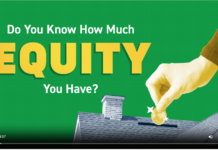
That money is gone. It built no equity. It contributed nothing to your net worth. Have you ever stopped to think about what it would mean if even a portion of that monthly payment had been going toward a home you actually owned in the Campbell market?
That is not a rhetorical question. That is a real calculation worth making before you decide to wait another year or two.
Don’t Let Student Loan Assumptions Rewrite Your Timeline
Here is something that surprises a lot of first-time buyers: student loans do not automatically affect your mortgage qualification any differently than a car payment or a credit card balance. The average student loan balance at the time of a first home purchase runs around $30,000. That is real debt, no question. But lenders are looking at your total financial picture, not just that one line item.
Yahoo Finance and Chase have both noted that with the right approach and a clear view of your overall finances, buying a home while carrying student debt is genuinely possible. When your income is steady and your credit profile is reasonably clean, the student loan entry on your report may matter far less than you assumed.
Can you see how that changes the way you might be thinking about your timeline?
Why Campbell Real Estate Rewards Buyers Who Stop Waiting
Property values in the South Bay have historically trended upward over time. Buyers who let student loan anxiety push their purchase date back by two or three years often discover that the homes they could have afforded earlier are now outside their price range. Homes in Campbell averaged $1,668,791 in recent MLS data, with average days on market running around 10 days. That pace does not suggest a market that rewards hesitation.
If you are browsing a Campbell homes for sale listing and telling yourself you will circle back once the loans are gone, that gap between “later” and “now” has a real dollar cost attached to it.
Here is a consequence worth sitting with: what happens if nothing changes? If you keep renting in Campbell and keep making the same assumptions about your student debt for the next three to five years, where does that actually leave you? Not just financially, but in terms of stability and the kind of life you are building? That is not pressure. That is a question worth answering honestly for yourself.
What a House for Sale in Campbell CA Actually Requires to Qualify
Based on what buyers are telling us and what the data consistently shows, qualification for a house for sale in Campbell CA comes down to a few core factors: your debt-to-income ratio, your credit history, and your income stability. Student loans factor into that ratio, but so does every other debt you carry.
The National Association of Realtors found that nearly one in three first-time buyers carries student debt at closing. That is not a small group. Thousands of buyers every year decide not to let student loan balances stop them from moving forward. The question is not whether people with student loans can buy homes in Campbell. They clearly can. The question is whether you have actually checked what your numbers look like, or whether you have been assuming the answer is no without ever asking.
A lender can run the actual numbers for your specific situation in a single conversation. That one call might change your entire timeline.
What Would It Actually Mean to Stop Waiting?
Think about it this way. If you could lock in a fixed monthly payment on a house for sale in Campbell CA instead of watching your rent climb every renewal cycle, what would that mean for your financial stability over the next decade? What would it mean for your family?
Home equity builds over time regardless of whether you entered the market carrying student loans or not. The buyers who wait the longest are often the ones who never made the call to find out what was actually possible. They assumed the answer was no, and the market kept moving without them.
If that question is sitting with you, the next step is a straightforward conversation. Not a pitch. Not a sales call. Just a clear look at where you are and what is actually possible from here.
Timothy Alston, Broker, DRE# 01328224, works with buyers in the Campbell market at every stage of financial readiness. You can reach him at (408) 207-4593. If a lender told you today that you could qualify, would you want to know that sooner rather than later? Most people would.
Schools in Campbell
Aegis School Excellence Index · 2024-25 performance data
Serving districts: Campbell Union SD (K-8), Campbell Union High SD (9-12). School district boundaries can change; please verify current enrollment boundaries and program offerings directly with the school district.
Consider This
Have you explored how Saratoga’s neighborhoods vary from the foothills to the flatlands in price and character? Get our Saratoga neighborhood-by-neighborhood guide.
Want to talk through your Campbell options? 15-minute strategy call, no obligation.
Schedule a Call →If you are buying in Campbell, get a sewer lateral inspection. Many older Campbell homes have clay sewer lines that may need replacement.
Browse Campbell homes for sale
Free Download
Get the Complete Campbell Market Report
Monthly data, neighborhood breakdowns, price trends, and insider analysis delivered to your inbox.
Send Me the Report →Frequently Asked Questions
Still have questions about Campbell?
I’ve helped hundreds of families buy and sell in Campbell. Happy to share what I’m seeing in your specific neighborhood.
Free Home Valuation
What’s Your Campbell Home Worth?
Get an instant estimate powered by RealScout.
Get My Campbell Home Value →


Looking for homes in Campbell?
Get personalized listing alerts delivered to your inbox. Be the first to know about new homes that match your criteria in Campbell.
Get Campbell Listing Alerts →Community Resources
Campbell Essential Services


Official Sources
Ready to find your perfect home in Campbell?
Browse all available Campbell listings, explore neighborhood guides, and get personalized market insights.
Search Campbell Homes →Timothy Alston
Broker · DRE# 01328224
Aegis Luxury Real Estate
Harvard Business School Online, Certified Master Negotiation
23+ Years Silicon Valley Real Estate Experience
Retired Military Veteran
Copyright © 2026 MLSListings Inc. All rights reserved.
The data relating to real estate for sale on this display comes in part from the Internet Data Exchange program of the MLSListings™ MLS system. Real estate listings held by brokerage firms other than Aegis Luxury Real Estate are marked with the Internet Data Exchange icon and detailed information about them includes the names of the listing brokers and listing agents.
Based on information from the MLSListings MLS as of June 11, 2026. All data, including all measurements and calculations of area, is obtained from various sources and has not been, and will not be, verified by broker or MLS. All information should be independently reviewed and verified for accuracy. Properties may or may not be listed by the office/agent presenting the information.
These statistics are generated using information from the MLSListings Inc. multiple listing service, but have not been verified and are not guaranteed. MLSListings Inc. disclaims any responsibility for the accuracy and reliability of these statistics. This information should not be relied upon for real estate transaction decisions.
Data updated every 15 minutes. Visit www.MLSListings.com for more information.
Information provided is for general informational purposes only. Equal Housing Opportunity. If you are currently working with a real estate agent, this is not intended as a solicitation.
Aegis Luxury Real Estate · Timothy Alston, Broker, DRE# 01328224 · 10080 N. Wolfe Rd Ste SW3-200, Cupertino CA 95014 · (408) 207-4593
Last updated: July 28, 2026 | Data reflects July 2026 MLS statistics