
















The Hidden Cost of Remote Work Without the Right Space in Los Altos

Timothy Alston | Broker
Aegis Luxury Real Estate · DRE# 01328224
Published
September 21, 2021
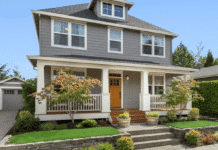
Timeless suburban elegance
If remote work is now a permanent part of your life, your home either supports that reality or quietly works against it. Many professionals in Los Altos are discovering that the creative workarounds they set up years ago, a laptop on the kitchen counter, a corner of the bedroom, are costing them more than just productivity. The question worth asking is whether your current space is actually built for the way you work now.
You know how you told yourself it was temporary? That you would just make it work until things got back to normal? And then normal never quite came back the way you expected?
A lot of people in Los Altos are living that exact story right now. They adapted. They got resourceful. But somewhere along the way, the workaround became the permanent setup, and the gap between what they have and what they actually need just keeps growing. Have you stopped to think about what that gap is actually costing you, not just in productivity, but in your quality of life every single day?
Trend #1: Remote Work Is Not a Phase Anymore
Economists at Goldman Sachs noted that job postings increasingly offer remote options, and surveys show both workers and employers expect remote work to stay far more common than it was before the pandemic. What does that mean for you practically? It means the home setup you were willing to tolerate temporarily may now be your workspace indefinitely. If you have been waiting for a signal that this shift is real, that signal has been here for a while now. The Los Altos real estate market has been responding to this shift in buyer priorities for some time, with demand for dedicated home office space consistently appearing at the top of buyer wish lists.
Trend #2: The Numbers Behind the Remote Shift
A survey of 1,000 hiring managers by Upwork found that the number of remote workers over the next five years is expected to nearly double compared to pre-pandemic levels, reaching an estimated 36.2 million Americans by 2025, an increase of roughly 16.8 million people. Does that number surprise you? Because for anyone making a housing decision based on the assumption that office life would fully return, that number changes the math in a meaningful way. Homes in Los Altos that offer dedicated office space, strong connectivity, and quiet separation from living areas have become notably more competitive in terms of buyer demand and property values.
Trend #3: What Full Remote Actually Opens Up for Homeowners
If you are among the nearly 23 percent of workers who will remain fully remote, your employer is no longer anchoring your address. Have you thought about what that freedom actually means for your next move? You can home deliver yourself to a location that fits your life, not just your commute. That might mean a home with more square footage, a true private office, and room to breathe, all within or beyond the Bay Area depending on what you value most. For some buyers, that conversation starts right here in Los Altos, where walkability, community amenities, and neighborhood quality make the trade-off very compelling even without a daily commute requirement.
Trend #4: How Hybrid Schedules Change the Commute Calculation
If your schedule is hybrid, meaning you are remote most days but in the office a few times a week, the old calculus about distance no longer applies the way it once did. Would an extra 10 or 15 minutes of commute time be worth trading for a home that has the dedicated workspace, the yard, and the layout you have been wanting? For many hybrid workers, that answer is yes. The key question to sit with is what your current home is costing you in focus, in stress, and in the daily friction of a space that was never designed for how you actually use it now.
Trend #5: The Overlooked Cost of Waiting
What happens if nothing changes? If you keep working from a corner of the kitchen or a makeshift setup in the bedroom for another two or three years, where does that leave you, professionally and personally? The hidden cost of staying in a home that no longer fits is rarely calculated in dollars, but it shows up in focus, in energy, and in the quiet frustration of knowing your space is working against you. Inventory in the Los Altos homes for sale market shifts with buyer demand, and homes that genuinely accommodate remote work tend to move quickly when they do appear.
Based on what buyers are telling us across the Santa Clara County market, the remote work shift has moved from a temporary experiment to a permanent feature of professional life for millions of people. That means the home that made sense in 2019 may simply not deliver what you need in 2025 and beyond. Does that match what you have been noticing in your own situation?
The good news is that this is not a problem without a solution. It is actually a moment where your housing decision and your work life can finally align, possibly for the first time. What would it mean for your daily routine if every morning you walked into a dedicated workspace that was quiet, organized, and actually designed for focus? Can you see how that changes things beyond just productivity?
If this is the year you stop adapting to a home that was never built for remote work and start looking for one that was, the next step is a straightforward conversation about what is available in your price range and what trade-offs are worth making. No pressure, no pitch. Just a real look at your options with someone who knows the local market well. Timothy Alston, Broker (DRE# 01328224), can be reached directly at (408) 207-4593. Would that kind of conversation be useful to you right now?
Schools in Los Altos
Aegis School Excellence Index · 2024-25 performance data
Serving districts: Los Altos SD (K-8), Mountain View-Los Altos Union High SD (9-12). School district boundaries can change; please verify current enrollment boundaries and program offerings directly with the school district.
Consider This
Have you explored how Saratoga’s neighborhoods vary from the foothills to the flatlands in price and character? Get our Saratoga neighborhood-by-neighborhood guide.
Want to talk through your Los Altos options? 15-minute strategy call, no obligation.
Schedule a Call →In Los Altos, lot size is often more important than home size. Buyers here value outdoor space and future expansion potential over finished square footage.
Browse Los Altos homes for sale
Free Download
Get the Complete Los Altos Market Report
Monthly data, neighborhood breakdowns, price trends, and insider analysis delivered to your inbox.
Send Me the Report →Frequently Asked Questions
Still have questions about Los Altos?
I’ve helped hundreds of families buy and sell in Los Altos. Happy to share what I’m seeing in your specific neighborhood.
Free Home Valuation
What’s Your Los Altos Home Worth?
Get an instant estimate powered by RealScout.
Get My Los Altos Home Value →Explore Nearby Cities



Looking for homes in Los Altos?
Get personalized listing alerts delivered to your inbox. Be the first to know about new homes that match your criteria in Los Altos.
Get Los Altos Listing Alerts →Community Resources
Los Altos Essential Services


Official Sources
Ready to find your perfect home in Los Altos?
Browse all available Los Altos listings, explore neighborhood guides, and get personalized market insights.
Search Los Altos Homes →Timothy Alston
Broker · DRE# 01328224
Aegis Luxury Real Estate
Harvard Business School Online, Certified Master Negotiation
23+ Years Silicon Valley Real Estate Experience
Retired Military Veteran
Copyright © 2026 MLSListings Inc. All rights reserved.
The data relating to real estate for sale on this display comes in part from the Internet Data Exchange program of the MLSListings™ MLS system. Real estate listings held by brokerage firms other than Aegis Luxury Real Estate are marked with the Internet Data Exchange icon and detailed information about them includes the names of the listing brokers and listing agents.
Based on information from the MLSListings MLS as of June 10, 2026. All data, including all measurements and calculations of area, is obtained from various sources and has not been, and will not be, verified by broker or MLS. All information should be independently reviewed and verified for accuracy. Properties may or may not be listed by the office/agent presenting the information.
These statistics are generated using information from the MLSListings Inc. multiple listing service, but have not been verified and are not guaranteed. MLSListings Inc. disclaims any responsibility for the accuracy and reliability of these statistics. This information should not be relied upon for real estate transaction decisions.
Data updated every 15 minutes. Visit www.MLSListings.com for more information.
Information provided is for general informational purposes only. Equal Housing Opportunity. If you are currently working with a real estate agent, this is not intended as a solicitation.
Aegis Luxury Real Estate · Timothy Alston, Broker, DRE# 01328224 · 10080 N. Wolfe Rd Ste SW3-200, Cupertino CA 95014 · (408) 207-4593
Last updated: July 10, 2026 | Data reflects July 2026 MLS statistics