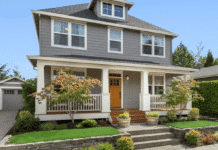





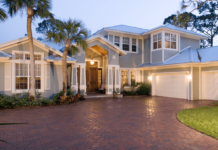













The Hidden Truth About Today’s Home Price Opportunity in Sunnyvale

Timothy Alston | Broker
Aegis Luxury Real Estate · DRE# 01328224
Published
August 04, 2021
Family-friendly tech hub
Home prices in Sunnyvale have continued to climb, and sellers who understand what is actually happening right now are in a position most homeowners only dream about. The average gap between what sellers listed for and what buyers paid has reached record levels in recent months, driven by tight inventory and strong buyer demand. If you have been sitting on a property and wondering whether the timing is right, the numbers suggest the window is real, and it will not stay this wide forever.
You know how there is always that voice in the back of your head saying, “Maybe I should wait just a little longer”? And then another part of you wonders if waiting might mean leaving money on the table? A lot of homeowners in Sunnyvale are sitting with exactly that tension right now. But here is the part most people have not stopped to think about yet: the experts are not debating whether prices will rise. They are debating how much slower the rise gets later on.
So what does that actually mean for you, specifically?
What Does Your Current Home Situation Actually Look Like?
Before anything else, take a honest look at where you are right now. Are you in a home that no longer fits your life? Are you holding equity you have not touched in years? Have you watched your neighborhood change and thought, “This might be the moment”?
What would it mean for your next chapter if you sold today versus waiting another 12 to 18 months, assuming prices appreciate more slowly by then? That is not a hypothetical. It is the exact scenario the economists are describing.
Lawrence Yun, Chief Economist at the National Association of Realtors, has said that home prices are not in danger of a decline due to tight inventory, but he does expect prices to appreciate at a slower pace toward the end of the cycle. That is not bad news. But it is important information if you are trying to make today’s opportunity count.
Have You Thought About What Today’s Home Price Gains Are Actually Worth to You?
Here is a question worth sitting with. If your home has gained $150,000 or more in equity over the past few years, and you could capture most of that gain right now at current demand levels, what would you do with that wealth? Pay off debt? Fund a move closer to family? Downsize and free up cash flow?
Selma Hepp, Deputy Chief Economist at CoreLogic, has noted that the imbalance between strong buyer demand and low availability of for-sale homes has led to bidding over asking prices reaching record levels. She also notes that home price acceleration will likely slow later, though remain meaningful. Can you see how that changes the math on waiting?
In Sunnyvale, the pressure on housing inventory has been especially persistent. Buyer demand in this corridor of Santa Clara County does not evaporate quickly. But the spread between what you can capture today versus what you might capture after appreciation moderates is a real number, and it is worth calculating before you decide.
When you make today’s home price environment part of your planning, rather than something you just read about in the news, the decision starts to look different. Does that make sense?
What Happens If Nothing Changes?
This is the question most homeowners skip. What if you do nothing for the next two to three years? If price growth slows as expected, and your carrying costs continue, and your life situation keeps pulling you toward a move you have been postponing, where does that leave you?
George Ratiu, Chief Economist at Realtor.com, has said that many sellers are going to take advantage of higher prices, and that this is very much the year they are going to put their home on the market. That is not pressure. That is a pattern he is observing across markets, and Sunnyvale homes for sale are very much part of that picture.
If you have been watching homes in Sunnyvale move quickly while yours sits unlistened, the question is not whether the market is good. It is whether you are using it.
How to Make Today’s Market Work for Your Specific Situation
Based on what sellers across the Bay Area are navigating right now, the core insight is straightforward. The today’s home price environment is strong, but the window for maximum leverage is narrowing as appreciation moderates. Acting while demand is high and inventory is low gives you the most negotiating power you are likely to see for some time.
If you could walk away from your current property with your equity intact, move into the next chapter of your life, and do it while buyer competition is still favoring sellers, would that be worth a conversation? Not a pitch. Just a real look at your numbers.
Sellers who make today’s conditions part of their strategy, rather than reacting to them after the fact, tend to come out ahead. The today’s home in a supply-constrained market like this one has a different kind of leverage than it did even two years ago. And today’s home price trajectory, while still positive, will not stay at this pace indefinitely.
If any of this connects with where you are right now, the next step is simple. Timothy Alston, Broker (DRE# 01328224) at Aegis Luxury Real Estate, is available to walk through what your specific property could realistically net in the current Sunnyvale market. No pressure. No pitch. Just a straightforward look at your situation and your options. Reach out at (408) 207-4593. The next step is yours to take whenever it makes sense for you.
Schools in Sunnyvale
Aegis School Excellence Index · 2024-25 performance data
Serving districts: Sunnyvale SD (K-8), Fremont Union High SD (9-12). School district boundaries can change; please verify current enrollment boundaries and program offerings directly with the school district.
Consider This
Have you explored how Saratoga’s neighborhoods vary from the foothills to the flatlands in price and character? Get our Saratoga neighborhood-by-neighborhood guide.
Want to talk through your Sunnyvale options? 15-minute strategy call, no obligation.
Schedule a Call →Sunnyvale homes near Washington Park benefit from the community pool, tennis courts, and sports fields. This municipal amenity cluster adds measurable neighborhood value.
Browse Sunnyvale homes for sale
Free Download
Get the Complete Sunnyvale Market Report
Monthly data, neighborhood breakdowns, price trends, and insider analysis delivered to your inbox.
Send Me the Report →Frequently Asked Questions
Still have questions about Sunnyvale?
I’ve helped hundreds of families buy and sell in Sunnyvale. Happy to share what I’m seeing in your specific neighborhood.
Free Home Valuation
What’s Your Sunnyvale Home Worth?
Get an instant estimate powered by RealScout.
Get My Sunnyvale Home Value →


Looking for homes in Sunnyvale?
Get personalized listing alerts delivered to your inbox. Be the first to know about new homes that match your criteria in Sunnyvale.
Get Sunnyvale Listing Alerts →Community Resources
Sunnyvale Essential Services


Official Sources
Ready to find your perfect home in Sunnyvale?
Browse all available Sunnyvale listings, explore neighborhood guides, and get personalized market insights.
Search Sunnyvale Homes →Timothy Alston
Broker · DRE# 01328224
Aegis Luxury Real Estate
Harvard Business School Online, Certified Master Negotiation
23+ Years Silicon Valley Real Estate Experience
Retired Military Veteran
Copyright © 2026 MLSListings Inc. All rights reserved.
The data relating to real estate for sale on this display comes in part from the Internet Data Exchange program of the MLSListings™ MLS system. Real estate listings held by brokerage firms other than Aegis Luxury Real Estate are marked with the Internet Data Exchange icon and detailed information about them includes the names of the listing brokers and listing agents.
Based on information from the MLSListings MLS as of June 11, 2026. All data, including all measurements and calculations of area, is obtained from various sources and has not been, and will not be, verified by broker or MLS. All information should be independently reviewed and verified for accuracy. Properties may or may not be listed by the office/agent presenting the information.
These statistics are generated using information from the MLSListings Inc. multiple listing service, but have not been verified and are not guaranteed. MLSListings Inc. disclaims any responsibility for the accuracy and reliability of these statistics. This information should not be relied upon for real estate transaction decisions.
Data updated every 15 minutes. Visit www.MLSListings.com for more information.
Information provided is for general informational purposes only. Equal Housing Opportunity. If you are currently working with a real estate agent, this is not intended as a solicitation.
Aegis Luxury Real Estate · Timothy Alston, Broker, DRE# 01328224 · 10080 N. Wolfe Rd Ste SW3-200, Cupertino CA 95014 · (408) 207-4593
Last updated: July 20, 2026 | Data reflects July 2026 MLS statistics