

















Hidden Risks of Overlooking New Construction in Los Altos

Timothy Alston | Broker
Aegis Luxury Real Estate · DRE# 01328224
Published
December 08, 2021
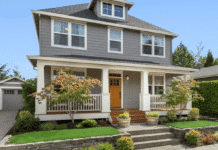
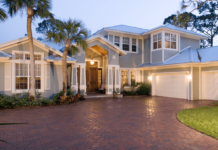
Timeless suburban elegance
If you are struggling to find a home in Los Altos right now, new construction could be the option you have been overlooking. Tight inventory in the Los Altos market has pushed many buyers toward builder communities, where they can customize finishes, lock in warranties, and move into a property no one else has ever lived in. Understanding how new construction compares to existing homes helps you decide which path actually fits your life.
You know how it goes. You find a listing you like, and it is already under contract before you can schedule a showing. Or you make a competitive offer, and somehow it still is not enough. A lot of buyers in Los Altos are dealing with exactly that right now. But here is the part most people have not stopped to think about yet: there is another category of homes that most buyers scroll right past because it does not show up the same way on a standard search.
What would it mean for you if you stopped competing in the same pool as everyone else and started looking somewhere most buyers are not looking?
Why Buyers Struggling to Find Homes Are Turning to New Construction
Before we go further, ask yourself this: what is your housing situation actually costing you right now? If you are renting, what does that monthly payment look like compared to where you want to be in five years? If you are in a home that no longer fits your life, how long have you been quietly dealing with that mismatch?
New construction offers something existing homes simply cannot: a blank slate. When you build from the ground up, you choose the layout, the finishes, the appliances, and the landscaping. Nothing is compromised because a previous owner made different choices than you would have. Does that matter to you? For a lot of buyers, it matters more than they initially expected.
There is also the question of maintenance. Rocket Mortgage has noted that buying new construction versus an existing home typically means fewer repairs to worry about. Many builders include a warranty that covers the unlikely event something does go wrong. So instead of inheriting someone else’s aging roof or outdated HVAC system, you are starting with everything new and under coverage. Can you see how that changes the math on total cost of ownership?
Energy efficiency is another angle worth considering. Newer builds are often designed with current energy standards, which can translate into lower utility bills month after month. Over time, that adds up in ways that a purchase price comparison alone would not show you.
What Existing Homes Offer That New Construction Cannot Replicate
To be fair, existing homes carry their own advantages that are genuinely hard to replace. Have you ever walked into an older home and immediately noticed something about the way it was built? The craftsmanship, the character, the mature trees out front that took decades to grow. Investopedia points out that established neighborhoods tend to offer developed landscaping and a sense of place that brand-new communities are still working toward.
Existing homes also give you a wider range of architectural styles and floor plans. When you are buying in an area like Los Altos, where the neighborhoods each have their own personality, being able to choose from decades of housing stock means more variety. You can get a real sense of the neighborhood, the traffic patterns, and the community feel before you commit.
There is also the question of charm. Houseopedia describes it plainly: older homes often offer architectural elements and historic character that new builds cannot reproduce. If that matters to you, no amount of custom finishes on a new build will replicate it.
So which is right for you? That depends on what you are actually trying to solve.
The Question Most Buyers in Los Altos Never Ask Themselves
Here is a consequence question worth sitting with: what happens if nothing changes? If you keep searching the same inventory, making the same offers, and coming up short, where does that leave you in two years? Are you still renting? Still in a home that does not fit? Still watching prices move?
The buyers who are finding homes right now are the ones willing to expand their definition of what to look for. Some are considering Los Altos homes for sale in new construction communities they had not previously explored. Others are going back to the resale market with a clearer picture of what they actually need versus what they thought they wanted.
Both paths can work. But you have to be clear on what you are optimizing for: customization and low maintenance, or character and established community. Neither is wrong. They are just different answers to different questions.
Based on what buyers in the Los Altos real estate market are navigating right now, the data suggests that new construction inventory has become a meaningful alternative as resale supply stays constrained across Santa Clara County. Builder communities have seen renewed interest from buyers who would normally default to existing homes but cannot find what they need at the price point they are targeting.
How a Trusted Broker Can Help You Navigate Both Options
Here is something worth knowing: working with a builder’s sales representative alone means you are working with someone whose job is to represent the builder, not you. Having an experienced broker at your side when you are evaluating new construction protects your interests through contract review, upgrade negotiations, and closing cost strategy.
The same holds for existing home purchases, where offer strategy and local market knowledge directly affect outcomes. Your broker understands local property values, what comparable homes have actually sold for, and how to position your offer so it competes without overpaying.
Do you feel like this might be the direction worth exploring? If so, the next step is a straightforward conversation, not a pitch, just an honest look at what is available, what fits your situation, and whether the numbers actually work for you. Reach out to Timothy Alston, Broker, at (408) 207-4593 and let’s figure out which path makes the most sense for where you want to be.
Schools in Los Altos
Aegis School Excellence Index · 2024-25 performance data
Serving districts: Los Altos SD (K-8), Mountain View-Los Altos Union High SD (9-12). School district boundaries can change; please verify current enrollment boundaries and program offerings directly with the school district.
Consider This
If you could own a newer-construction home in Milpitas at a fraction of Cupertino prices, would you look? Compare Milpitas new construction options and see the value difference.
Want to talk through your Los Altos options? 15-minute strategy call, no obligation.
Schedule a Call →Los Altos sellers should get a pre-sale home inspection. In this high-end market, buyers expect transparency, and surprises during escrow can kill deals.
Browse Los Altos homes for sale
Free Download
Get the Complete Los Altos Market Report
Monthly data, neighborhood breakdowns, price trends, and insider analysis delivered to your inbox.
Send Me the Report →Frequently Asked Questions
Still have questions about Los Altos?
I’ve helped hundreds of families buy and sell in Los Altos. Happy to share what I’m seeing in your specific neighborhood.
Free Home Valuation
What’s Your Los Altos Home Worth?
Get an instant estimate powered by RealScout.
Get My Los Altos Home Value →Explore Nearby Cities



Looking for homes in Los Altos?
Get personalized listing alerts delivered to your inbox. Be the first to know about new homes that match your criteria in Los Altos.
Get Los Altos Listing Alerts →Community Resources
Los Altos Essential Services


Official Sources
Ready to find your perfect home in Los Altos?
Browse all available Los Altos listings, explore neighborhood guides, and get personalized market insights.
Search Los Altos Homes →Timothy Alston
Broker · DRE# 01328224
Aegis Luxury Real Estate
Harvard Business School Online, Certified Master Negotiation
23+ Years Silicon Valley Real Estate Experience
Retired Military Veteran
Copyright © 2026 MLSListings Inc. All rights reserved.
The data relating to real estate for sale on this display comes in part from the Internet Data Exchange program of the MLSListings™ MLS system. Real estate listings held by brokerage firms other than Aegis Luxury Real Estate are marked with the Internet Data Exchange icon and detailed information about them includes the names of the listing brokers and listing agents.
Based on information from the MLSListings MLS as of June 11, 2026. All data, including all measurements and calculations of area, is obtained from various sources and has not been, and will not be, verified by broker or MLS. All information should be independently reviewed and verified for accuracy. Properties may or may not be listed by the office/agent presenting the information.
These statistics are generated using information from the MLSListings Inc. multiple listing service, but have not been verified and are not guaranteed. MLSListings Inc. disclaims any responsibility for the accuracy and reliability of these statistics. This information should not be relied upon for real estate transaction decisions.
Data updated every 15 minutes. Visit www.MLSListings.com for more information.
Information provided is for general informational purposes only. Equal Housing Opportunity. If you are currently working with a real estate agent, this is not intended as a solicitation.
Aegis Luxury Real Estate · Timothy Alston, Broker, DRE# 01328224 · 10080 N. Wolfe Rd Ste SW3-200, Cupertino CA 95014 · (408) 207-4593
Last updated: July 10, 2026 | Data reflects July 2026 MLS statistics