


















Why Buying a Home Became Much Easier in Los Altos

Timothy Alston | Broker
Aegis Luxury Real Estate · DRE# 01328224
Published
December 07, 2021
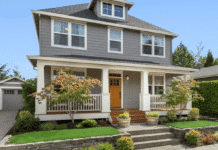
Timeless suburban elegance
Qualifying for a home loan in Los Altos became much easier when the Federal Housing Finance Agency (FHFA) significantly raised its Conforming Loan Limits. The new baseline limit climbed to $647,200 nationwide, with roughly 100 counties approaching $1 million, meaning more buyers can now access lower down payments and less restrictive lending standards than before. For many households in Santa Clara County, this shift changes the math in a meaningful way.
You know how it feels when you have been watching the Los Altos market for months, maybe longer, and the homes you actually want keep sitting just out of reach? Not because you are not serious. Not because you do not have income. But because the financing piece has never quite lined up the way you needed it to?
A lot of buyers are dealing with exactly that right now. Two specific obstacles keep coming up in almost every conversation: saving enough for a down payment, and actually qualifying under the lending standards that have been in place. But here is the part most people have not stopped to think about yet. Both of those obstacles became much easier to clear, quietly, without a lot of headlines.
What Your Housing Situation Actually Looks Like Right Now
What does your current situation look like? Are you renting and watching that monthly payment go somewhere it will never come back from? Are you in a home that no longer fits how you live, whether that means space, a dedicated workspace, or just a neighborhood that suits where you are now?
How long have you been in that situation? And what is it actually costing you, not just in dollars, but in the sense of being stuck somewhere that does not work anymore?
Those are not rhetorical questions. They are worth sitting with for a moment, because the answer tells you whether any of what follows is relevant to your life right now.
The Two Walls Most Buyers Hit First
Have you ever stopped to think about why the down payment requirement exists at a specific number? It is not arbitrary. It comes from how lenders manage risk. When a loan is considered a conforming loan, meaning it meets the standards set by Fannie Mae and Freddie Mac, lenders can sell that loan off and free up their capital. That makes the loan less risky for them, which in turn means they can offer lower interest rates and more flexible terms to you.
When a loan exceeds the conforming limit, it becomes what is called a jumbo loan. As Investopedia describes it, jumbo loans do not meet the requirements to be acquired by Fannie Mae or Freddie Mac. Because lenders cannot sell these loans, they carry more risk, and that risk gets passed to you through higher interest rates, larger down payment requirements (often 20% or more), and stricter reserve requirements, sometimes six months of cash or more sitting in the bank before they will approve you.
Can you see how that second category ends up locking out a significant portion of buyers, even buyers with solid finances?
Trend #1: Conforming Loan Limits Became Much Higher
The FHFA raised its baseline Conforming Loan Limit to $647,200 for 2022, a significant jump driven by historic home price appreciation. FHFA Acting Director Sandra L. Thompson noted that the increase reflects price growth over the prior year and that approximately 100 counties will see limits approaching $1 million. For buyers in high-cost markets like Santa Clara County, this shift means a broader range of homes now qualify for conforming loan treatment. That directly reduces both the down payment burden and the interest rate exposure for buyers who were previously pushed into jumbo territory.
Trend #2: FHA Limits Also Became More Accessible
The Federal Housing Administration raised its own Conforming Loan Limits alongside the FHFA changes. FHA loans are specifically designed for buyers who may not have large savings built up or whose credit profile is still developing. If that describes where you are right now, this expansion could open a path that was not available to you before. FHA loans typically require smaller down payments and more flexible credit standards, which makes them a meaningful option for first-time buyers or those re-entering the market.
Trend #3: The Down Payment Barrier in Los Altos Softened
In a market like Los Altos, where property values have historically stayed strong and home equity accumulates steadily over time, the gap between conforming and jumbo territory has real consequences. With higher conforming limits, more buyers can now enter the market without hitting the 20% down payment threshold that jumbo lenders typically require. That is not a small shift. For many households, the difference between 5% down and 20% down on a $900,000 home is the difference between buying now and waiting years longer.
Trend #4: Interest Rate Exposure Became Much Lower for Many Buyers
When a buyer moves from jumbo loan territory into conforming territory, the interest rate difference is not cosmetic. Lenders price jumbo loans higher because they cannot transfer that risk. Even a half-point difference in mortgage rate compounds into tens of thousands of dollars over a 30-year loan term. If the new limits allow your purchase to qualify as a conforming loan, qualifying became a much easier and less expensive process than it would have been under last year’s thresholds. That is a concrete financial benefit, not an abstract one.
Trend #5: Buyer Demand in High-Cost Markets Shifts With Limit Changes
When loan limits expand in high-cost areas, buyer demand typically broadens across price points that were previously harder to finance. For anyone browsing Los Altos homes for sale, this matters because homes that previously required jumbo financing may now qualify under the new conforming limits. That expands the pool of qualified buyers, which affects offer strategy and pricing dynamics. Understanding where your target price range now sits relative to these new limits is a practical step that could meaningfully change your negotiating position.
What Happens If Nothing Changes for You?
Here is a consequence worth sitting with. What if you keep waiting? If you spend the next three to five years watching the Los Altos market from the outside, what does that look like? Rent that keeps climbing, equity that belongs to someone else, and loan limits that may not stay this favorable. The security and stability that come with owning where you live do not accumulate while you wait.
That is not pressure. That is just the math of inaction. And it is worth asking yourself honestly whether staying in the same position for another year actually serves you.
If you could lock in a monthly payment that never changed, instead of a rent that goes up every renewal cycle, what would that mean for your household? Does that kind of stability matter to you right now?
A Straightforward Next Step
Based on what many buyers are working through right now, these limit changes might be exactly the opening you have been waiting for. Not because the market suddenly became simple, but because two of the biggest barriers, down payment size and qualifying standards, became much easier to clear than they were before.
Do you feel like this could be what you have been looking for? If so, the next step is a straightforward conversation to look at the numbers for your specific situation. Not a pitch. Just an honest look at where you are and what is now possible. Reach out to Timothy Alston, Broker, at (408) 207-4593 to talk through how these changes apply to you.
Schools in Los Altos
Aegis School Excellence Index · 2024-25 performance data
Serving districts: Los Altos SD (K-8), Mountain View-Los Altos Union High SD (9-12). School district boundaries can change; please verify current enrollment boundaries and program offerings directly with the school district.
Consider This
If you could own a newer-construction home in Milpitas at a fraction of Cupertino prices, would you look? Compare Milpitas new construction options and see the value difference.
Want to talk through your Los Altos options? 15-minute strategy call, no obligation.
Schedule a Call →In Los Altos, homes on larger lots near Loyola Corners are often overlooked but offer excellent value compared to properties closer to downtown.
Browse Los Altos homes for sale
Free Download
Get the Complete Los Altos Market Report
Monthly data, neighborhood breakdowns, price trends, and insider analysis delivered to your inbox.
Send Me the Report →Frequently Asked Questions
Still have questions about Los Altos?
I’ve helped hundreds of families buy and sell in Los Altos. Happy to share what I’m seeing in your specific neighborhood.
Free Home Valuation
What’s Your Los Altos Home Worth?
Get an instant estimate powered by RealScout.
Get My Los Altos Home Value →Explore Nearby Cities



Looking for homes in Los Altos?
Get personalized listing alerts delivered to your inbox. Be the first to know about new homes that match your criteria in Los Altos.
Get Los Altos Listing Alerts →Community Resources
Los Altos Essential Services


Official Sources
Ready to find your perfect home in Los Altos?
Browse all available Los Altos listings, explore neighborhood guides, and get personalized market insights.
Search Los Altos Homes →Timothy Alston
Broker · DRE# 01328224
Aegis Luxury Real Estate
Harvard Business School Online, Certified Master Negotiation
23+ Years Silicon Valley Real Estate Experience
Retired Military Veteran
Copyright © 2026 MLSListings Inc. All rights reserved.
The data relating to real estate for sale on this display comes in part from the Internet Data Exchange program of the MLSListings™ MLS system. Real estate listings held by brokerage firms other than Aegis Luxury Real Estate are marked with the Internet Data Exchange icon and detailed information about them includes the names of the listing brokers and listing agents.
Based on information from the MLSListings MLS as of June 10, 2026. All data, including all measurements and calculations of area, is obtained from various sources and has not been, and will not be, verified by broker or MLS. All information should be independently reviewed and verified for accuracy. Properties may or may not be listed by the office/agent presenting the information.
These statistics are generated using information from the MLSListings Inc. multiple listing service, but have not been verified and are not guaranteed. MLSListings Inc. disclaims any responsibility for the accuracy and reliability of these statistics. This information should not be relied upon for real estate transaction decisions.
Data updated every 15 minutes. Visit www.MLSListings.com for more information.
Information provided is for general informational purposes only. Equal Housing Opportunity. If you are currently working with a real estate agent, this is not intended as a solicitation.
Aegis Luxury Real Estate · Timothy Alston, Broker, DRE# 01328224 · 10080 N. Wolfe Rd Ste SW3-200, Cupertino CA 95014 · (408) 207-4593
Last updated: July 10, 2026 | Data reflects July 2026 MLS statistics