





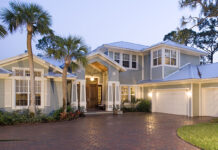









The Surprising Truth About Downsizing to Buy Houses San Jose

Timothy Alston | Broker
Aegis Luxury Real Estate · DRE# 01328224
Published
March 07, 2024
Capital of Silicon Valley
Downsizing at retirement in San Jose can reduce monthly housing costs, unlock decades of built-up home equity, and fundamentally shift your financial position. For homeowners who have held property in Santa Clara County for ten or more years, the equity sitting inside an oversized home is often far larger than they realize, and far more useful than leaving it locked in walls they no longer need.
You know how retirement is supposed to feel like a release? Less obligation, more space in your days, fewer things competing for your energy? But a lot of long-term homeowners in the Bay Area quietly reach a point where the house that once felt like an asset starts to feel like a job. The mortgage. The maintenance. The rooms that have been empty for years.
And somewhere in the back of your mind, a question begins to surface: is this home still working for you, or are you working for it? That question is worth sitting with before you do anything else. Because the answer often points somewhere most people have not looked yet.
What Is That Oversized Home Actually Costing You Each Month?
Have you ever stopped to add up every monthly expense tied directly to the size of your home? Not just the mortgage. The property taxes, utility bills, landscaping, insurance, and the repairs that seem to come up more often as the home ages. Each of those numbers tends to shrink considerably in a smaller property.
Realtor.com notes that a smaller home typically means lower bills and less upkeep, plus a potential windfall from selling your larger home. And in a market like San Jose, that windfall is not a small figure. For many homeowners who bought in the late 1990s or early 2000s, the equity accumulated since then could represent several hundred thousand dollars sitting idle in a property that no longer fits their life.
What would it mean for you to convert a meaningful portion of that equity into liquidity and step into a home with a fraction of the overhead?
Homeowners who purchased in San Jose during the early 2000s rode through one of the most volatile stretches in modern real estate history. The 2008 downturn tested resolve across Santa Clara County, but those who held on through the correction watched their equity recover and then accelerate well beyond pre-crisis levels. That patience became the financial foundation many of those homeowners are still sitting on today. Their decision to buy houses in San Jose, and to stay, turned out to be one of the most consequential financial moves of their lives.
The Equity Question Most Retirees Never Actually Answer
Daniel Hunt, CFA at Morgan Stanley, makes the point plainly: home equity can be a significant source of retirement wealth, yet it is frequently left out of retirement planning conversations entirely.
So here is a situation question worth asking yourself honestly: do you know your actual equity number right now? Not a rough estimate. The real figure, based on current market value minus what you owe. Because for many homeowners who have been in their San Jose real estate for fifteen or twenty-plus years, that number is likely higher than their most recent guess.
Average property values in Santa Clara County climbed at rates that outpaced most other asset classes between 2012 and 2022. If you do not know your equity number, how are you building a retirement financial plan around it? That is not a rhetorical question. It is a gap in the math.
Between 2012 and 2019, property values across Santa Clara County climbed steadily as tech employment surged and housing inventory stayed historically tight. Homeowners who purchased during or just after the downturn saw their equity grow at rates that surprised most observers. Many of those same homeowners are now at or near retirement age, holding properties worth two to three times what they originally paid. The decision to stay and hold through that cycle created a level of home equity that now gives them real choices about how and where they live next.
Are the Original Reasons You Decided to Buy Houses in San Jose Still True?
Think back to when you first decided to buy houses in San Jose, or anywhere in the Bay Area. What did you need then that you do not necessarily need now? More bedrooms for children who have since moved out? A large yard for a lifestyle that has shifted? Proximity to a school district that no longer applies to your household?
Life changes. And when your life changes, it is worth asking whether your housing situation has kept up with those changes, or whether it is still shaped by needs from twenty years ago. Could a smaller, lower-maintenance home actually give you more of what matters to you now, rather than less?
The truth about downsizing is not just financial. It includes time, mental bandwidth, and freedom from managing a property that no longer fits your daily reality. The truth about downsizing often does not surface until someone asks the right question. Does that make sense as a way of looking at it?
The pandemic years reshaped what homeowners wanted from their properties and accelerated appreciation across Santa Clara County in ways that surprised even experienced observers. Average home values in San Jose climbed sharply between 2020 and 2022 before moderating. Homeowners who held through that cycle now sit on equity positions that make a retirement-driven move not just appealing, but financially powerful. Those who want to buy houses in San Jose at a smaller price point today are often doing so from a position of genuine financial strength.
What Happens to Your Financial Picture If Nothing Changes?
Here is the consequence question most people avoid: what does your financial situation actually look like if you stay in the same home for the next five to ten years? The maintenance costs on an aging property will likely increase. The rooms you are not using will still cost money to heat, cool, and insure. The equity will remain locked inside a structure that may no longer match your life.
And every year that passes is a year you are not deploying that capital toward something that actually serves your retirement. Is that the plan? Or is there a version of this that works better for you?
When you are ready to explore what is available, San Jose homes for sale span a wide range of sizes, neighborhoods, and price points, from lower-maintenance condos in Willow Glen to single-level homes in Almaden Valley. Understanding what the market actually offers right now is a useful first step before making any decisions about your current property.
The Four Numbers That Turn a Vague Idea Into an Actual Plan
The numbers that matter most are four: your current home’s value, your equity position, what a smaller home in San Jose would cost today, and what your monthly overhead would look like after the move. Can you see how having those four figures in front of you changes the conversation entirely?
About downsizing specifically, most people delay because the decision seems complicated. But it is rarely the move itself that is complicated. It is the lack of clear numbers. Once those four figures are on the table, the decision usually becomes much more straightforward. Are you with me on that?
Three Questions Worth Sitting With Before You Buy Houses in San Jose at a Smaller Price Point
Before you talk to anyone, sit with these honestly.
First: have your needs genuinely changed since you bought your current home, and are you being fully honest with yourself about that?
Second: what are your actual monthly housing costs right now, and do you have a clear target for what you want those costs to look like in retirement?
Third: if you had access to a significant amount of equity right now, would you use it differently than letting it sit in a home you may be outgrowing?
Your answers to those three questions will tell you more than any market report could. They are also the right starting point for a conversation about whether it makes sense to buy houses in San Jose at a different size and price point than where you are today.
When you are ready to get specific, Timothy Alston, Broker (DRE# 01328224) at Aegis Luxury Real Estate, can walk you through your current equity position, what homes in San Jose at the right size and price point look like in today’s market, and what your monthly costs would realistically become after the move. No pitch. Just the actual numbers for your actual situation. Would that kind of straightforward conversation be useful to you? If so, reach out at (408) 207-4593. The next step is yours to take whenever it makes sense for you.
Schools in San Jose
Aegis School Excellence Index · 2024-25 performance data
Serving districts: San Jose Unified SD, Alum Rock Union Elementary SD, Berryessa Union SD, Cambrian SD, Campbell Union SD (partial), East Side Union High SD, Evergreen Elementary SD, Franklin-McKinley SD, Luther Burbank SD, Moreland SD, Mount Pleasant SD, Oak Grove SD, Orchard SD, Union SD. School district boundaries can change; please verify current enrollment boundaries and program offerings directly with the school district.
Consider This
Have you explored how Saratoga’s neighborhoods vary from the foothills to the flatlands in price and character? Get our Saratoga neighborhood-by-neighborhood guide.
Want to talk through your San Jose options? 15-minute strategy call, no obligation.
Schedule a Call →San Jose buyers should compare the Almaden Valley, Cambrian, and Evergreen neighborhoods. Each offers distinct pricing, lot sizes, and community character.
Browse San Jose homes for sale
Free Download
Get the Complete San Jose Market Report
Monthly data, neighborhood breakdowns, price trends, and insider analysis delivered to your inbox.
Send Me the Report →Frequently Asked Questions
Still have questions about San Jose?
I’ve helped hundreds of families buy and sell in San Jose. Happy to share what I’m seeing in your specific neighborhood.
Free Home Valuation
What’s Your San Jose Home Worth?
Get an instant estimate powered by RealScout.
Get My San Jose Home Value →

Looking for homes in San Jose?
Get personalized listing alerts delivered to your inbox. Be the first to know about new homes that match your criteria in San Jose.
Get San Jose Listing Alerts →Community Resources
San Jose Essential Services


Official Sources
Ready to find your perfect home in San Jose?
Browse all available San Jose listings, explore neighborhood guides, and get personalized market insights.
Search San Jose Homes →Timothy Alston
Broker · DRE# 01328224
Aegis Luxury Real Estate
Harvard Business School Online, Certified Master Negotiation
23+ Years Silicon Valley Real Estate Experience
Retired Military Veteran
Copyright © 2026 MLSListings Inc. All rights reserved.
The data relating to real estate for sale on this display comes in part from the Internet Data Exchange program of the MLSListings™ MLS system. Real estate listings held by brokerage firms other than Aegis Luxury Real Estate are marked with the Internet Data Exchange icon and detailed information about them includes the names of the listing brokers and listing agents.
Based on information from the MLSListings MLS as of June 12, 2026. All data, including all measurements and calculations of area, is obtained from various sources and has not been, and will not be, verified by broker or MLS. All information should be independently reviewed and verified for accuracy. Properties may or may not be listed by the office/agent presenting the information.
These statistics are generated using information from the MLSListings Inc. multiple listing service, but have not been verified and are not guaranteed. MLSListings Inc. disclaims any responsibility for the accuracy and reliability of these statistics. This information should not be relied upon for real estate transaction decisions.
Data updated every 15 minutes. Visit www.MLSListings.com for more information.
Information provided is for general informational purposes only. Equal Housing Opportunity. If you are currently working with a real estate agent, this is not intended as a solicitation.
Aegis Luxury Real Estate · Timothy Alston, Broker, DRE# 01328224 · 10080 N. Wolfe Rd Ste SW3-200, Cupertino CA 95014 · (408) 207-4593
Last updated: August 21, 2026 | Data reflects August 2026 MLS statistics