














The Hidden Cost of Wrong Pricing When You Want To Sell in Saratoga

Timothy Alston | Broker
Aegis Luxury Real Estate · DRE# 01328224
Published
January 23, 2023
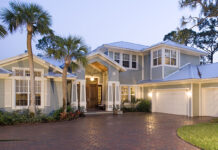
Wine country elegance in the foothills
If you want to sell your house in Saratoga and you price it wrong from the start, you could lose money, lose time, or lose buyers entirely. Pricing too high pushes serious buyers toward better-valued listings. Pricing too low leaves real equity on the table. The right price, set from day one, is the single most controllable factor in how your sale plays out.
You know how it feels to see a house sit on the market for weeks, then quietly drop its price? And then you start wondering what is wrong with it, even if nothing actually is? A lot of sellers in Saratoga are in that exact situation right now, not because their home lacks value, but because the number on the listing did not match what the market was ready to accept.
So before you list, there is one question worth sitting with: what does the right price actually look like for your specific home in today’s market?
What Do You Want From This Sale?
Think about what you are actually hoping to walk away with. Is it speed? Maximum proceeds? A smooth process without a lot of back-and-forth? Most sellers want all three, and the right asking price is the lever that makes all three possible at the same time.
What would it mean for you if your home sold in the first two weeks, above your asking price, with no price reductions along the way? That outcome is still happening in Saratoga real estate, but almost exclusively for homes that are priced in line with what the current market supports.
Have you thought about what happens if you overprice by even five or ten percent? Buyers who can afford your home will not bother to visit. Buyers who do visit will be comparing it to homes they can get for less. And the longer it sits, the more leverage shifts away from you.
The Hidden Risk of Pricing Too High or Too Low
There is a trap on both sides of this. Sellers sometimes price low thinking it will spark a bidding war. It can. But it can also attract buyers who wonder why the price seems off, or investors looking for a discount rather than buyers who genuinely love the home. Does that match the outcome you want?
Pricing too high carries its own set of consequences. When a listing drops its price after sitting on the market, that price cut gets noticed. Some buyers see it as a signal that something is wrong, even when nothing is. The home that looked like a premium property in week one can start to look like a problem property by week four.
Realtor.com has noted that sellers in the current environment may want to adjust their expectations from the pandemic-era market, where almost any price found a buyer quickly. That era has passed. The buyers shopping Saratoga homes for sale today are informed, patient, and comparing every listing carefully.
How Pricing Affects Buyer Behavior in Saratoga
Here is something worth thinking about. Buyers today are working with real budget constraints. When mortgage rates are elevated, every dollar of purchase price translates directly into monthly payment. A home priced ten percent above market value does not just feel expensive. For a buyer running the numbers, it could push them out of qualifying range entirely.
Homes in Saratoga that are priced accurately for current conditions are still generating strong offers and selling within competitive timeframes. The market has not stalled for well-priced properties. It has become more selective. That is a meaningful distinction.
What would it look like if your home was the one that sold quickly while your neighbors waited? How much of your next chapter is on hold until this sale closes?
What the Right Price Actually Requires
Pricing a house correctly is not guesswork. It involves looking at what comparable homes have actually sold for, not just listed for, in your immediate area. It means accounting for current buyer demand, the condition of your home, and where inventory levels stand right now. It also means separating your emotional attachment to the home from the number a buyer is going to accept.
That last part is harder than it sounds. You know what went into this house. The renovations, the years, the care. A qualified broker can hold both of those realities at once: the value you have built, and the price a buyer in today’s market will actually pay.
Timothy Alston (DRE# 01328224), Broker at Aegis Luxury Real Estate, works specifically with sellers in Saratoga to find that number through a structured analysis of current market data, comparable sales, and buyer activity. Not a Zestimate. Not a number that feels good. The number that gets results.
What Happens If You Wait or Guess?
What does the next six months look like if you list at the wrong price, sit on the market, and eventually reduce? You have lost time, possibly taken on carrying costs, and the negotiating position you started with is gone. The buyer who makes an offer after a price drop knows they have leverage. They will use it.
If you want to sell your house and come out of it feeling like you made a smart decision, the path starts with a pricing conversation, not a listing. One conversation with a broker who knows this market could change the entire trajectory of your sale.
Would it make sense to have that conversation before you commit to a number? If so, reach out to Timothy Alston at (408) 207-4593. Not a pitch. Just a straightforward look at your home, the current market, and the price that puts you in the strongest possible position.
Schools in Saratoga
Aegis School Excellence Index · 2024-25 performance data
Serving districts: Saratoga Union Elementary SD (K-8), Los Gatos-Saratoga Joint Union High SD (9-12). School district boundaries can change; please verify current enrollment boundaries and program offerings directly with the school district.
Consider This
Have you explored how Saratoga’s neighborhoods vary from the foothills to the flatlands in price and character? Get our Saratoga neighborhood-by-neighborhood guide.
Want to talk through your Saratoga options? 15-minute strategy call, no obligation.
Schedule a Call →In Saratoga, homes with updated gourmet kitchens and wine storage areas resonate with the local buyer demographic. These features are expected, not extras.
Browse Saratoga homes for sale
Free Download
Get the Complete Saratoga Market Report
Monthly data, neighborhood breakdowns, price trends, and insider analysis delivered to your inbox.
Send Me the Report →Frequently Asked Questions
Still have questions about Saratoga?
I’ve helped hundreds of families buy and sell in Saratoga. Happy to share what I’m seeing in your specific neighborhood.
Free Home Valuation
What’s Your Saratoga Home Worth?
Get an instant estimate powered by RealScout.
Get My Saratoga Home Value →


Looking for homes in Saratoga?
Get personalized listing alerts delivered to your inbox. Be the first to know about new homes that match your criteria in Saratoga.
Get Saratoga Listing Alerts →Community Resources
Saratoga Essential Services


Official Sources
Ready to find your perfect home in Saratoga?
Browse all available Saratoga listings, explore neighborhood guides, and get personalized market insights.
Search Saratoga Homes →Timothy Alston
Broker · DRE# 01328224
Aegis Luxury Real Estate
Harvard Business School Online, Certified Master Negotiation
23+ Years Silicon Valley Real Estate Experience
Retired Military Veteran
Copyright © 2026 MLSListings Inc. All rights reserved.
The data relating to real estate for sale on this display comes in part from the Internet Data Exchange program of the MLSListings™ MLS system. Real estate listings held by brokerage firms other than Aegis Luxury Real Estate are marked with the Internet Data Exchange icon and detailed information about them includes the names of the listing brokers and listing agents.
Based on information from the MLSListings MLS as of July 15, 2026. All data, including all measurements and calculations of area, is obtained from various sources and has not been, and will not be, verified by broker or MLS. All information should be independently reviewed and verified for accuracy. Properties may or may not be listed by the office/agent presenting the information.
These statistics are generated using information from the MLSListings Inc. multiple listing service, but have not been verified and are not guaranteed. MLSListings Inc. disclaims any responsibility for the accuracy and reliability of these statistics. This information should not be relied upon for real estate transaction decisions.
Data updated every 15 minutes. Visit www.MLSListings.com for more information.
Information provided is for general informational purposes only. Equal Housing Opportunity. If you are currently working with a real estate agent, this is not intended as a solicitation.
Aegis Luxury Real Estate · Timothy Alston, Broker, DRE# 01328224 · 10080 N. Wolfe Rd Ste SW3-200, Cupertino CA 95014 · (408) 207-4593
Last updated: July 16, 2026 | Data reflects July 2026 MLS statistics