















Hidden Obstacles Most Saratoga Buyers Never Know If They’re Ready

Timothy Alston | Broker
Aegis Luxury Real Estate · DRE# 01328224
Published
December 01, 2022
Wine country elegance in the foothills
How do you know if you’re ready to buy a home in a market like Saratoga? The honest answer: most younger buyers are closer than they think. The two biggest obstacles, understanding the mortgage process and saving enough for a down payment, both have real solutions available right now. Knowing those solutions exist is the first step toward closing the gap between where you are and where you want to be.
You know how it feels to have a goal that seems just out of reach? And then time keeps passing, rent keeps climbing, and the goal never quite gets closer? A lot of younger buyers in the Saratoga area are sitting with exactly that right now. They want homeownership. They are not sure where to start. And the longer they wait, the heavier that uncertainty gets.
Here is the part most people have not stopped to think about yet: the obstacles they believe are stopping them may not be as fixed as they assume. So before you decide it is not the right time, it might be worth asking yourself a few honest questions.
What Does Your Housing Situation Actually Look Like Right Now?
Are you renting? Month to month, or locked into a lease that feels like a holding pattern? Have you ever stopped to think about what happens to all that rent money at the end of every year? Not where it goes, but what it leaves behind. Because the answer, for most renters, is nothing.
A Maxwell survey of millennial and Gen Z borrowers found that 95% of respondents said the cost of renting was too high. That is not a fringe opinion. That is nearly universal. And yet most of those same people had not yet applied for a mortgage. So what is the gap between knowing rent is too expensive and actually doing something about it?
If you’re pursuing homeownership but have not taken a first step, it is worth asking: what exactly are you waiting for? A lower rate? More savings? A clearer sense of the process? Those are fair answers. But they are also worth examining, because each one has a path through it.
In the early 2000s, lenders made it almost too easy to buy. Then the correction came, and a generation of young buyers watched their parents lose equity overnight. That experience shaped how millennials and Gen Z approach homeownership today: cautiously, skeptically, and often with more questions than their parents ever thought to ask. The caution is understandable. But it has also kept many qualified buyers on the sidelines for longer than necessary.
How Do You Know If the Mortgage Process Is Really That Complicated?
Here is a real number: 33% of younger buyers in the Maxwell survey said the mortgage process was confusing or too difficult to understand. That is one in three people. And when something feels confusing, the natural response is to wait until it feels less confusing. Which, without guidance, it never does.
Mortgages are not one-size-fits-all. Your credit profile, your income structure, your debt-to-income ratio, your loan type, all of it shapes what you qualify for and at what terms. A quick online search gives you general information. It does not give you a picture of your specific situation. Can you see how that gap between generic answers and personalized guidance might be what is actually slowing you down?
Working with a trusted broker who understands the Saratoga real estate market means you get answers built around your numbers, not someone else’s. That changes the conversation entirely.
After the 2008 correction, lenders swung hard in the other direction. Qualification standards tightened significantly, and the paperwork burden on buyers increased substantially. Many younger buyers who came of age during this period absorbed the message that buying a home was out of reach for ordinary people. That belief has lingered well past the era that created it, and it continues to shape how first-time buyers in markets like Saratoga think about their options today.
What Would It Mean To Know If Your Down Payment Gap Is Smaller Than You Think?
The second major obstacle: 46% of younger buyers in the Maxwell survey said they did not have enough saved for a down payment or closing costs. That is a real concern. But here is a question worth sitting with: what if the number you think you need is not the number you actually need?
Down Payment Resource reported more than 2,300 homebuyer assistance programs available nationwide, a number that has been growing quarter over quarter. Many of these programs are specifically designed for first-time buyers, income-qualified buyers, or buyers in higher-cost markets like Santa Clara County. Most buyers have never heard of them. Does that change anything for you?
Beyond assistance programs, as inventory has shifted in some segments, more sellers have shown willingness to negotiate closing cost contributions. That reduces the cash you need to bring to the table at closing. If you’re pursuing a home and you have been stopped by the savings question, it is worth finding out what the actual number looks like for your situation before assuming the door is closed.
Buyers who purchased homes in Saratoga and the surrounding Santa Clara County area between 2019 and 2022 saw substantial equity accumulation in a compressed timeframe. That equity represents real, measurable wealth that renters in the same period did not build. The National Association of Realtors has documented that the average homeowner net worth is roughly 40 times that of the average renter. The gap between owning and renting is not abstract. It shows up in actual balance sheets over time.
What Happens If Nothing Changes?
Here is a consequence worth sitting with honestly. If you keep renting for the next three to five years in a market like this one, what does that actually cost you? Not just in dollars paid to a landlord, but in equity not built, in a fixed payment you never locked in, in options you did not have.
You do not have to know if the timing is perfect right now. But it is worth knowing if the obstacles you believe are real are actually as large as they seem. Sometimes the gap is not as wide as it looks from the outside.
If you’re pursuing homeownership and you have been sitting on the question of whether it is actually possible for you, the most useful next step is a straightforward conversation. Not a pitch. Just a clear look at your numbers and what the path forward could look like for your specific situation.
Explore Saratoga homes for sale to get a sense of what the current inventory looks like and what price points are active in the market.
Timothy Alston, Broker, DRE# 01328224, Aegis Luxury Real Estate, is available for a direct conversation at (408) 207-4593. Would a straightforward, no-pressure look at your options be worth 20 minutes of your time?
Schools in Saratoga
Aegis School Excellence Index · 2024-25 performance data
Serving districts: Saratoga Union Elementary SD (K-8), Los Gatos-Saratoga Joint Union High SD (9-12). School district boundaries can change; please verify current enrollment boundaries and program offerings directly with the school district.
Consider This
Have you explored how Saratoga’s neighborhoods vary from the foothills to the flatlands in price and character? Get our Saratoga neighborhood-by-neighborhood guide.
Want to talk through your Saratoga options? 15-minute strategy call, no obligation.
Schedule a Call →Saratoga buyers should know that the Saratoga-Sunnyvale Road corridor divides the city into distinct characters: flatter, more suburban to the east and hillier, more rural to the west.
Browse Saratoga homes for sale
Free Download
Get the Complete Saratoga Market Report
Monthly data, neighborhood breakdowns, price trends, and insider analysis delivered to your inbox.
Send Me the Report →Frequently Asked Questions
Still have questions about Saratoga?
I’ve helped hundreds of families buy and sell in Saratoga. Happy to share what I’m seeing in your specific neighborhood.
Free Home Valuation
What’s Your Saratoga Home Worth?
Get an instant estimate powered by RealScout.
Get My Saratoga Home Value →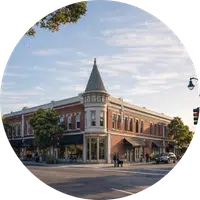


Looking for homes in Saratoga?
Get personalized listing alerts delivered to your inbox. Be the first to know about new homes that match your criteria in Saratoga.
Get Saratoga Listing Alerts →Community Resources
Saratoga Essential Services


Official Sources
Ready to find your perfect home in Saratoga?
Browse all available Saratoga listings, explore neighborhood guides, and get personalized market insights.
Search Saratoga Homes →Timothy Alston
Broker · DRE# 01328224
Aegis Luxury Real Estate
Harvard Business School Online, Certified Master Negotiation
23+ Years Silicon Valley Real Estate Experience
Retired Military Veteran
Copyright © 2026 MLSListings Inc. All rights reserved.
The data relating to real estate for sale on this display comes in part from the Internet Data Exchange program of the MLSListings™ MLS system. Real estate listings held by brokerage firms other than Aegis Luxury Real Estate are marked with the Internet Data Exchange icon and detailed information about them includes the names of the listing brokers and listing agents.
Based on information from the MLSListings MLS as of June 12, 2026. All data, including all measurements and calculations of area, is obtained from various sources and has not been, and will not be, verified by broker or MLS. All information should be independently reviewed and verified for accuracy. Properties may or may not be listed by the office/agent presenting the information.
These statistics are generated using information from the MLSListings Inc. multiple listing service, but have not been verified and are not guaranteed. MLSListings Inc. disclaims any responsibility for the accuracy and reliability of these statistics. This information should not be relied upon for real estate transaction decisions.
Data updated every 15 minutes. Visit www.MLSListings.com for more information.
Information provided is for general informational purposes only. Equal Housing Opportunity. If you are currently working with a real estate agent, this is not intended as a solicitation.
Aegis Luxury Real Estate · Timothy Alston, Broker, DRE# 01328224 · 10080 N. Wolfe Rd Ste SW3-200, Cupertino CA 95014 · (408) 207-4593
Last updated: July 12, 2026 | Data reflects July 2026 MLS statistics