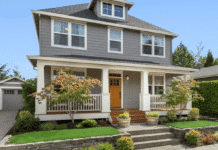



















The Hidden Costs of Skipping an Existing Home in San Jose

Timothy Alston | Broker
Aegis Luxury Real Estate · DRE# 01328224
Published
August 26, 2020
Capital of Silicon Valley
When buyers in San Jose weigh an existing home against new construction, the choice shapes their equity position, monthly costs, and move-in timeline for years. Existing homes typically offer faster closing timelines, more room for price negotiation, and established neighborhoods. New construction offers energy efficiency, warranties, and customization. Neither is universally better. The right answer depends entirely on your situation.
You know how it goes: you start your home search excited about the possibilities, and then reality sets in. Inventory is tight, prices are stubborn, and every time you find something worth pursuing, it is already gone. A lot of buyers in San Jose are dealing with exactly that right now.
And then someone mentions new construction. Suddenly there is a whole other path you had not seriously considered. But before you pivot, have you ever stopped to think about what each option is actually asking of you, not just in dollars, but in time, flexibility, and the life you want to be living?
What Does Your Housing Situation Actually Look Like Right Now?
Are you renting month to month and watching your costs climb? Or do you own something now and need to move within a specific window? Your current situation matters more than almost any other factor in this decision. What would change for you if you had a firm move-in date you could count on?
With an existing home, the timeline you negotiate with the seller is generally the timeline you get. Escrow closes, keys transfer, and you move. That predictability has real value, especially if you have a lease ending, kids starting school, or a job relocation driving your schedule.
New construction works on the builder’s schedule. Weather, supply chains, and permitting all play a role. How would a three-to-six month delay affect the rest of your plans? That is not a hypothetical. It is a question worth sitting with before you fall in love with a floor plan.
The Existing Home Advantage Most Buyers Overlook
Here is something that does not come up enough in these conversations. When you buy an existing home or a resale property, you are often buying into a neighborhood that already has an identity. The trees are mature. The traffic patterns are known. The neighbors have lived there for years. You can walk the street on a Tuesday afternoon and get a real read on the place.
New construction subdivisions are a different experience. You are buying a promise of what the neighborhood will become. The lots around yours might sit empty for months. The community amenities shown in the renderings might take years to complete. Does that uncertainty bother you, or does the clean slate appeal to you?
There is also the matter of price negotiation. Builders price their models based on material costs and margin. That number is largely fixed. A motivated seller on an existing home, on the other hand, is a human being with a situation of their own. That dynamic creates room to negotiate on price, closing costs, repairs, and timing in ways that builder contracts typically do not allow.
Where New Construction Actually Wins
It would not be a fair comparison without being honest about what new construction does well. If you want a home or a specific layout that does not exist in the current resale inventory, new construction lets you build it. Mudroom, home office, open-plan kitchen, the exact tile you want in the primary bath. That level of customization has genuine value.
Energy efficiency is another real advantage. New windows, new appliances, a new roof, and systems built to current code all translate to lower utility bills and fewer maintenance surprises in the early years. Programs like ENERGY STAR certification mean some of those savings are measurable before you even move in.
Warranty coverage is also part of the picture. A new construction home typically comes with builder warranties covering structural components and systems for a defined period. With an existing home, the condition of those systems depends entirely on how the previous owners maintained them. A thorough inspection and a home warranty policy can close that gap, but it is a step you have to take intentionally.
What Happens If You Keep Waiting?
Here is the consequence question most buyers avoid. What happens if you keep deferring this decision? If you are renting in San Jose right now, every month that passes is a month of housing costs that build zero equity for you. None of it comes back. What would it mean for your net worth over the next ten years if even part of that monthly payment was building ownership instead?
The National Association of Realtors has tracked the gap between average homeowner and renter net worth for years. The difference is not small. It compounds. And the San Jose real estate market, despite its cycles, has historically rewarded long-term ownership in ways that few other asset classes match.
Can you see how the cost of waiting is not neutral? It has a direction. The question is whether you are comfortable with where that direction leads.
Whether you are drawn to San Jose homes for sale in established neighborhoods or you are genuinely curious about what a new build might offer you, the decision does not have to be made in the abstract. The best way to figure out which path fits your situation is to look at real numbers, real timelines, and real inventory side by side.
If that kind of conversation would be useful to you, Timothy Alston, Broker at Aegis Luxury Real Estate, is available for a straightforward look at both options in San Jose. No pressure. No pitch. Just clarity. Reach out at (408) 207-4593 and let’s see what the numbers actually look like for your situation.
Schools in San Jose
Aegis School Excellence Index · 2024-25 performance data
Serving districts: San Jose Unified SD, Alum Rock Union Elementary SD, Berryessa Union SD, Cambrian SD, Campbell Union SD (partial), East Side Union High SD, Evergreen Elementary SD, Franklin-McKinley SD, Luther Burbank SD, Moreland SD, Mount Pleasant SD, Oak Grove SD, Orchard SD, Union SD. School district boundaries can change; please verify current enrollment boundaries and program offerings directly with the school district.
Consider This
Have you explored how Saratoga’s neighborhoods vary from the foothills to the flatlands in price and character? Get our Saratoga neighborhood-by-neighborhood guide.
Want to talk through your San Jose options? 15-minute strategy call, no obligation.
Schedule a Call →San Jose homes near Guadalupe River Park and Trail benefit from continuous trail improvements that boost outdoor recreation access and property values.
Browse San Jose homes for sale
Free Download
Get the Complete San Jose Market Report
Monthly data, neighborhood breakdowns, price trends, and insider analysis delivered to your inbox.
Send Me the Report →Frequently Asked Questions
Still have questions about San Jose?
I’ve helped hundreds of families buy and sell in San Jose. Happy to share what I’m seeing in your specific neighborhood.
Free Home Valuation
What’s Your San Jose Home Worth?
Get an instant estimate powered by RealScout.
Get My San Jose Home Value →


Looking for homes in San Jose?
Get personalized listing alerts delivered to your inbox. Be the first to know about new homes that match your criteria in San Jose.
Get San Jose Listing Alerts →Community Resources
San Jose Essential Services


Official Sources
Ready to find your perfect home in San Jose?
Browse all available San Jose listings, explore neighborhood guides, and get personalized market insights.
Search San Jose Homes →Timothy Alston
Broker · DRE# 01328224
Aegis Luxury Real Estate
Harvard Business School Online, Certified Master Negotiation
23+ Years Silicon Valley Real Estate Experience
Retired Military Veteran
Copyright © 2026 MLSListings Inc. All rights reserved.
The data relating to real estate for sale on this display comes in part from the Internet Data Exchange program of the MLSListings™ MLS system. Real estate listings held by brokerage firms other than Aegis Luxury Real Estate are marked with the Internet Data Exchange icon and detailed information about them includes the names of the listing brokers and listing agents.
Based on information from the MLSListings MLS as of June 11, 2026. All data, including all measurements and calculations of area, is obtained from various sources and has not been, and will not be, verified by broker or MLS. All information should be independently reviewed and verified for accuracy. Properties may or may not be listed by the office/agent presenting the information.
These statistics are generated using information from the MLSListings Inc. multiple listing service, but have not been verified and are not guaranteed. MLSListings Inc. disclaims any responsibility for the accuracy and reliability of these statistics. This information should not be relied upon for real estate transaction decisions.
Data updated every 15 minutes. Visit www.MLSListings.com for more information.
Information provided is for general informational purposes only. Equal Housing Opportunity. If you are currently working with a real estate agent, this is not intended as a solicitation.
Aegis Luxury Real Estate · Timothy Alston, Broker, DRE# 01328224 · 10080 N. Wolfe Rd Ste SW3-200, Cupertino CA 95014 · (408) 207-4593
Last updated: July 03, 2026 | Data reflects July 2026 MLS statistics